

Why Is My Sourdough So Dense? Troubleshooting Guide
A dense, tight crumb usually traces back to a weak starter or a bulk ferment that ended too soon. Here’s how to diagnose the cause and bake a lighter, more open loaf next time.
Cut open your bread only to find a gummy interior, huge gaping holes surrounded by dense dough (the classic “fool’s crumb”), or a tight, rubbery sandwich texture? Dive deep into the relationship between hydration, gluten development, and fermentation to transform your interior crumb into a soft, beautifully open masterpiece.
Not sure which symptom is yours? Try the visual What’s Wrong With My Loaf? guide – match it to the fix in one click.
More Troubleshooting Topics
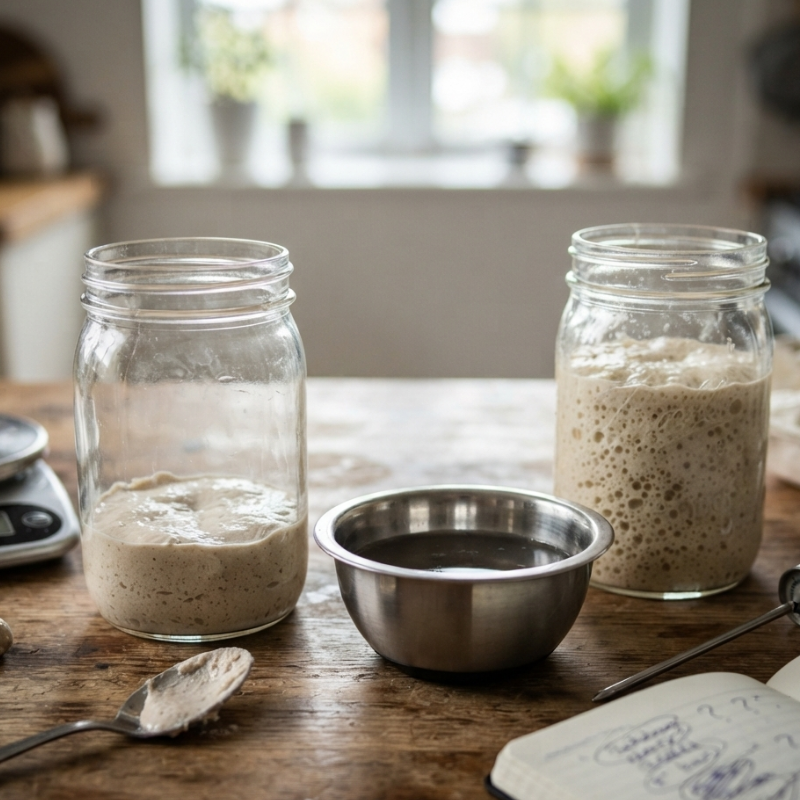 Starter ProblemsRescuing your rise when things go flat.
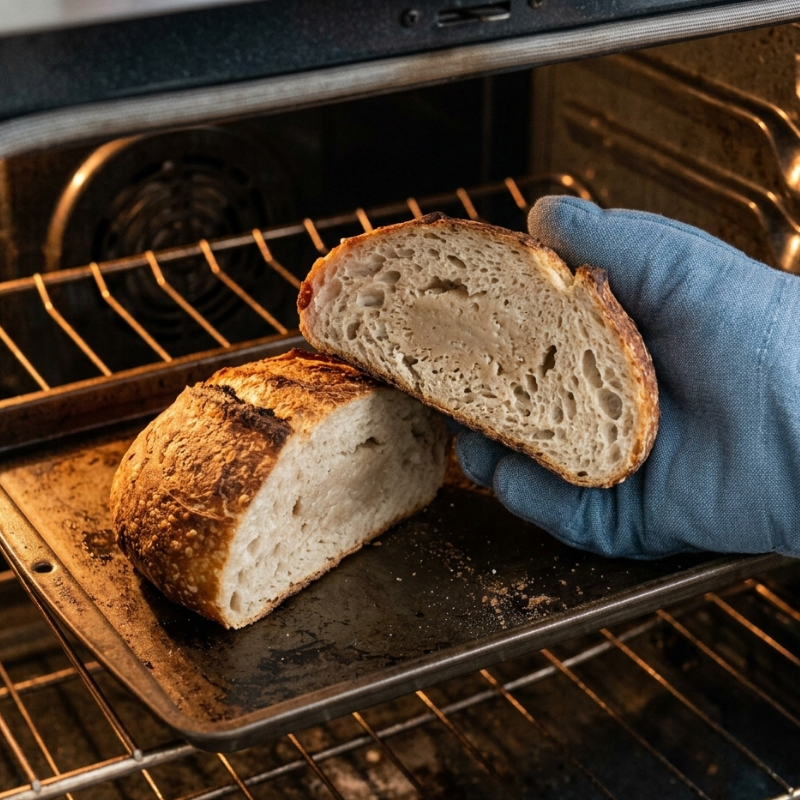 Crust & ShapeCrafting the ultimate golden, crackly blister.
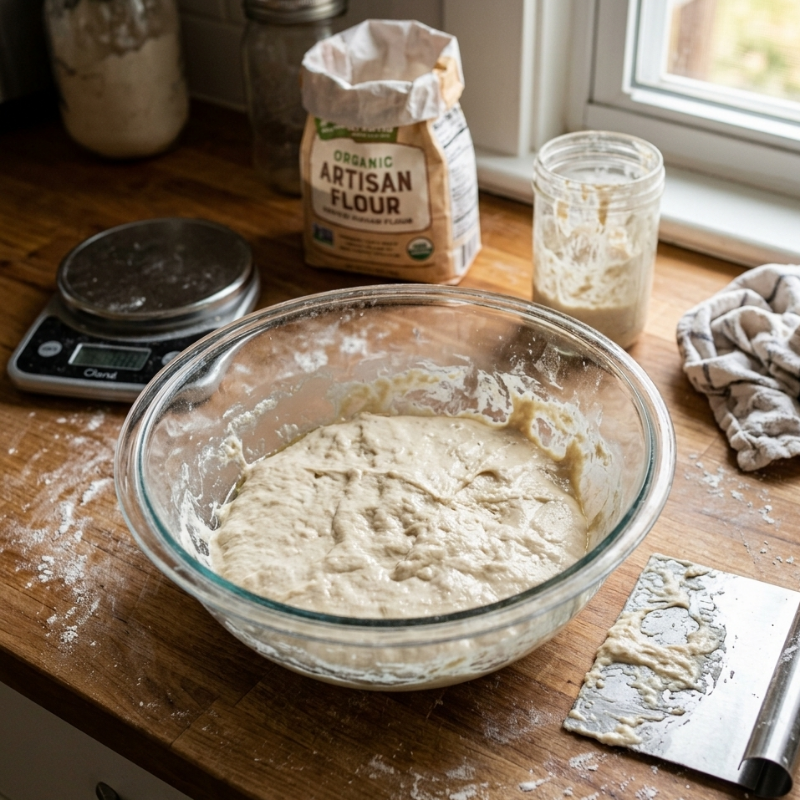 Rise & Structure ProblemsMastering the mechanics of a perfect rise.
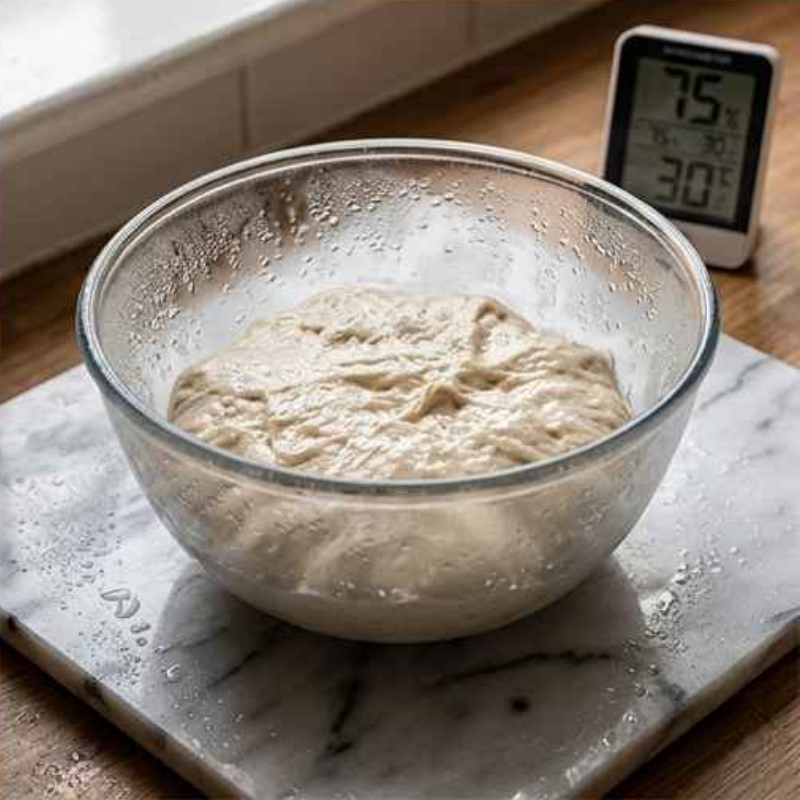 Sourdough in Hot, Humid ClimatesTaming wild yeast when the heat is on.
Swipe to see more categories
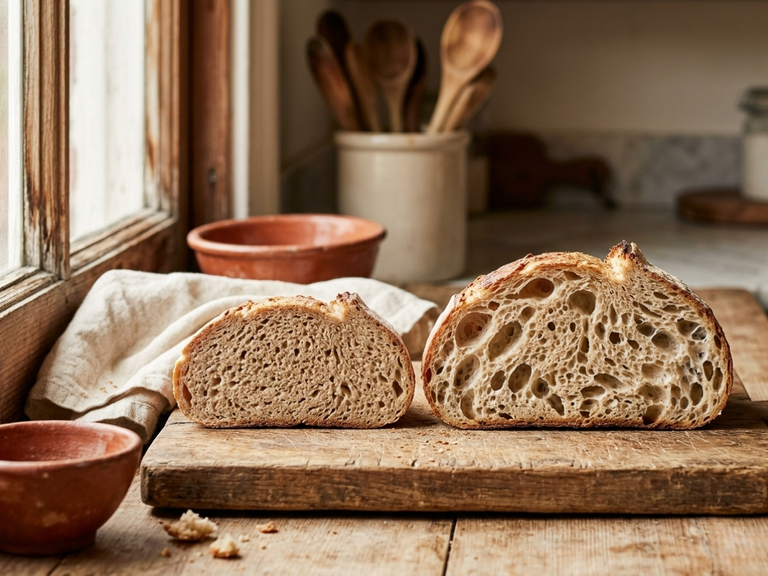
A dense, tight crumb usually traces back to a weak starter or a bulk ferment that ended too soon. Here’s how to diagnose the cause and bake a lighter, more open loaf next time.
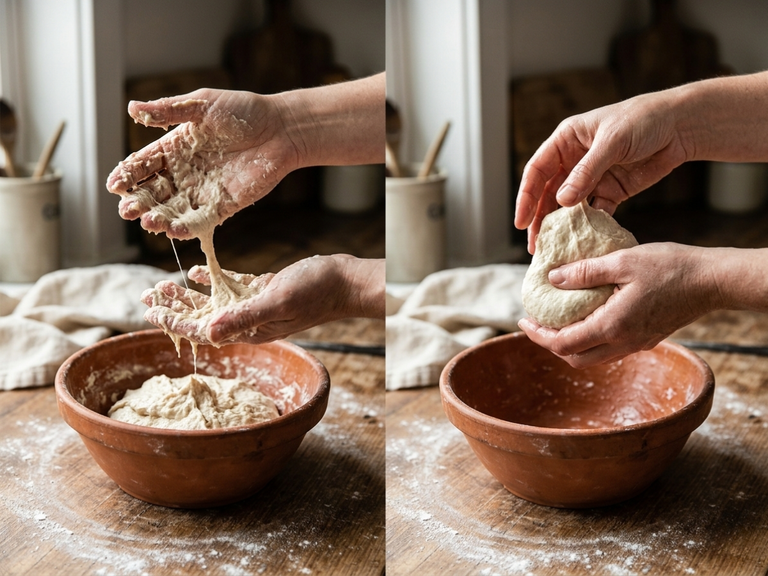
High-hydration dough is supposed to feel loose and tacky, but there’s a difference between that and dough that won’t leave your hands. Here’s how to handle it without dumping in extra flour.

A gummy, wet-looking crumb almost always points to underbaking or underproofing rather than a bad recipe. Here’s how to tell which one you’re dealing with and bake a properly set, open crumb.