
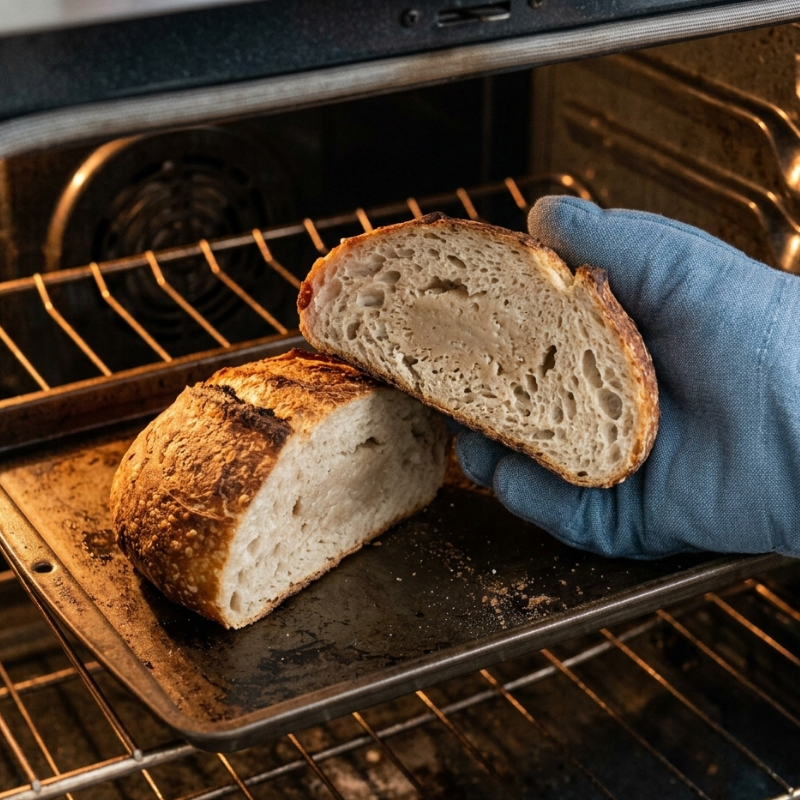
Gummy Sourdough Crumb: Causes and How to Fix It
A gummy, wet-looking crumb almost always points to underbaking or underproofing rather than a bad recipe. Here’s how to tell which one you’re dealing with and bake a properly set, open crumb.
Flat loaf? Sluggish starter? Dense crumb that won’t cooperate? Don’t panic – sourdough goes sideways for all of us sometimes. We’re here to help you balance things out and get back to baking bread you’re proud of.
Not sure where to start? Try the visual What’s Wrong With My Loaf? guide – match your symptom to the exact post in one click.
Find Your Fix
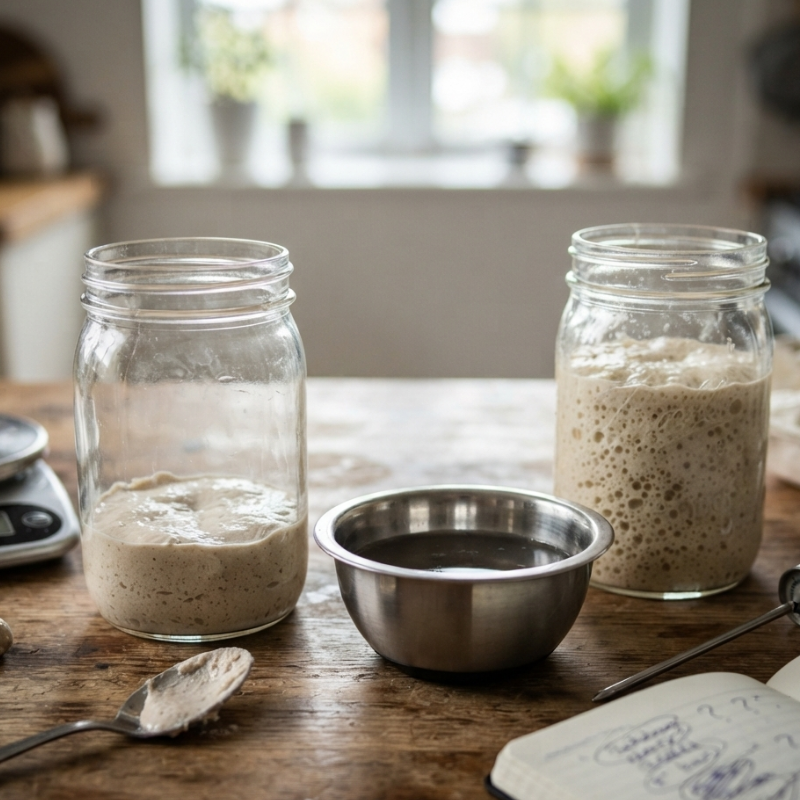 Starter ProblemsRescuing your rise when things go flat.
 Crust & ShapeCrafting the ultimate golden, crackly blister.
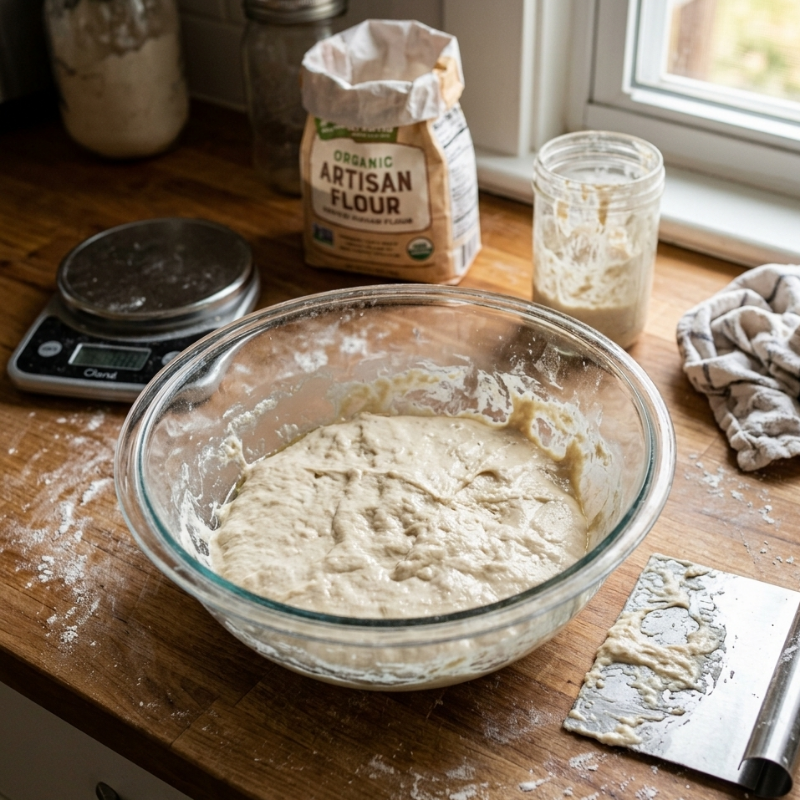 Rise & Structure ProblemsMastering the mechanics of a perfect rise.
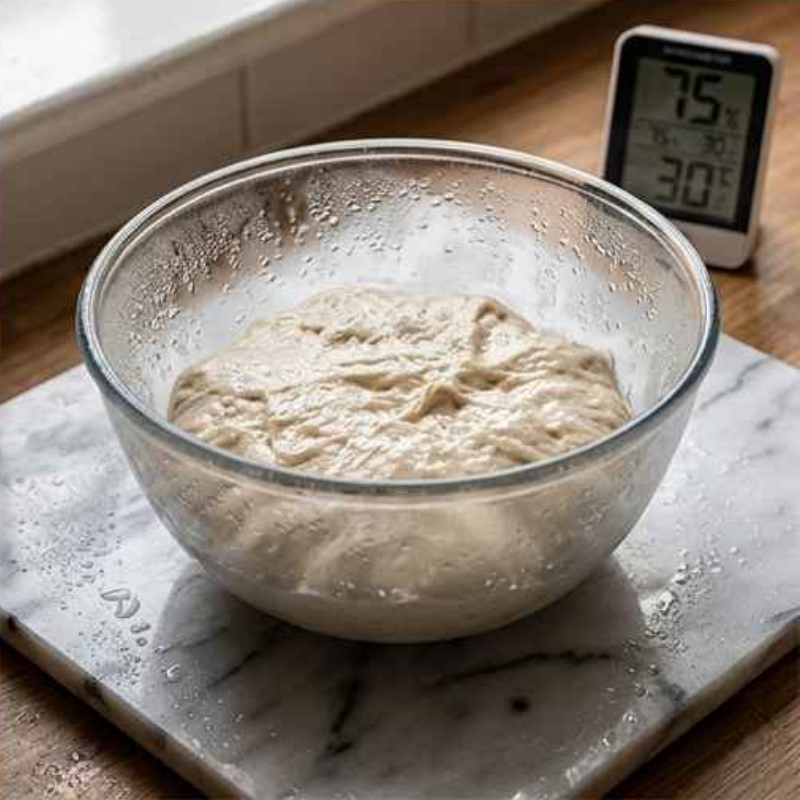 Sourdough in Hot, Humid ClimatesTaming wild yeast when the heat is on.
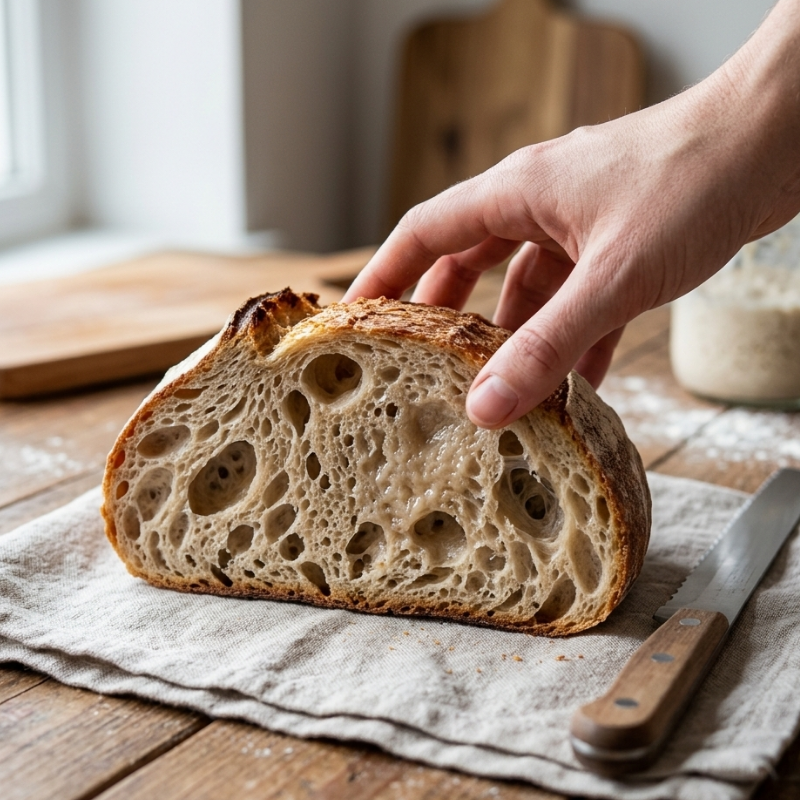 Crumb & TexturePerfecting the interior matrix of your loaf.
Swipe to see more categories
Curious about the craft behind the crumb? Peek behind the scenes in Starter 101 and Sourdough Science.

A gummy, wet-looking crumb almost always points to underbaking or underproofing rather than a bad recipe. Here’s how to tell which one you’re dealing with and bake a properly set, open crumb.

Guessing whether a loaf is overproofed or underproofed leads to inconsistent bakes. The poke test is the fastest, most reliable way to tell the two apart before the oven even turns on.

A loaf that spreads flat across the pan instead of standing tall is almost always a sign of weak gluten structure. Here’s how to build real strength into your dough so it holds its shape.

Watching a beautifully proofed loaf collapse the moment the blade touches it is one of the more heartbreaking sourdough moments. Here’s why overproofed dough does this, and how to catch it earlier.