
Einkorn Sourdough Hearth Bread
Einkorn is the oldest wheat still in cultivation – genetically closer to wild grass than anything in a modern bag of bread flour – and it bakes like a different grain entirely. This is a 100% whole einkorn hearth loaf, handled the way einkorn actually wants to be handled: short autolyse, gentle mixing, a fast-moving bulk ferment, and a lower, closer-watched bake.
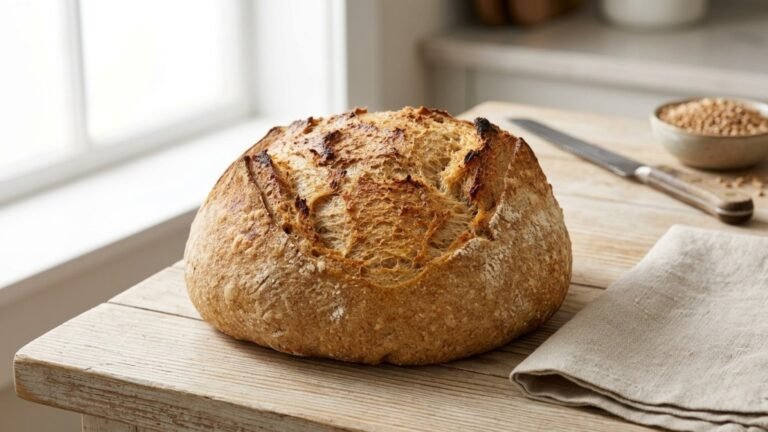
It comes out denser and more rustic than a wheat boule, with a nutty, faintly sweet flavor that’s genuinely distinct – not a lower-effort version of a wheat loaf, a different loaf entirely.
Why You’ll Love It
- 100% whole einkorn – the oldest wheat species still cultivated, genuinely distinct from modern flour
- A nutty, faintly sweet flavor unlike anything from a bag of bread flour
- A hands-on lesson in how fermentation speed changes with the grain, not just the schedule
- A realistic, achievable ancient-grain loaf – no specialty milling equipment required
- Ties directly into the site’s fermentation-science content if you want to go deeper
Ingredients
Volume measurements are included for convenience, but they’re approximate – for the most consistent results, weigh your ingredients on a kitchen scale, especially the flour.
- Whole einkorn flour (450 g / 3¾ cups)
- Water, cool room temperature (310 g / 1¼ cups + 2 Tbsp)
- Active sourdough starter (90 g / ⅓ cup)
- Fine sea salt (9 g / 1½ tsp)
Equipment
- Kitchen scale
- Dutch oven, 5-6 quart
- Banneton (proofing basket) with cloth liner
- Bench scraper
- Lame or a very sharp, thin blade
Sample Schedule (2-Day)
Day 1
- Mix and rest 20 minutes
- Add starter and salt; mix gently (5 minutes hands-on)
- Bulk ferment 3-3.5 hours with 2 gentle folds – watch closely, it moves fast
- Shape into a loose round
- Place in the banneton, cover, and refrigerate overnight
Day 2
- Preheat the oven with the Dutch oven inside
- Score straight from the fridge
- Bake covered, then uncovered
- Cool at least 1 hour before slicing

Einkorn Sourdough Hearth Bread
Method
- In a large bowl, mix the einkorn flour and water together by hand just until no dry flour remains. Cover and rest for 20 minutes – einkorn hydrates quickly, so it needs less autolyse time than wheat flour.
- Add the starter and salt. Mix gently by hand just until incorporated, about 2–3 minutes. Einkorn’s gluten tears rather than stretches, so avoid kneading – gentle folding does the work instead.
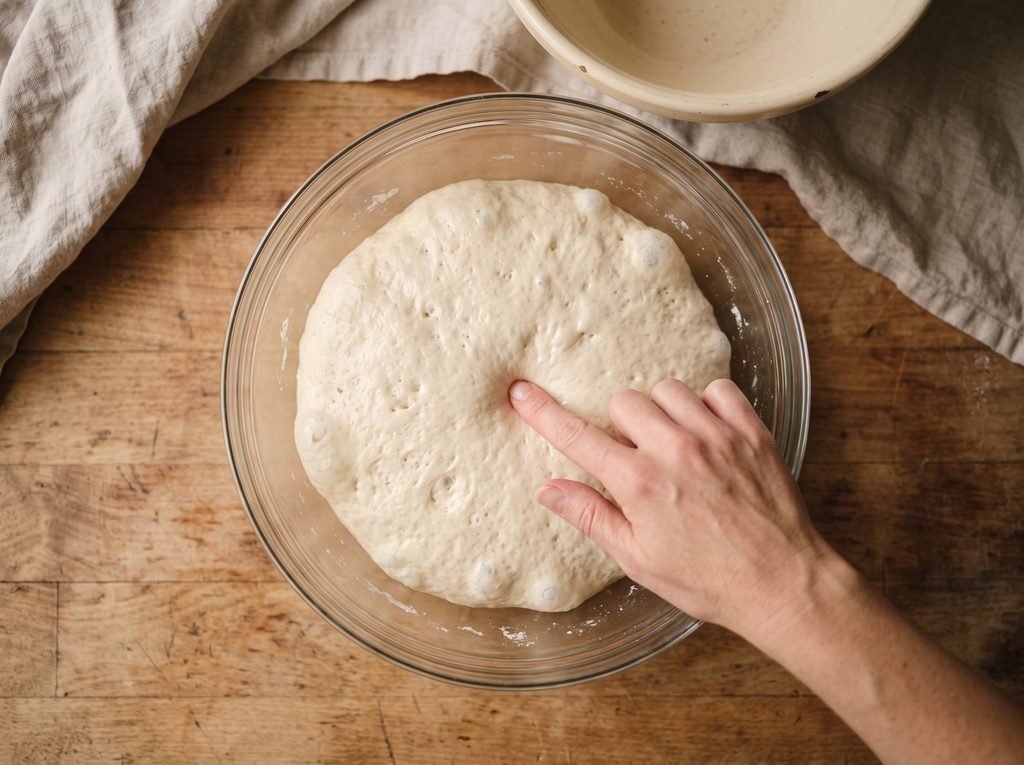
- Cover and bulk ferment at room temperature for 3–3.5 hours, with two gentle folds in the first hour. Watch it closely – einkorn ferments noticeably faster than wheat and overproofs easily. It’s ready when visibly puffy and airy at the edges, not doubled.
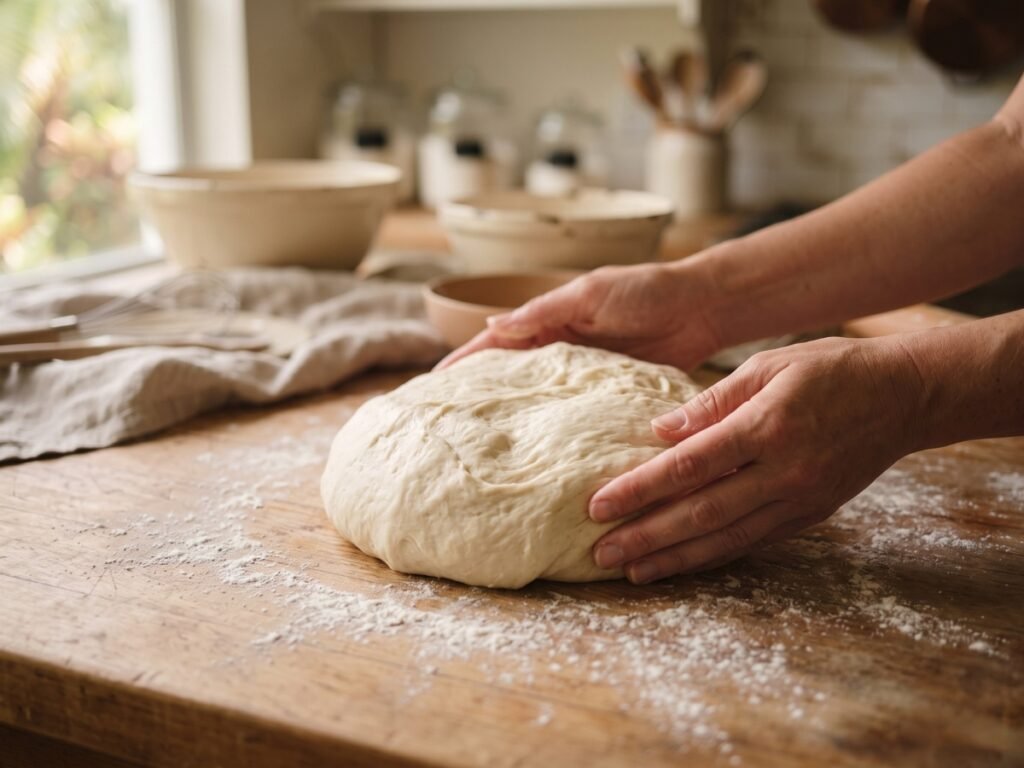
- Turn the dough out onto a lightly floured surface and shape gently into a round – it will feel looser and less taut than a wheat dough, which is normal.
- Place seam-side up in a well-floured banneton, cover, and refrigerate overnight (10–12 hours – don’t push much past this, since einkorn keeps fermenting even in the cold).
- The next day, preheat the oven to 400°F (205°C) with the Dutch oven inside for at least 30 minutes.
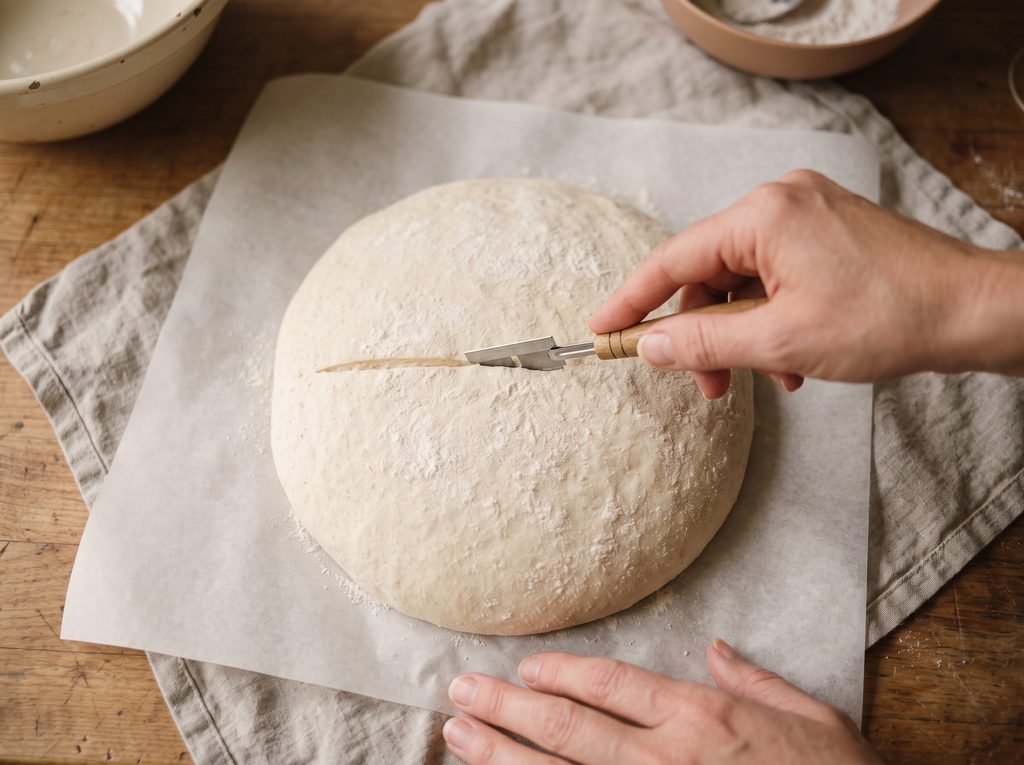
- Turn the cold dough out onto parchment paper and score with a simple cross or single slash.
- Lower the dough (on its parchment) into the hot Dutch oven, cover, and bake for 25 minutes.
- Remove the lid and bake another 15 minutes, until deeply golden. Einkorn browns faster than wheat, so watch the last few minutes closely and tent with foil if it’s coloring too fast.
- Cool on a wire rack at least 1 hour before slicing.
Notes
Save This Recipe
Get it emailed to you now, plus new recipes as they go up.
Your email is safe with me. I’ll send this recipe straight over. No spam, ever—and you can unsubscribe anytime.
How to Make It
1Mix and rest. In a large bowl, mix the einkorn flour and water together by hand just until no dry flour remains. Cover and rest for 20 minutes – einkorn hydrates quickly, so it needs less autolyse time than wheat flour.
2Add starter and salt. Add the starter and salt. Mix gently by hand just until incorporated, about 2-3 minutes. Einkorn’s gluten tears rather than stretches, so avoid kneading – gentle folding does the work instead.
3Bulk ferment – watch closely. Cover and bulk ferment at room temperature for 3-3.5 hours, with two gentle folds in the first hour. Watch it closely – einkorn ferments noticeably faster than wheat and overproofs easily. It’s ready when visibly puffy and airy at the edges, not doubled.
4Shape. Turn the dough out onto a lightly floured surface and shape gently into a round – it will feel looser and less taut than a wheat dough, which is normal.
5Refrigerate overnight. Place seam-side up in a well-floured banneton, cover, and refrigerate overnight (10-12 hours – don’t push much past this, since einkorn keeps fermenting even in the cold).
6Preheat. The next day, preheat the oven to 400°F (205°C) with the Dutch oven inside for at least 30 minutes.
7Score. Turn the cold dough out onto parchment paper and score with a simple cross or single slash.
8Bake, covered. Lower the dough (on its parchment) into the hot Dutch oven, cover, and bake for 25 minutes.
9Bake, uncovered. Remove the lid and bake another 15 minutes, until deeply golden. Einkorn browns faster than wheat, so watch the last few minutes closely and tent with foil if it’s coloring too fast.

10Cool. Cool on a wire rack at least 1 hour before slicing.
Tips & Troubleshooting
- It moves fast: einkorn ferments noticeably faster than modern wheat – check bulk fermentation earlier than you would for a wheat loaf, especially in a warm kitchen.
- Don’t chase a wheat-style rise: a denser, flatter, more rustic loaf is normal and expected for 100% einkorn, not a sign something went wrong.
- Keep the water measurement close to the gram: einkorn dough can go from workable to soupy with surprisingly little extra water.
- Lower and slower than a wheat boule: the 400°F bake here is intentionally cooler than the 475-500°F many wheat boules use – einkorn’s sugars brown faster and will scorch at wheat-loaf temperatures.
- Want the fermentation science behind why this dough behaves so differently? What Fermentation Actually Does to Your Flour goes deeper.
How to Store
To store: in a paper bag or bread box at room temperature up to 3 days.
To freeze: slice first, then freeze in an airtight bag up to 3 months; toast slices straight from frozen.
Nutrition
Per slice, based on 12 slices per loaf. Estimated from the ingredients used – provided for convenience and not a substitute for a precise calculation.
130
Calories
24g
Carbs
5g
Protein
1g
Fat
3g
Fiber
150mg
Sodium
Desi’s Notes
Einkorn is the oldest wheat species still in cultivation, basically unchanged since before agriculture as we know it existed, and it bakes like it – this loaf will not look like a tall, open-crumbed wheat boule, and that’s not a sign you did something wrong.
The single biggest mistake I made the first few times I baked with einkorn was treating the fermentation schedule like a wheat loaf. It moves fast. I’ve had bulk fermentation finish nearly an hour ahead of a wheat dough started at the same time, and over-proofed einkorn dough goes slack and hard to shape in a way that’s hard to recover from.
Baking it low and slow relative to a wheat boule keeps the crust from setting too dark before the inside catches up – einkorn’s sugars behave differently in the oven than modern wheat’s do.
Before You Bake
Scaling this recipe up or down? Run your numbers through the Sourdough Calculator. And since einkorn ferments on its own clock, What Fermentation Actually Does to Your Flour is worth a read before you start.
Knead to Know?
New recipes, baking tips, and sourdough troubleshooting — delivered before your starter even finishes its next rise.
Get the latest insights, no spam — just new recipes and baking tips. Unsubscribe anytime. See our Privacy Policy.




Tried this recipe? Leave a star rating below — it takes 10 seconds and helps other bakers decide what to make next.
Baked this recipe your way? Share it in Community Bakes and inspire other readers.