
Sourdough Sandwich Bread
This is the loaf that lives on my counter for actual sandwiches, not just show-off crust. Milk, butter, and a little honey soften the crumb and tame the sourdough tang, so it slices clean and doesn’t fight you when you’re building a lunch. It still gets its rise entirely from starter – no commercial yeast hiding in the ingredient list.
Why You’ll Love It
- A soft, tender crumb that slices thin without tearing – built for sandwiches, not just crusty snacking
- Milk and butter mellow the sourdough tang, so it’s friendly to picky eaters
- One 9×5 loaf pan does all the shaping work for you – no scoring, no banneton
- An overnight cold proof means you control exactly when it hits the oven
- Freezes beautifully in slices for effortless weekday toast
Ingredients
Volume measurements are included for convenience, but a kitchen scale will get you a far more consistent loaf, especially for the flour.
- Bread flour (600 g / 5 cups): the extra protein compared to all-purpose gives this enriched dough the structure it needs to hold a tall pan shape.
- Whole milk (240 g / 1 cup), lukewarm: adds tenderness and a faint richness. Dairy-free milk works, though the crumb will be a touch less soft.
- Active sourdough starter (150 g / ⅔ cup): needs to be bubbly and doubled before you mix.
- Honey (43 g / 2 Tbsp): a light sweetness that also helps the crust brown evenly.
- Unsalted butter (57 g / 4 Tbsp), softened: worked in after the initial mix so it doesn’t slow down gluten development.
- Fine sea salt (11 g / about 2 tsp): added with the second addition of flour, same as any of my other loaves.
Equipment
- Kitchen scale: enriched doughs are sensitive to hydration – weighing pays off here more than most recipes.
- 9×5-inch loaf pan: the size this recipe is written for. A different size will change your bake time and loaf height.
- Stand mixer with dough hook (optional): this dough can be mixed by hand, but a mixer saves your arm during the enrichment stage.
- Shower cap or reusable bowl cover: keeps the dough from drying out or forming a skin overnight.
- Instant-read thermometer: the most reliable way to know an enriched loaf is fully baked without over-browning the crust.
Sample Schedule (2-Day)
Day 1
- Mix the dough (about 15 minutes hands-on)
- Bulk ferment 4-5 hours at room temperature, until puffy and risen about 50%
- Shape into a loaf and place in a greased 9×5 pan
- Cover and refrigerate overnight
Day 2
- Let the pan sit at room temperature 45-60 minutes while the oven preheats
- Bake 35-40 minutes until deep golden and 205°F internal
- Cool in the pan 10 minutes, then turn out onto a rack
- Cool at least 1 hour before slicing

Sourdough Sandwich Bread
Method
- Whisk lukewarm milk, active starter, and honey together in a large bowl until the starter is mostly dissolved.
- Mix in about half the flour, then the salt, then the remaining flour until a rough dough forms.
- Work in the softened butter in two additions, then knead about 8 minutes until smooth and elastic.
- Cover and bulk ferment 4–5 hours at room temperature, until risen about 50%.
- Shape into a loaf and place seam-side down in a greased 9×5-inch pan.
- Cover and refrigerate overnight, 10–14 hours.
- The next day, let the pan sit at room temperature 45–60 minutes while the oven preheats to 375°F.
- Bake 35–40 minutes until deeply golden and 205°F internal, tenting with foil if it browns too quickly.
- Cool in the pan 10 minutes, then turn out onto a rack and cool at least 1 hour before slicing.
Notes
Save This Recipe
Get it emailed to you now, plus new recipes as they go up.
Your email is safe with me. I’ll send this recipe straight over. No spam, ever—and you can unsubscribe anytime.
How to Make It
1Mix the wet ingredients and starter. In a large bowl or stand mixer bowl, whisk together 240 g (1 cup) lukewarm whole milk, 150 g (⅔ cup) active starter, and 43 g (2 Tbsp) honey until the starter is mostly dissolved.
2Add the flour and salt. Add about 300 g (2½ cups) of the bread flour and mix until a shaggy dough forms. Add 11 g (about 2 tsp) salt, then the remaining 300 g (2½ cups) flour, and mix or knead until the dough comes together into a rough ball.
3Work in the butter. Add the 57 g (4 Tbsp) softened butter in two additions, mixing or kneading until each is fully absorbed before adding the next. Continue kneading – by hand or mixer – for about 8 minutes, until the dough is smooth, elastic, and only slightly tacky.
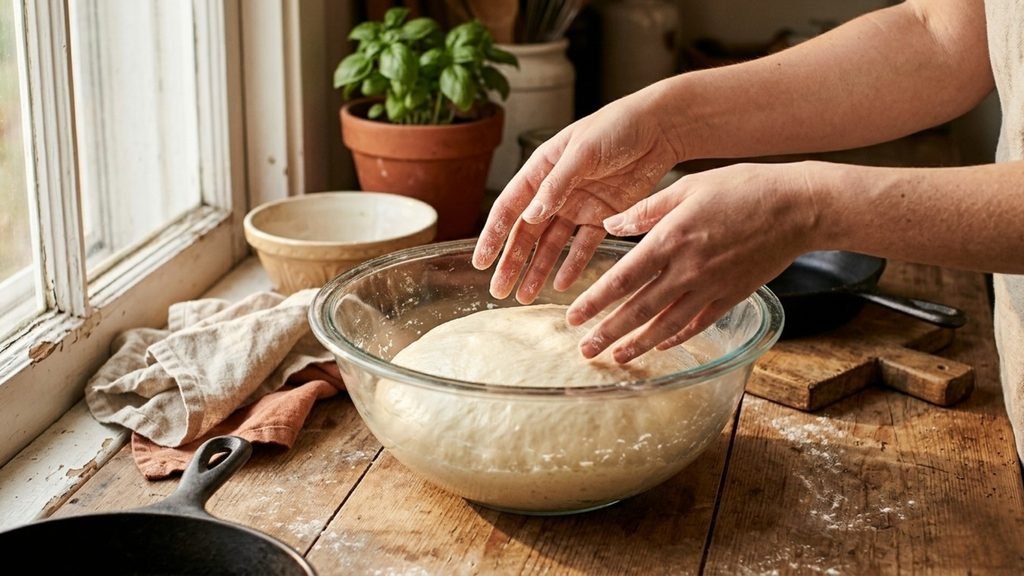
4Bulk ferment. Cover the bowl and let the dough rise at room temperature for 4 to 5 hours, until noticeably puffy and risen by about 50%. In a warm kitchen this can move faster, so check at the 3-hour mark.
5Shape the loaf. Turn the dough out onto a lightly floured counter. Pat it into a rough rectangle about as wide as your loaf pan is long, then roll it up tightly from one short end, pinching the seam closed as you go.
6Place in the pan. Grease a 9×5-inch loaf pan and place the dough seam-side down inside it. Press it gently so it fills the corners evenly.
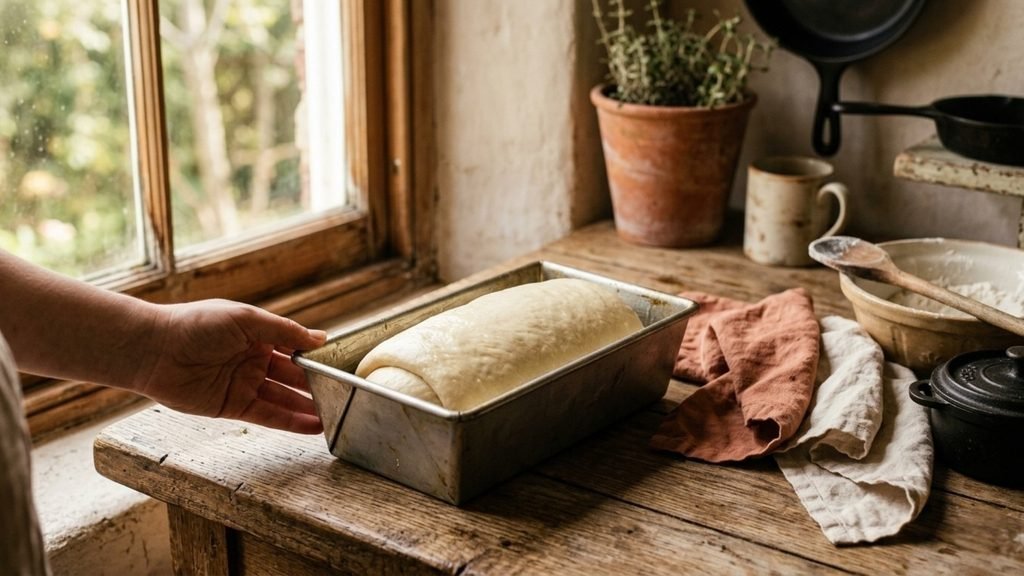
7Cold proof overnight. Cover the pan and refrigerate overnight, 10 to 14 hours. The dough will rise slowly and develop flavor while you sleep.
8Warm up and preheat. The next day, take the pan out of the fridge and let it sit at room temperature for 45 to 60 minutes while your oven preheats to 375°F. The dough should look domed and jiggle slightly when the pan is nudged.
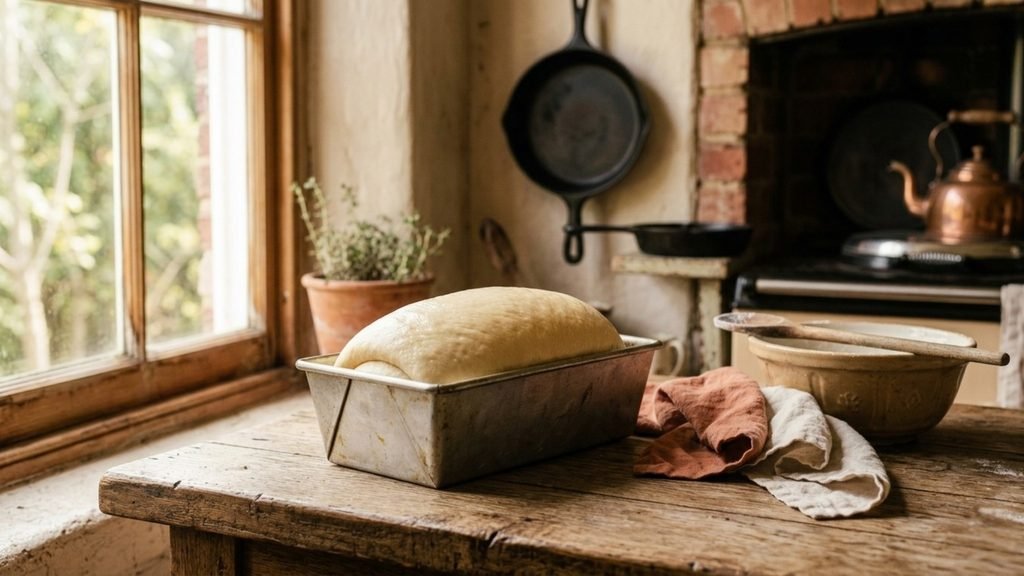
9Bake. Bake for 35 to 40 minutes, tenting loosely with foil after the first 20 minutes if the top is browning quickly. It’s done when deeply golden and an instant-read thermometer inserted into the center reads about 205°F.
10Cool before slicing. Let the loaf cool in the pan for 10 minutes, then turn it out onto a wire rack. Resist slicing until it’s cooled for at least an hour – enriched doughs are especially prone to gumminess if cut too soon.

Tips & Troubleshooting
- Room temperature matters more than the clock: in a hot, humid kitchen, bulk ferment can finish closer to 3 hours – watch the dough, not the timer.
- Butter softened, not melted: melted butter can make the dough greasy and slow gluten development. Let it sit at room temperature until it dents easily with a finger.
- Internal temp beats guessing: 205°F is the most reliable doneness signal for an enriched loaf – the crust can look done well before the center is fully baked.
- If the top browns too fast: a loose foil tent after 20 minutes protects the crust while the inside finishes baking.
How to Store
To store: keep in a bread bag or airtight container at room temperature for up to 4 days. The butter and milk in this dough help it stay soft longer than a lean loaf.
To freeze: slice the whole loaf once fully cooled, then freeze the slices in a zip-top bag with parchment between layers. Pull out what you need and toast straight from frozen.
Nutrition
Per slice, based on 14 slices per loaf. Estimated from the ingredients used – provided for convenience and not a substitute for a precise calculation.
165
CALORIES
29
CARBS (G)
5
PROTEIN (G)
3
FAT (G)
2
SAT. FAT (G)
1
FIBER (G)
3
SUGAR (G)
190
SODIUM (MG)
Desi’s Notes
I get asked constantly for a sourdough loaf that doesn’t taste like sourdough, and this is my answer. The milk and honey round off the tang so much that people who swear they don’t like sourdough usually can’t tell this one apart from a bakery sandwich loaf.
Don’t skip the overnight cold proof if you can help it – an enriched dough baked straight after bulk fermenting tends to be denser and less evenly risen. The slow, cold rise gives the gluten time to relax into the pan shape.
Before You Bake
Scaling this recipe up or down? Run your numbers through the Sourdough Calculator. And if you want a printable reference for troubleshooting or timing, browse all six Printable Quicksheets.
Knead to Know?
New recipes, baking tips, and sourdough troubleshooting — delivered before your starter even finishes its next rise.
Get the latest insights, no spam — just new recipes and baking tips. Unsubscribe anytime. See our Privacy Policy.




Tried this recipe? Leave a star rating below — it takes 10 seconds and helps other bakers decide what to make next.
Baked this recipe your way? Share it in Community Bakes and inspire other readers.