
Sourdough Spelt Sandwich Loaf
Spelt is an ancient grain with a genuinely different personality than modern wheat – nuttier, slightly sweet, and built around a gluten structure that’s fragile rather than strong. This loaf leans into that instead of fighting it: gentle mixing, gentle folds, and a quiet overnight rest in the fridge before it bakes into a tall, tender sandwich loaf.
It’s mostly whole spelt flour, with just enough bread flour blended in to give it the structure to rise properly in a pan – genuinely whole-grain, not a token gesture.
Why You’ll Love It
- A genuinely whole-grain sandwich loaf – mostly whole spelt flour, not a dusting of it
- Spelt’s nutty, slightly sweet flavor that plain wheat sandwich bread doesn’t have
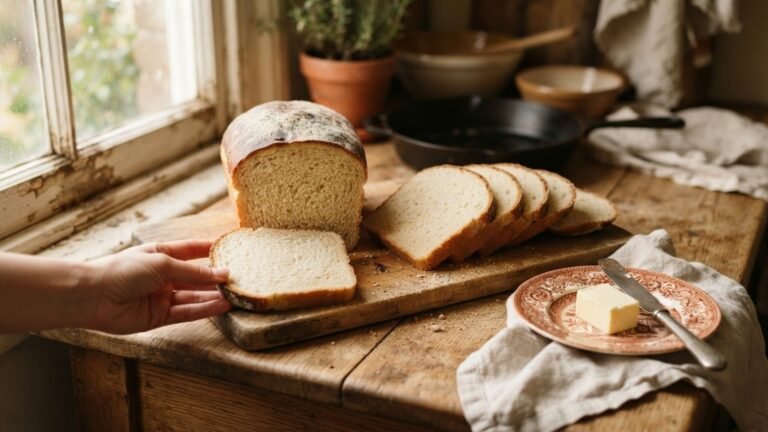
- A soft, tender crumb from a touch of honey and butter, still sliceable for sandwiches
- An overnight cold proof that fits around a normal schedule
- A great entry point into ancient grains if you’ve only ever baked with bread flour
Ingredients
Volume measurements are included for convenience, but they’re approximate – for the most consistent results, weigh your ingredients on a kitchen scale, especially the flour.
- Whole spelt flour (350 g / 2¾ cups)
- Bread flour (150 g / 1¼ cups): for structure – see Tips
- Water, room temperature (320 g / 1⅓ cups)
- Active sourdough starter (100 g / ⅓ cup + 1 Tbsp)
- Fine sea salt (10 g / 1¾ tsp)
- Honey (20 g / 1 Tbsp)
- Unsalted butter, softened (30 g / 2 Tbsp)
Equipment
- 9×5-inch loaf pan
- Kitchen scale
- Bench scraper
- Instant-read thermometer (optional, but the most reliable doneness test)
- Plastic wrap or a reusable bowl cover
Sample Schedule (2-Day)
Day 1
- Mix and autolyse 30 minutes
- Add salt, honey, and butter; mix gently (5 minutes hands-on)
- Bulk ferment 4-5 hours with 2 gentle folds early on
- Shape and place in the loaf pan
- Cover and refrigerate overnight
Day 2
- Let the pan sit at room temperature 45-60 minutes
- Score and bake
- Cool completely before slicing

Sourdough Spelt Sandwich Loaf
Method
- In a large bowl, mix the spelt flour, bread flour, and water together by hand just until no dry flour remains. Cover and rest (autolyse) for 30 minutes.
- Add the starter, salt, honey, and softened butter. Mix gently just until fully incorporated – a few minutes by hand is plenty. Avoid kneading hard or long; spelt’s gluten is fragile and breaks down with too much handling.
- Cover and bulk ferment at room temperature for 4–5 hours, giving the dough two gentle folds (fold each side in toward the center) in the first 2 hours, then leaving it undisturbed. It should look puffy and about 40–50% risen, not doubled.
- Turn the dough out onto a lightly floured surface and shape gently into a log the length of your loaf pan. Place seam-side down in a greased 9×5-inch loaf pan.
- Cover and refrigerate overnight (8–12 hours).
- The next day, let the pan sit at room temperature for 45–60 minutes while the oven preheats to 375°F (190°C). The dough should crest just above the rim of the pan before it goes in.
- Score the top lightly with a single lengthwise slash and bake for 35–40 minutes, tenting loosely with foil after 20 minutes if the top is browning too quickly.
- The loaf is done when it sounds hollow when tapped and reads 195–200°F (90–93°C) in the center.
- Turn out onto a wire rack and cool completely, at least 1 hour, before slicing.
Notes
Save This Recipe
Get it emailed to you now, plus new recipes as they go up.
Your email is safe with me. I’ll send this recipe straight over. No spam, ever—and you can unsubscribe anytime.
How to Make It
1Mix and autolyse. In a large bowl, mix the spelt flour, bread flour, and water together by hand just until no dry flour remains. Cover and rest (autolyse) for 30 minutes.
2Add the rest, gently. Add the starter, salt, honey, and softened butter. Mix gently just until fully incorporated – a few minutes by hand is plenty. Avoid kneading hard or long; spelt’s gluten is fragile and breaks down with too much handling.
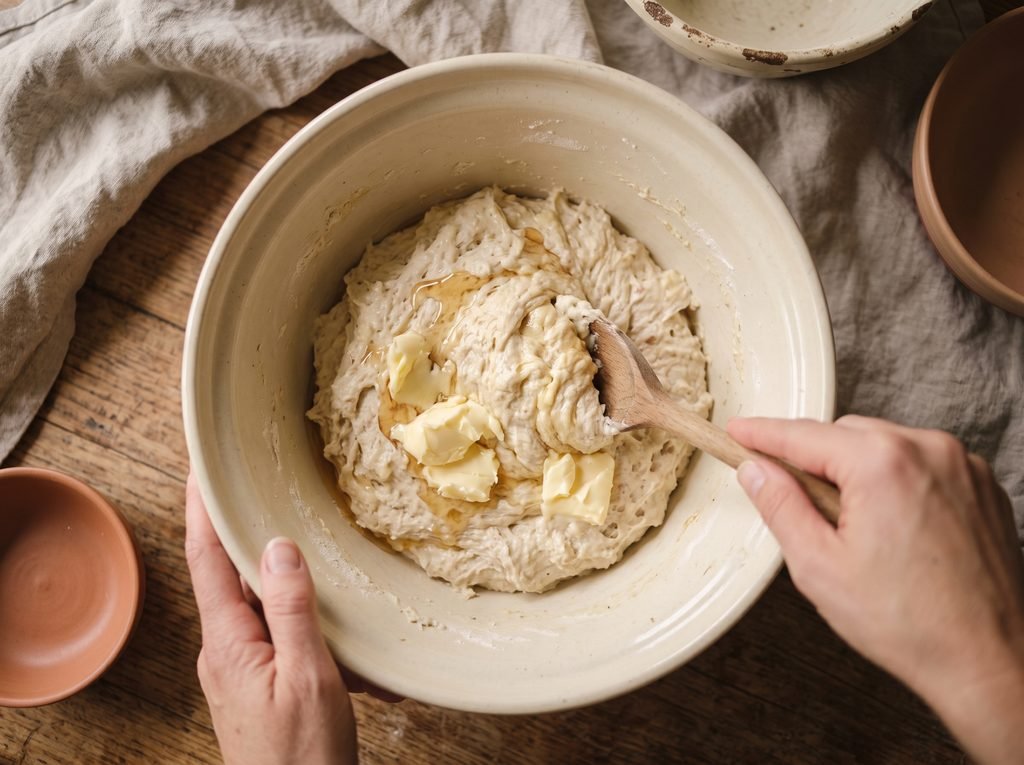
3Bulk ferment. Cover and bulk ferment at room temperature for 4-5 hours, giving the dough two gentle folds (fold each side in toward the center) in the first 2 hours, then leaving it undisturbed. It should look puffy and about 40-50% risen, not doubled.
4Shape. Turn the dough out onto a lightly floured surface and shape gently into a log the length of your loaf pan. Place seam-side down in a greased 9×5-inch loaf pan.
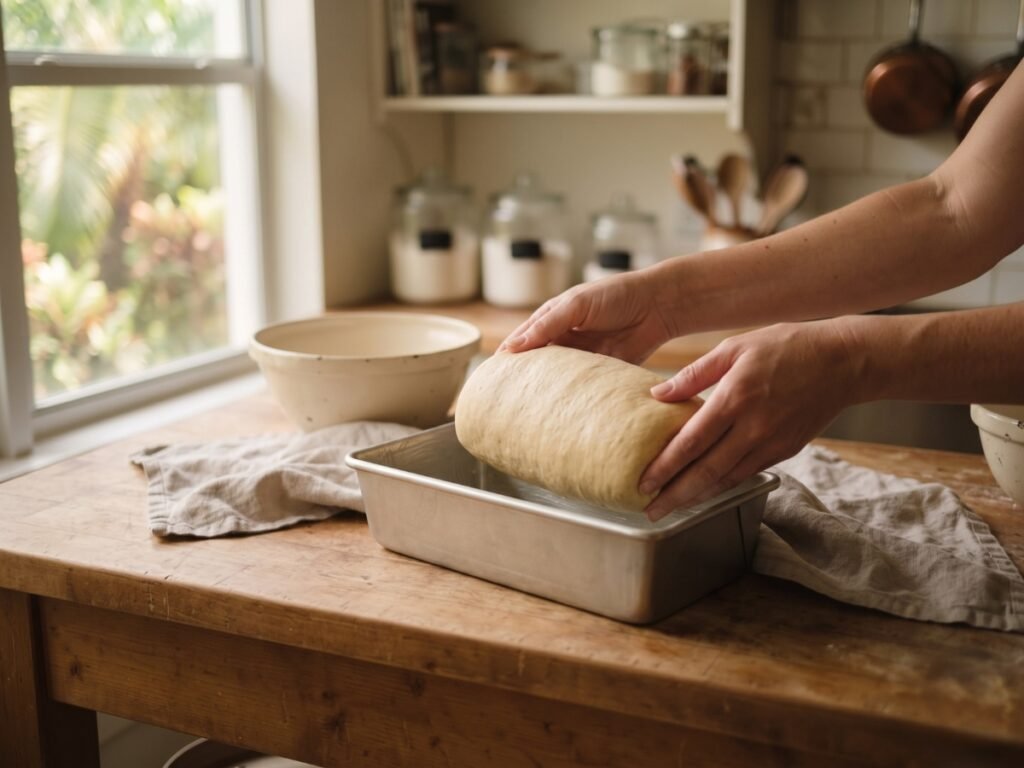
5Refrigerate overnight. Cover and refrigerate overnight (8-12 hours).
6Take off the chill. The next day, let the pan sit at room temperature for 45-60 minutes while the oven preheats to 375°F (190°C). The dough should crest just above the rim of the pan before it goes in.
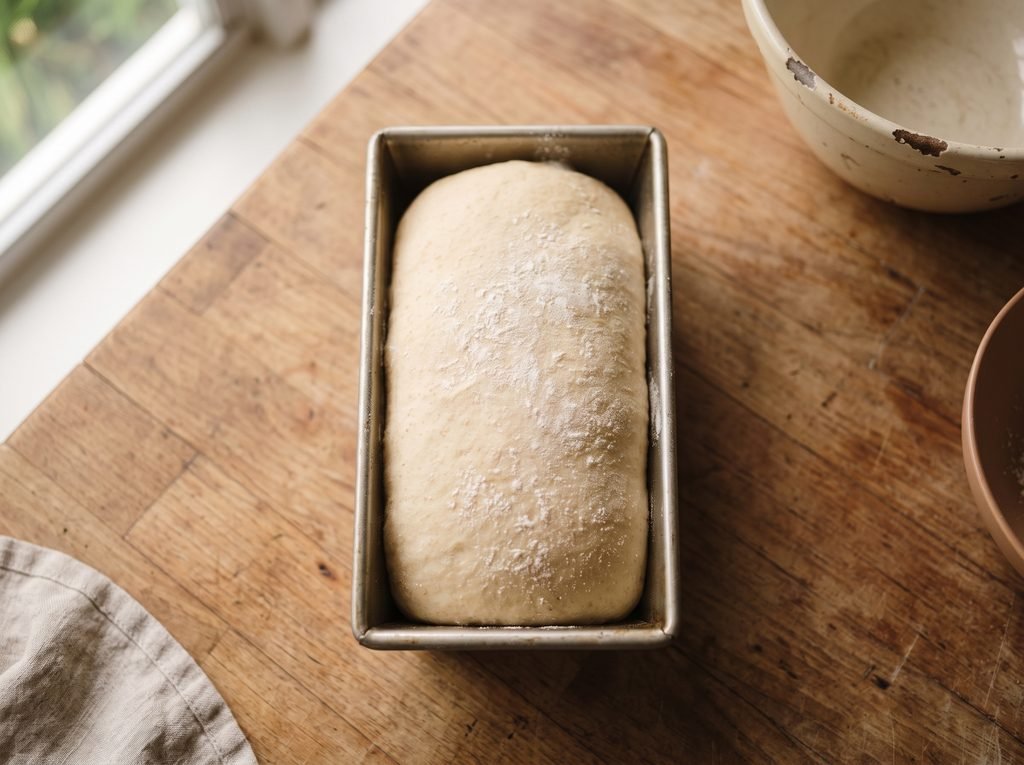
7Score and bake. Score the top lightly with a single lengthwise slash and bake for 35-40 minutes, tenting loosely with foil after 20 minutes if the top is browning too quickly.
8Check doneness. The loaf is done when it sounds hollow when tapped and reads 195-200°F (90-93°C) in the center.
9Cool. Turn out onto a wire rack and cool completely, at least 1 hour, before slicing.

Tips & Troubleshooting
- Don’t overwork the dough: spelt’s gluten is fragile and breaks down with too much kneading or folding – mix and fold gently and stop as soon as things come together.
- Why the bread flour: 100% whole spelt can struggle to hold its shape in a tall pan loaf; the quarter of bread flour here gives it just enough backbone without diluting the whole-grain flavor much.
- Trust the thermometer over the clock: spelt loaves can look done on the outside before the crumb has fully set – 195-200°F in the center is the reliable test.
- Curious why spelt behaves so differently from bread flour? The site’s Ash Content article walks through why.
- No fridge space overnight: you can skip the cold retard and let the shaped loaf proof at room temperature for 2-3 hours instead, until it crests the pan, then bake.
How to Store
To store: keep sliced or whole in a bread bag at room temperature up to 4 days.
To freeze: slice first, then freeze in an airtight bag up to 3 months; toast slices straight from frozen.
Nutrition
Per slice, based on 12 slices per loaf. Estimated from the ingredients used – provided for convenience and not a substitute for a precise calculation.
140
Calories
26g
Carbs
5g
Protein
2g
Fat
3g
Fiber
190mg
Sodium
Desi’s Notes
Spelt was the first whole grain flour that made me actually understand what “fragile gluten” means – treat this dough like wheat dough and you’ll overwork it into a gummy, dense loaf. Handle it gently and it rewards you with a genuinely tender, nutty crumb.
I don’t bake with 100% whole spelt here. A quarter of the flour is bread flour, just enough to give the loaf the structure to rise tall in a pan – this is still a whole-grain-forward loaf, not a compromise.
The honey and butter aren’t traditional to every spelt loaf, but they’re what make this one genuinely work as a sandwich bread instead of a rustic hearth loaf – soft enough for a lunchbox sandwich, not just toast.
Before You Bake
Scaling this recipe up or down? Run your numbers through the Sourdough Calculator. And if you’re curious why whole grains like spelt behave so differently in the oven, read Ash Content: The Flour Number Nobody Explains.
Knead to Know?
New recipes, baking tips, and sourdough troubleshooting — delivered before your starter even finishes its next rise.
Get the latest insights, no spam — just new recipes and baking tips. Unsubscribe anytime. See our Privacy Policy.




Tried this recipe? Leave a star rating below — it takes 10 seconds and helps other bakers decide what to make next.
Baked this recipe your way? Share it in Community Bakes and inspire other readers.