
Sourdough Discard Irish Soda Bread
This isn’t a fermented bread – there’s no rise to wait on here, just baking soda and the acid in buttermilk and sourdough discard doing fast, reliable work. It’s the quickest way on this site to turn a cup of discard into something worth putting on the table, start to finish in under an hour.
A deep cross cut into the top and a quick bake in a hot oven gives it a great craggy, rustic crust – genuinely different from every other loaf in the Discard Recipes lineup.
Why You’ll Love It
- No fermentation wait at all – mix, shape, and bake in under an hour
- A great way to use up a cup of sourdough discard with zero planning ahead
- A genuinely different regional bread from anything else in the catalog
- A craggy, rustic crust from a technique (cutting in cold butter) most sourdough bakers haven’t tried
- Best served the day it’s baked, still faintly warm, with good butter
Ingredients
Volume measurements are included for convenience, but they’re approximate – for the most consistent results, weigh your ingredients on a kitchen scale, especially the flour.
- All-purpose flour (420 g / 3½ cups)
- Baking soda (9 g / 1¾ tsp)
- Fine sea salt (9 g / 1½ tsp)
- Granulated sugar (25 g / 2 Tbsp)
- Cold unsalted butter, cubed (50 g / ¼ cup)
- Sourdough discard, unfed (240 g / 1 cup)
- Buttermilk, cold (180 g / ¾ cup)
Equipment
- Kitchen scale
- Large mixing bowl
- Pastry cutter or two forks, for cutting in the butter
- Baking sheet
- Sharp knife, for scoring the cross
Sample Schedule (Same Day)
Same Day
- Mix the dough (15 minutes)
- Shape and score
- Bake 40-45 minutes
- Cool 20-30 minutes, then serve warm

Sourdough Discard Irish Soda Bread
Method
- Preheat the oven to 400°F (205°C) and line a baking sheet with parchment.
- In a large bowl, whisk together the flour, baking soda, salt, and sugar.
- Cut the cold butter into the dry ingredients with a pastry cutter or two forks until the mixture looks like coarse crumbs, with pieces no bigger than a pea.
- In a separate bowl or large measuring cup, whisk the sourdough discard and buttermilk together until smooth.
- Pour the wet mixture into the dry ingredients and stir with a fork or spatula just until a shaggy, sticky dough comes together. Don’t overmix – a rough, craggy dough is exactly right.
- Turn the dough out onto a floured surface and gently pat (don’t knead) into a round about 7–8 inches across and roughly 2 inches thick.
- Transfer to the prepared baking sheet and cut a deep cross into the top with a sharp knife, about ¾ inch deep.
- Bake for 40–45 minutes, until deeply golden brown and the loaf sounds hollow when tapped on the bottom (an internal temperature of 200–205°F is the most reliable test).
- Cool on a wire rack at least 20–30 minutes before slicing. Soda bread is traditionally served while still warm.
Notes
Save This Recipe
Get it emailed to you now, plus new recipes as they go up.
Your email is safe with me. I’ll send this recipe straight over. No spam, ever—and you can unsubscribe anytime.
How to Make It
1Preheat. Preheat the oven to 400°F (205°C) and line a baking sheet with parchment.
2Mix the dry ingredients. In a large bowl, whisk together the flour, baking soda, salt, and sugar.
3Cut in the butter. Cut the cold butter into the dry ingredients with a pastry cutter or two forks until the mixture looks like coarse crumbs, with pieces no bigger than a pea.

4Mix the wet ingredients. In a separate bowl or large measuring cup, whisk the sourdough discard and buttermilk together until smooth.
5Combine. Pour the wet mixture into the dry ingredients and stir with a fork or spatula just until a shaggy, sticky dough comes together. Don’t overmix – a rough, craggy dough is exactly right.
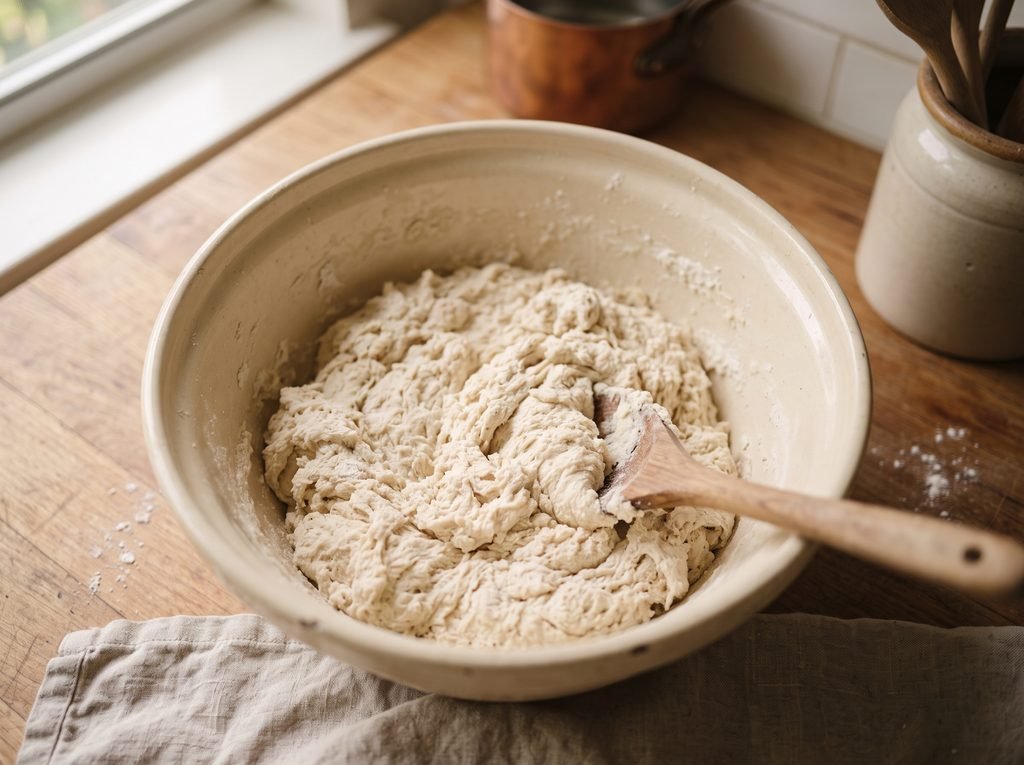
6Shape. Turn the dough out onto a floured surface and gently pat (don’t knead) into a round about 7-8 inches across and roughly 2 inches thick.
7Score. Transfer to the prepared baking sheet and cut a deep cross into the top with a sharp knife, about ¾ inch deep.
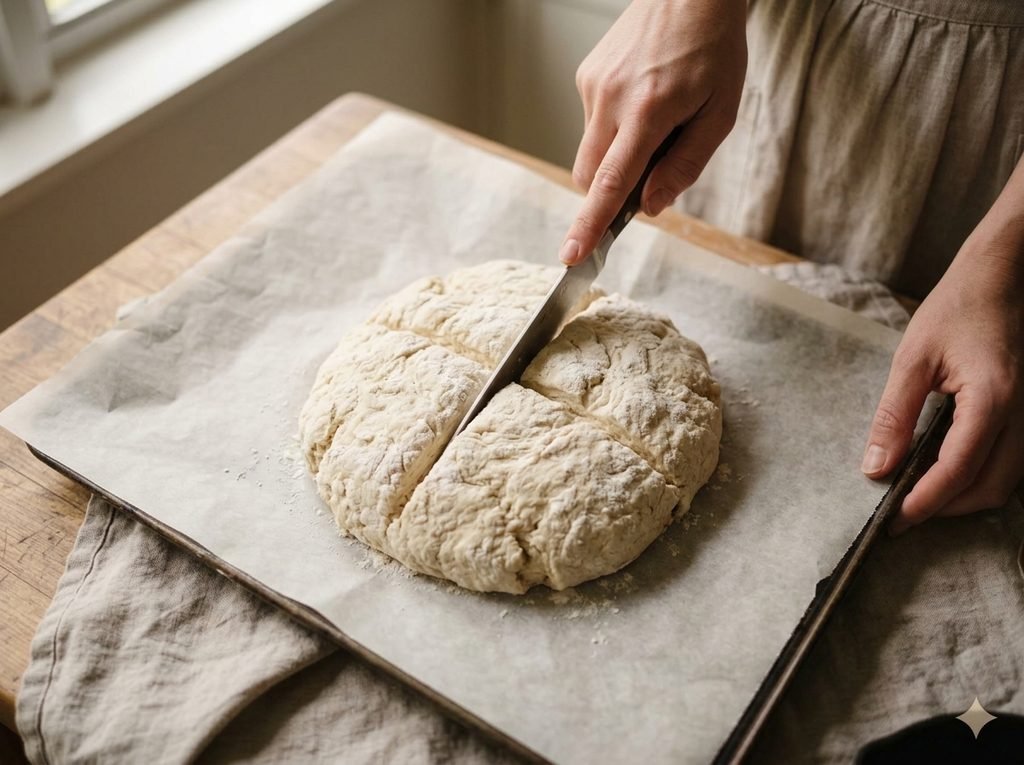
8Bake. Bake for 40-45 minutes, until deeply golden brown and the loaf sounds hollow when tapped on the bottom (an internal temperature of 200-205°F is the most reliable test).
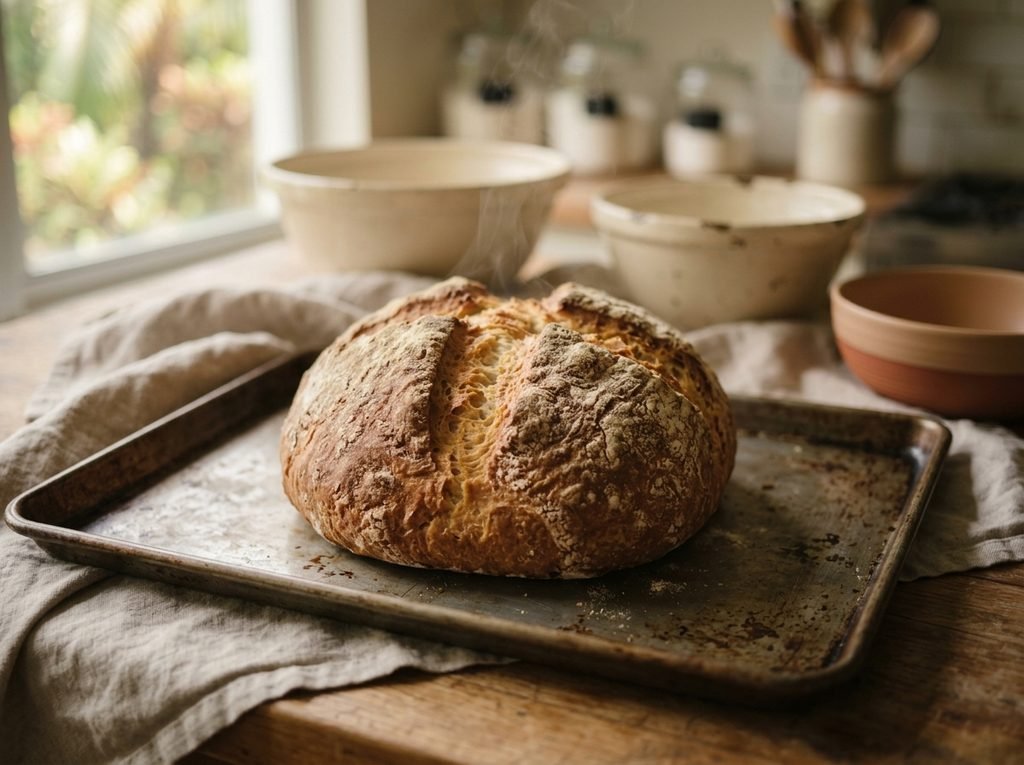
9Cool and serve. Cool on a wire rack at least 20-30 minutes before slicing. Soda bread is traditionally served while still warm.
Tips & Troubleshooting
- Don’t overmix: soda bread toughens the same way biscuits do – stir just until it comes together and stop.
- Want the traditional “Spotted Dog” version? Fold in 75 g (½ cup) dried currants and 1 Tbsp caraway seeds with the wet ingredients.
- Whole wheat swap: replacing up to half the all-purpose flour with whole wheat gives a heartier, more traditional crumb – add an extra splash of buttermilk if the dough feels dry.
- Discard doesn’t need to be active: plain, unfed discard straight from the fridge is exactly right here – the baking soda does all the lifting.
- Cut the cross deep: a shallow score won’t open up properly in the oven and the center can end up underbaked.
How to Store
To store: wrapped at room temperature up to 2 days – soda bread is best the day it’s made and dries out faster than a yeasted loaf.
To freeze: wrap the cooled loaf tightly and freeze up to 2 months; thaw and warm in the oven before serving.
Nutrition
Per wedge, based on 10 wedges per loaf. Estimated from the ingredients used – provided for convenience and not a substitute for a precise calculation.
190
Calories
32g
Carbs
5g
Protein
5g
Fat
1g
Fiber
260mg
Sodium
Desi’s Notes
Soda bread isn’t really sourdough – there’s no fermentation happening here, the baking soda and the acid in the buttermilk and discard do all the lifting, fast. I still think it earns a place on a sourdough site: it’s the single best way to use up a cup of discard when you don’t want to wait for anything to rise.
The cross cut into the top isn’t just tradition (though the old story is that it lets the fairies out) – it also helps a thick, dense dough like this bake through more evenly.
Don’t overwork this dough. It should look a little rough and craggy going into the oven. A soda bread that’s been kneaded smooth like a yeasted loaf comes out tough instead of tender.
Before You Bake
Scaling this recipe up or down? Run your numbers through the Sourdough Calculator. And if you’re sitting on more discard than this recipe uses, the Starter Feeding & Discard Log can help you keep track of what to use next.
Knead to Know?
New recipes, baking tips, and sourdough troubleshooting — delivered before your starter even finishes its next rise.
Get the latest insights, no spam — just new recipes and baking tips. Unsubscribe anytime. See our Privacy Policy.




Tried this recipe? Leave a star rating below — it takes 10 seconds and helps other bakers decide what to make next.
Baked this recipe your way? Share it in Community Bakes and inspire other readers.