
Swedish Sourdough Rye Crispbread (Knäckebröd)
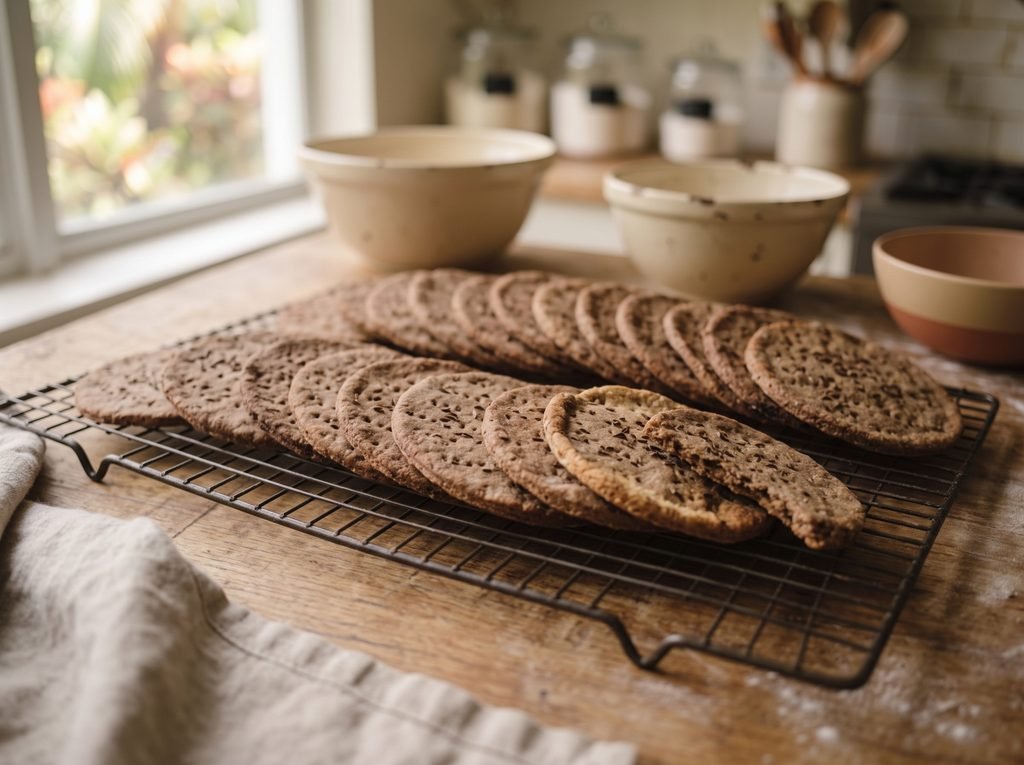
Knäckebröd is a Swedish pantry staple that predates refrigeration – a naturally leavened rye dough rolled paper-thin, docked all over, and baked until it shatters like a cracker. It’s about as far from the site’s rustic hearth loaves as a recipe can get, and it’s a format this site hasn’t touched at all.
A real sourdough ferment goes into the dough here, but it’s working for flavor rather than lift – this one isn’t judged by how tall it rises, but by how thin and evenly crisp it bakes.
Why You’ll Love It
- A completely different bread format from anything else on the site – thin, crisp, and cracker-like
- A real sourdough ferment for genuine depth of flavor, not just a fast cracker dough
- Keeps for weeks in an airtight container – genuinely make-ahead pantry food
- A great way to use up rye flour beyond another loaf
- An easy, low-stakes way to try Scandinavian baking for the first time
Ingredients
Volume measurements are included for convenience, but they’re approximate – for the most consistent results, weigh your ingredients on a kitchen scale, especially the flour.
- Whole rye flour (250 g / 2 cups)
- Bread flour (150 g / 1¼ cups): for rollability – see Tips
- Active sourdough starter (100 g / ⅓ cup + 1 Tbsp)
- Water, room temperature (160 g / ⅔ cup)
- Fine sea salt (8 g / 1½ tsp)
- Honey (15 g / 2 tsp)
- Neutral oil, such as vegetable or melted butter (20 g / 1½ Tbsp)
- Caraway or fennel seeds (2 tsp): optional, but traditional
Equipment
- Kitchen scale
- Rolling pin
- Fork or a docking tool, for pricking the dough
- Baking sheets
- Parchment paper
- Round cutter or a drinking glass (optional, for traditional rounds)
Sample Schedule (Same Day)
Same Day
- Mix and rest 20 minutes
- Add starter and remaining ingredients; knead briefly
- Ferment 3-4 hours (for flavor, not rise)
- Roll thin, dock, and cut
- Bake 15-18 minutes
- Cool completely until fully crisp

Swedish Sourdough Rye Crispbread (Knäckebröd)
Method
- In a large bowl, mix the rye flour, bread flour, and water together by hand just until no dry flour remains. Cover and rest for 20 minutes.
- Add the starter, salt, honey, oil, and caraway seeds. Mix and knead briefly, 3–4 minutes, until evenly combined – rye doesn’t develop much gluten, so this stays a short step.
- Cover and ferment at room temperature for 3–4 hours. This ferment is for flavor, not lift – the dough should look fragrant and slightly puffy, not doubled.
- Preheat the oven to 400°F (205°C) and line two baking sheets with parchment.
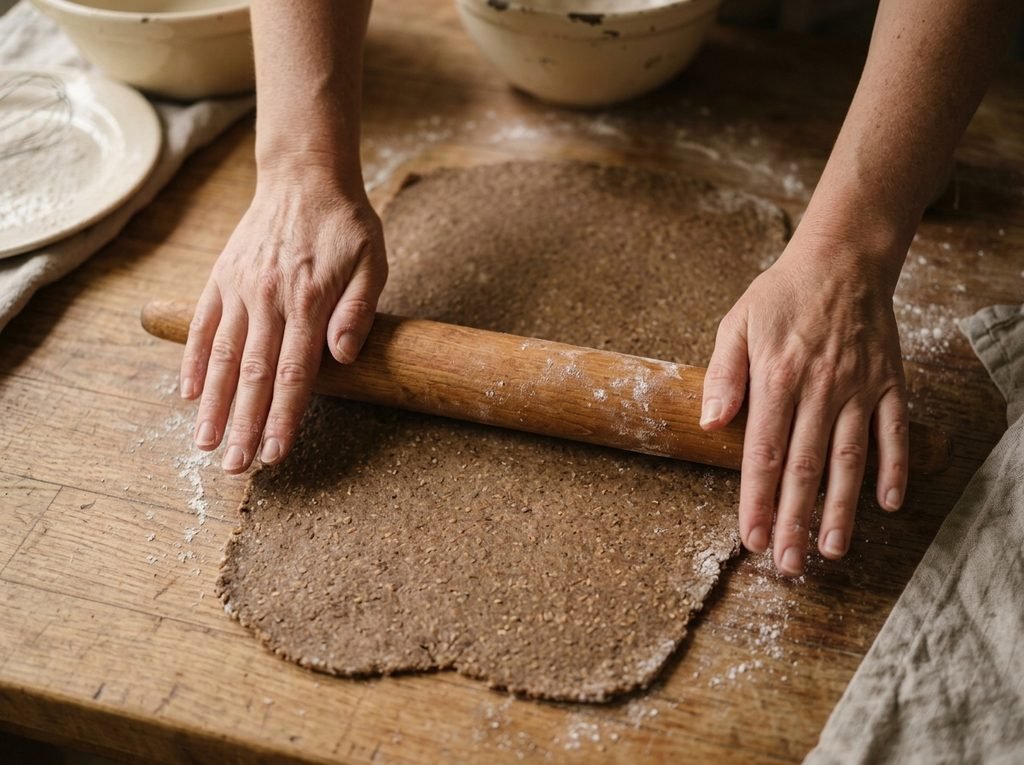
- Divide the dough into 5–6 pieces. On a well-floured surface, roll each piece out as thin as you can, ideally about ⅛ inch (3 mm) – the thinner and more even, the crisper the result.
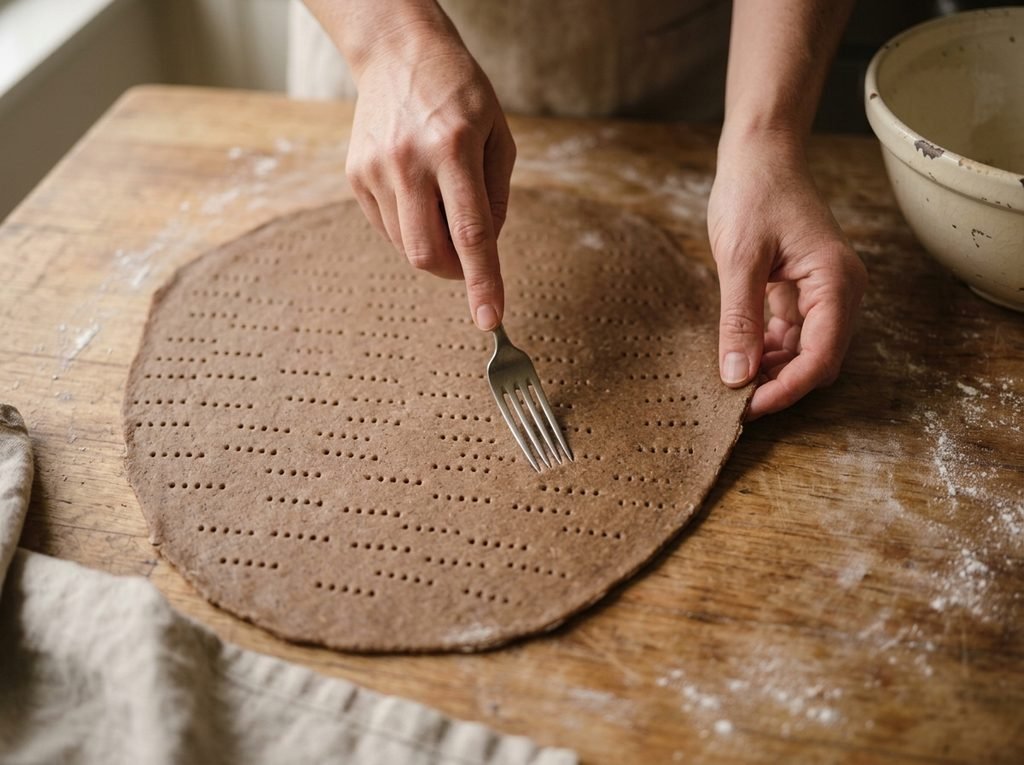
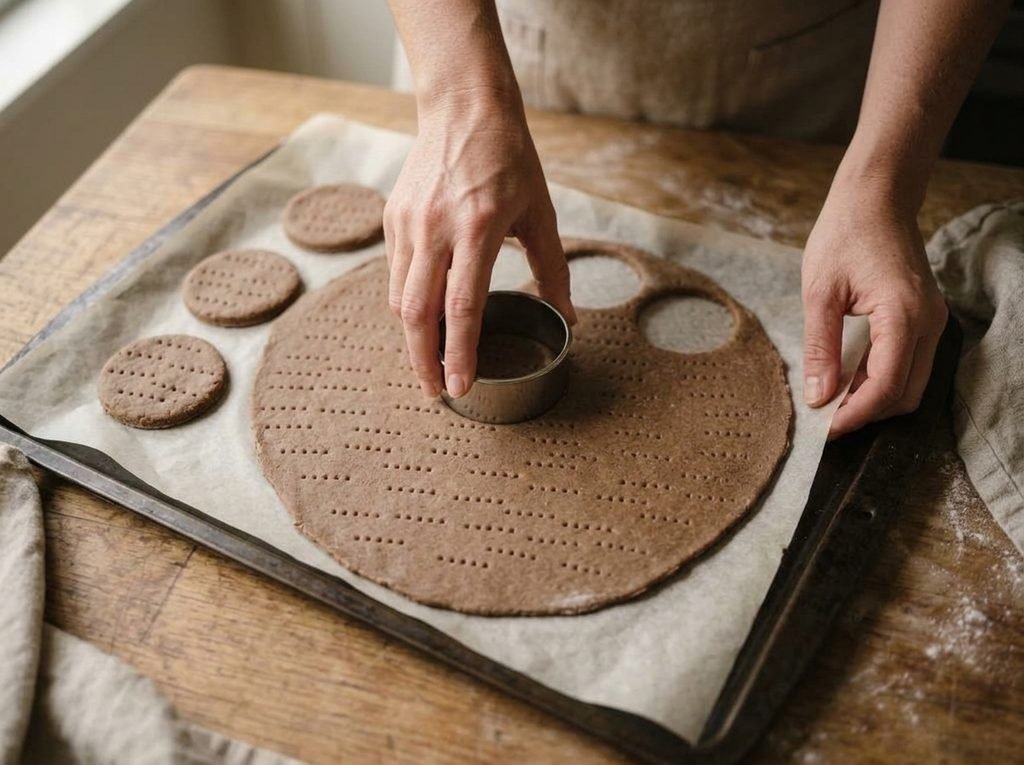
- Transfer the rolled sheets to the prepared baking sheets. Prick all over with a fork or docking tool – this stops the dough from puffing up unevenly as it bakes. Cut into rounds with a cutter if you’d like, or leave as rustic sheets to break into shards after baking.
- Bake for 15–18 minutes, until crisp and lightly golden at the edges. Thin spots can brown fast, so check at the 12-minute mark and pull any pieces that are coloring ahead of the rest.
- Cool completely on a wire rack – the crackers crisp up fully as they cool, so don’t judge doneness while they’re still warm.
Notes
Save This Recipe
Get it emailed to you now, plus new recipes as they go up.
Your email is safe with me. I’ll send this recipe straight over. No spam, ever—and you can unsubscribe anytime.
How to Make It
1Mix and rest. In a large bowl, mix the rye flour, bread flour, and water together by hand just until no dry flour remains. Cover and rest for 20 minutes.
2Add the rest. Add the starter, salt, honey, oil, and caraway seeds. Mix and knead briefly, 3-4 minutes, until evenly combined – rye doesn’t develop much gluten, so this stays a short step.
3Ferment for flavor. Cover and ferment at room temperature for 3-4 hours. This ferment is for flavor, not lift – the dough should look fragrant and slightly puffy, not doubled.
4Preheat. Preheat the oven to 400°F (205°C) and line two baking sheets with parchment.
5Roll thin. Divide the dough into 5-6 pieces. On a well-floured surface, roll each piece out as thin as you can, ideally about ⅛ inch (3 mm) – the thinner and more even, the crisper the result.
6Dock and cut. Transfer the rolled sheets to the prepared baking sheets. Prick all over with a fork or docking tool – this stops the dough from puffing up unevenly as it bakes. Cut into rounds with a cutter if you’d like, or leave as rustic sheets to break into shards after baking.
7Bake. Bake for 15-18 minutes, until crisp and lightly golden at the edges. Thin spots can brown fast, so check at the 12-minute mark and pull any pieces that are coloring ahead of the rest.
8Cool. Cool completely on a wire rack – the crackers crisp up fully as they cool, so don’t judge doneness while they’re still warm.
Tips & Troubleshooting
- Why the bread flour: 100% rye rolls out beautifully but tears easily and cracks apart when you try to transfer it; the bread flour blend here makes the dough forgiving enough to roll paper-thin without falling apart.
- Roll evenly, not just thin: uneven thickness means some pieces burn while others stay chewy – a consistent ⅛ inch across the whole sheet matters more than getting it as thin as physically possible.
- Don’t skip docking: those fork holes aren’t decorative – without them, the dough puffs unevenly and bakes up patchy instead of uniformly crisp.
- Humidity is the real enemy: especially somewhere like South Florida, crispbread stored in anything less than a truly airtight container will go soft within a day or two – see Why Does My Sourdough Go Soft or Moldy So Fast in a Humid Climate? for why.
- Bake a test piece first: ovens vary enough on thin bakes like this that it’s worth baking one cracker to check timing before committing a full sheet.
How to Store
To store: once fully cooled, keep in a truly airtight container or tin at room temperature up to 3 weeks – this is one of the few things on the site that genuinely keeps.
To freeze: not necessary given the shelf life, but they’ll keep in an airtight freezer bag up to 3 months if you’d like to bake ahead.
Nutrition
Per cracker, based on 24 crackers per batch. Estimated from the ingredients used – provided for convenience and not a substitute for a precise calculation.
45
Calories
8g
Carbs
1g
Protein
1g
Fat
1g
Fiber
90mg
Sodium
Desi’s Notes
Knäckebröd is one of those foods that makes total sense once you understand what it’s for – it was built to survive a long Scandinavian winter without going stale, which is exactly what a bone-dry, paper-thin cracker does better than any loaf of bread ever could.
This isn’t a dough you judge by how much it rises. A short ferment here is entirely about flavor, not lift – you want it fragrant and slightly puffy, not doubled.
Down here in South Florida humidity is the real enemy of a good crispbread, more than anything that happens in the oven. If yours go soft within a day or two, it’s almost always the storage container, not the recipe.
Before You Bake
Scaling this recipe up or down? Run your numbers through the Sourdough Calculator. And if you want a printable reference for troubleshooting crumb and crust on your other bakes, grab the Crumb & Crust Diagnostic Quicksheet.
Knead to Know?
New recipes, baking tips, and sourdough troubleshooting — delivered before your starter even finishes its next rise.
Get the latest insights, no spam — just new recipes and baking tips. Unsubscribe anytime. See our Privacy Policy.



Tried this recipe? Leave a star rating below — it takes 10 seconds and helps other bakers decide what to make next.
Baked this recipe your way? Share it in Community Bakes and inspire other readers.