
Japanese Milk Bread Dinner Rolls (Shokupan Rolls)
These are the pillowy, pull-apart dinner rolls you get at a Japanese bakery – almost impossibly soft, faintly sweet, and staying that way for days after baking. The secret is tangzhong, a quick cooked flour-and-milk paste that lets the dough hold far more moisture than a standard enriched dough. No sourdough starter required, just yeast and about three hours, most of it hands-off.
Why You’ll Love It
- The tangzhong method gives these rolls a cloud-like texture that stays soft for days, not just the day you bake
- Faintly sweet and completely neutral – equally at home next to a holiday roast or spread with jam at breakfast
- No cold proof or overnight plan needed – mix, rise, shape, and bake, all in one day
- Makes a full dozen, perfect for a crowd or a holiday table
- Freezes and reheats beautifully
Ingredients
Volume measurements are included for convenience, but weighing your flour on a kitchen scale will give you the most consistent dough.
Tangzhong (Milk Roux)
- Bread flour (30 g / 3 Tbsp)
- Whole milk (150 g / ⅔ cup)
Dough
- Bread flour (380 g / 3 cups)
- Whole milk (120 g / ½ cup)
- 1 large egg
- Granulated sugar (50 g / ¼ cup)
- Instant yeast (7 g / 2¼ tsp)
- Fine sea salt (6 g / 1 tsp)
- Unsalted butter, softened (43 g / 3 Tbsp)
- 1 egg, beaten, for egg wash
Equipment
- Kitchen scale: for weighing ingredients – the most reliable way to get consistent rolls
- Small saucepan: for cooking the tangzhong
- Stand mixer with dough hook: kneads the enriched dough to a smooth, elastic texture
- 9×13-inch baking pan: for the rolls’ second rise and baking
- Pastry brush: for brushing on the egg wash
Sample Schedule (Same Day)
Same Day
- Make the tangzhong and let cool (15 minutes)
- Mix and knead the dough (20 minutes)
- First rise (1-1½ hours)
- Divide and shape into rolls (15 minutes)
- Second rise (45-60 minutes)
- Bake (18-20 minutes)

Japanese Milk Bread Dinner Rolls (Shokupan Rolls)
Method
- Make the tangzhong. In a small saucepan, whisk the bread flour (30 g / 3 Tbsp) and milk (150 g / ⅔ cup) over medium-low heat, whisking constantly, until it thickens into a smooth paste, about 3–4 minutes. Remove from heat and let cool to room temperature.
- Mix the dough. In a stand mixer bowl, combine the cooled tangzhong, bread flour (380 g / 3 cups), milk (120 g / ½ cup), egg, sugar (50 g / ¼ cup), and instant yeast (7 g / 2¼ tsp). Mix on low with the dough hook until a shaggy dough forms.
- Knead in the butter. Add the salt (6 g / 1 tsp), then knead on medium 5 minutes. Add the softened butter (43 g / 3 Tbsp) one piece at a time, kneading until fully absorbed, about 8–10 more minutes, until the dough is smooth and passes the windowpane test.
- First rise. Shape into a ball, place in a greased bowl, cover, and let rise in a warm spot 1–1½ hours, until doubled.
- Divide and shape. Punch down the dough and divide into 12 equal pieces (about 65 g each). Shape each into a tight ball.
- Second rise. Arrange the rolls in a buttered 9×13-inch pan, cover, and let rise 45–60 minutes, until puffy and touching.
- Egg wash and bake. Preheat the oven to 350°F. Brush the rolls with beaten egg. Bake 18–20 minutes, until deep golden brown and the internal temperature reads about 190°F.
- Cool. Brush with melted butter if desired, and cool at least 15 minutes before serving.
Notes
Save This Recipe
Get it emailed to you now, plus new recipes as they go up.
Your email is safe with me. I’ll send this recipe straight over. No spam, ever—and you can unsubscribe anytime.
How to Make It
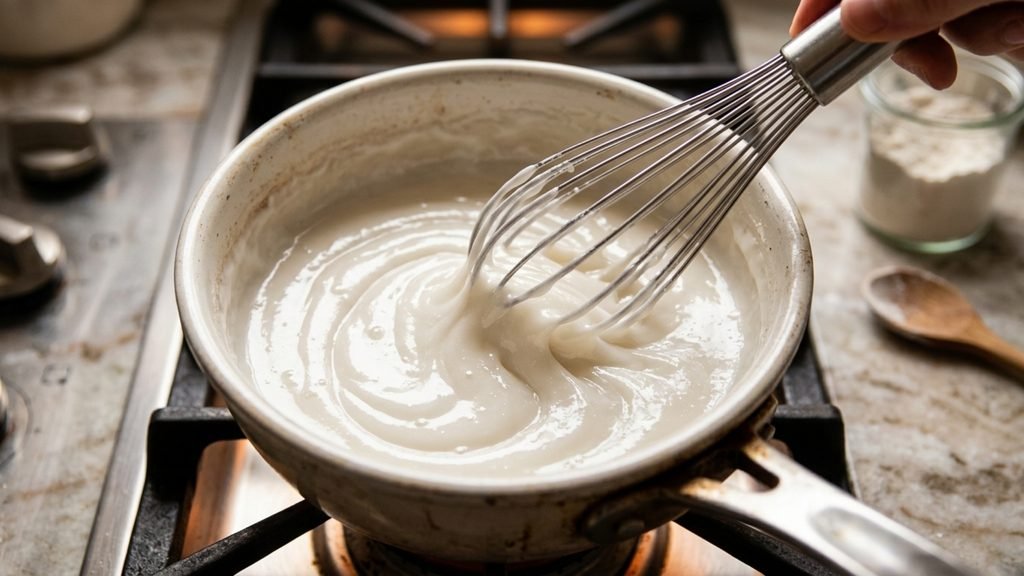
1Make the tangzhong. In a small saucepan, whisk the bread flour (30 g / 3 Tbsp) and milk (150 g / ⅔ cup) over medium-low heat, whisking constantly, until it thickens into a smooth paste, about 3-4 minutes. Remove from heat and let cool to room temperature.
2Mix the dough. In a stand mixer bowl, combine the cooled tangzhong, bread flour (380 g / 3 cups), milk (120 g / ½ cup), egg, sugar (50 g / ¼ cup), and instant yeast (7 g / 2¼ tsp). Mix on low with the dough hook until a shaggy dough forms.
3Knead in the butter. Add the salt (6 g / 1 tsp), then knead on medium 5 minutes. Add the softened butter (43 g / 3 Tbsp) one piece at a time, kneading until fully absorbed, about 8-10 more minutes, until the dough is smooth and passes the windowpane test.
4First rise. Shape into a ball, place in a greased bowl, cover, and let rise in a warm spot 1-1½ hours, until doubled.
5Divide and shape. Punch down the dough and divide into 12 equal pieces (about 65 g each). Shape each into a tight ball.
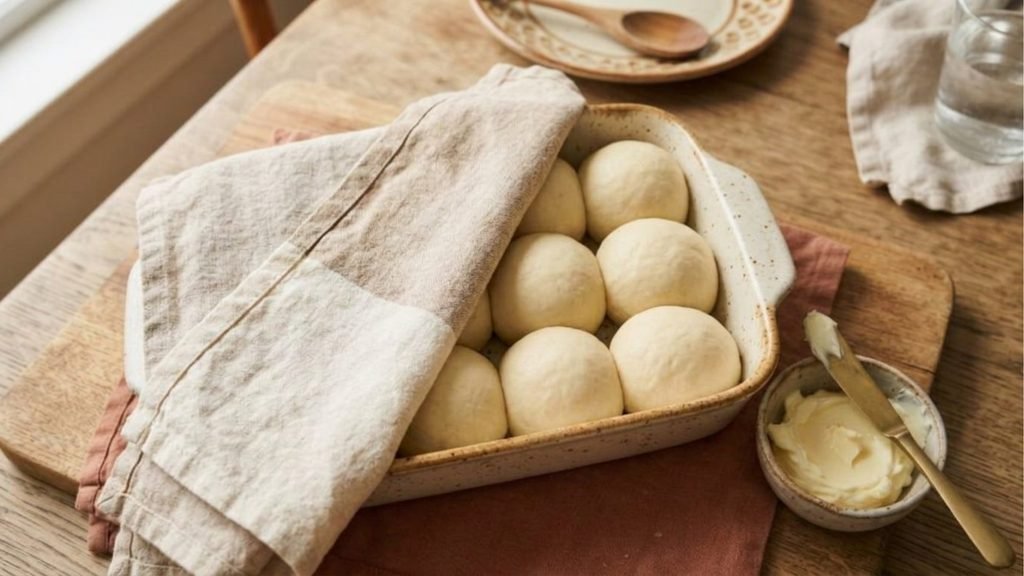
6Second rise. Arrange the rolls in a buttered 9×13-inch pan, cover, and let rise 45-60 minutes, until puffy and touching.
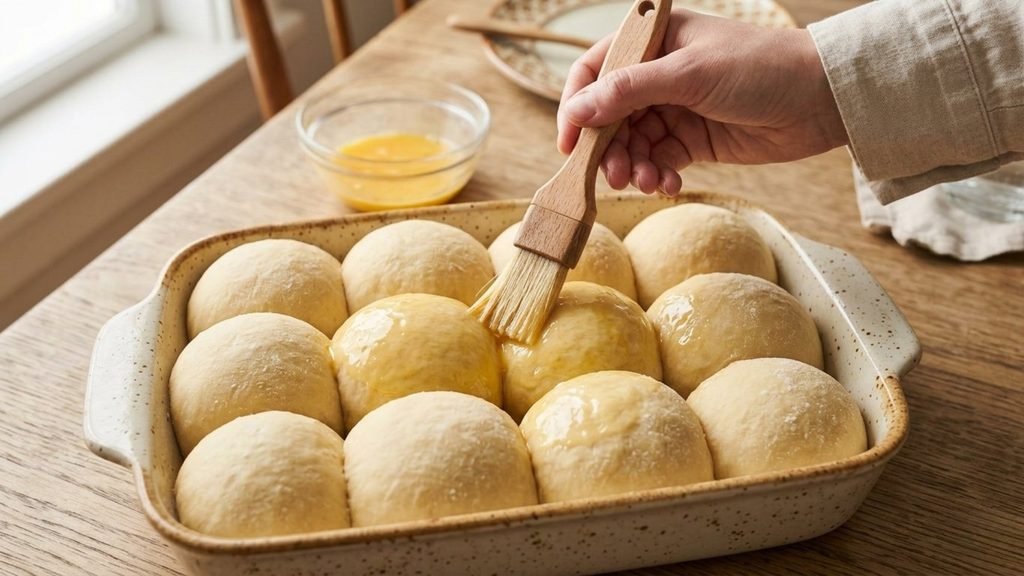
7Egg wash and bake. Preheat the oven to 350°F. Brush the rolls with beaten egg. Bake 18-20 minutes, until deep golden brown and the internal temperature reads about 190°F.
8Cool. Brush with melted butter if desired, and cool at least 15 minutes before serving.
Tips & Troubleshooting
- Dough too sticky to handle: this dough is meant to be soft and slightly tacky – resist adding too much extra flour, or the rolls will turn out dense.
- Windowpane test: stretch a small piece of dough thin between your fingers – if it stretches into a translucent sheet without tearing, it’s kneaded enough.
- Rolls baking unevenly: rotate the pan halfway through baking if your oven has hot spots.
- Want extra shine: brush with a second coat of egg wash right before baking.
How to Store
To store: keep in an airtight container or bag at room temperature up to 3 days.
To freeze: freeze baked, cooled rolls in a freezer bag up to 2 months; thaw and warm in a 300°F oven for 8-10 minutes.
Nutrition
Per roll, based on 12 rolls. Estimated from the ingredients used – provided for convenience and not a substitute for a precise calculation.
190
Calories
30
Carbs
6
Protein
5
Fat
1
Fiber
160
Sodium
Desi’s Notes
The tangzhong feels like an unnecessary extra step the first time you make it. It is not. Those fifteen minutes are the entire reason these rolls stay soft three days later instead of turning into bricks overnight.
I make a double batch of these every holiday. They disappear faster than anything else on the table, sourdough included.
If your kitchen runs cool, a turned-off oven with the light on makes a reliable warm spot for both rises.
Before You Bake
Want a printable reference for weighing ingredients or converting between cups and grams? Grab the Conversion & Baker’s-Percentage Cheat Sheet, one of six free Printable Quicksheets on the site.
Knead to Know?
New recipes, baking tips, and sourdough troubleshooting — delivered before your starter even finishes its next rise.
Get the latest insights, no spam — just new recipes and baking tips. Unsubscribe anytime. See our Privacy Policy.




Tried this recipe? Leave a star rating below — it takes 10 seconds and helps other bakers decide what to make next.
Baked this recipe your way? Share it in Community Bakes and inspire other readers.