
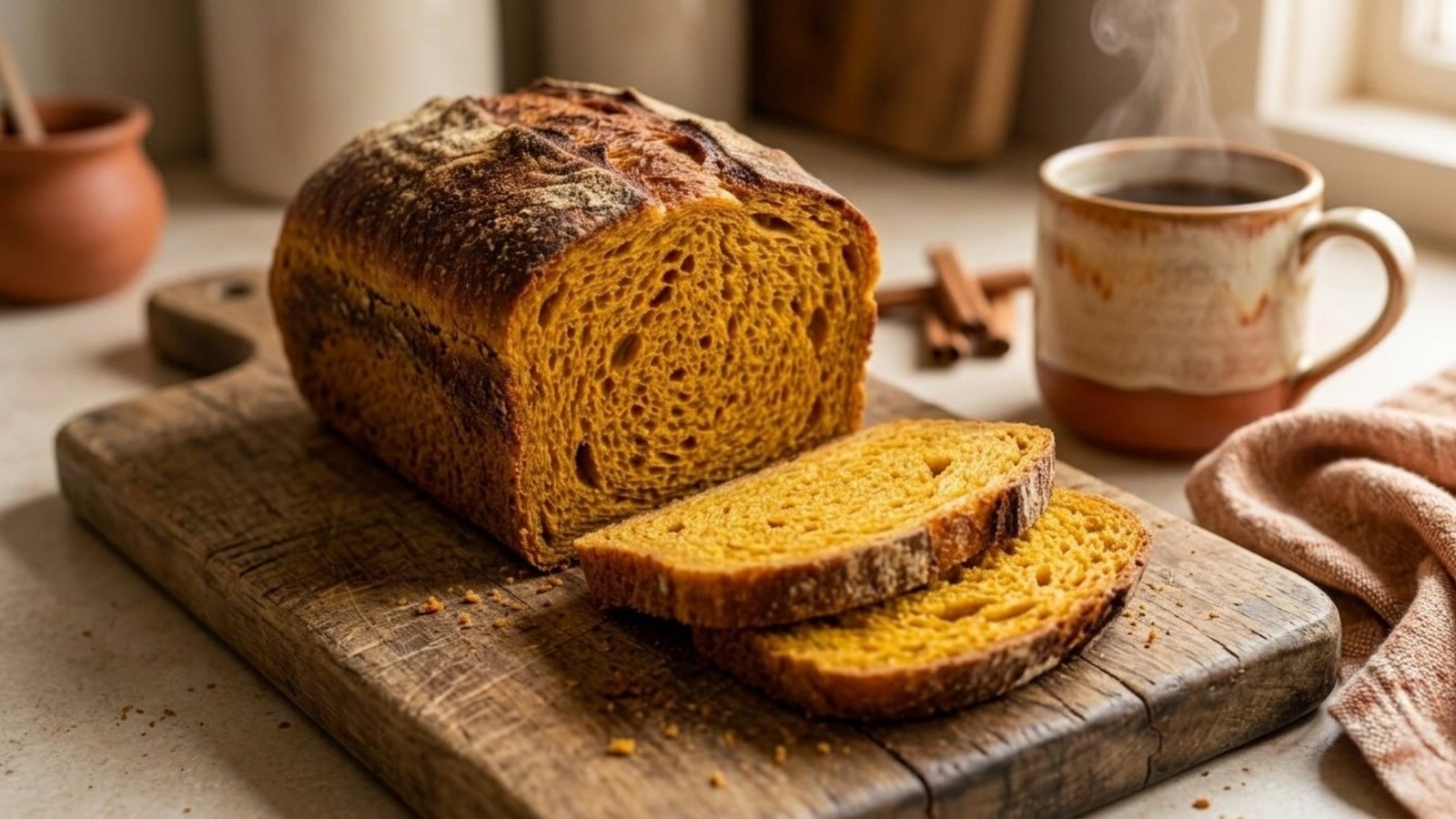
Sourdough Pumpkin Bread
This is the loaf that finally gave our pumpkin bread a proper sourdough backbone – real fermentation, not a quick-bread shortcut, so you get that same tangy depth as our Plain Sourdough Loaf underneath the cinnamon and nutmeg.
Why You’ll Love It
- Real naturally-leavened bread, not a quick bread – you get the slow-fermented depth and better keeping quality of a true sourdough loaf, dressed up for fall.
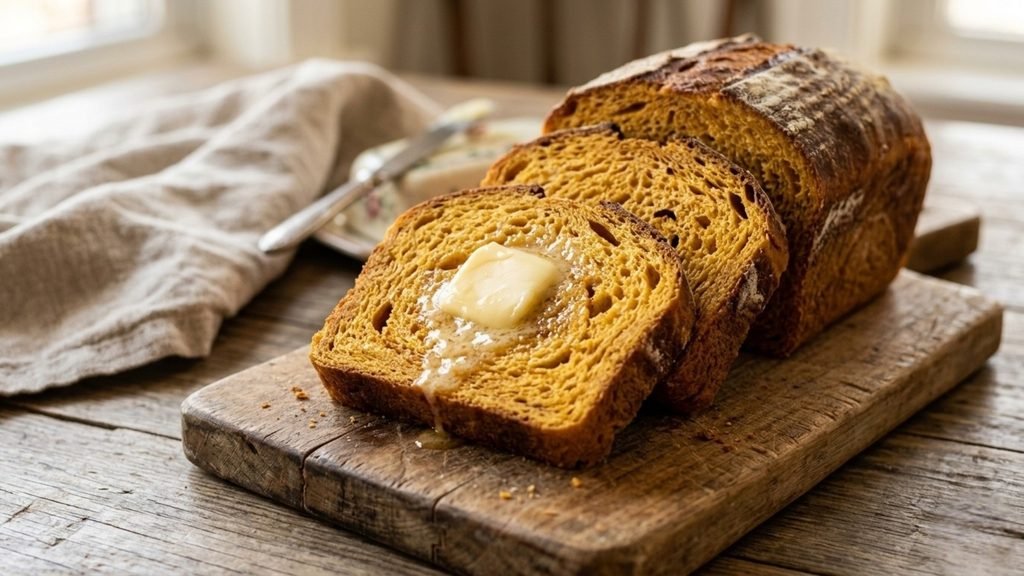
- Soft, tender, enriched crumb that slices clean enough for sandwiches, but tastes like dessert toasted with butter.
- The overnight cold retard means almost all the work happens the day before – you wake up, proof for an hour, and bake.
- Freezes beautifully, so one baking day gets you pumpkin bread for weeks.
Ingredients
Volume measurements are included for convenience, but they’re approximate – a kitchen scale will always get you a more consistent loaf, especially for the flour.
A few notes on what’s doing the work here, beyond the flour and starter.
- Bread flour (500 g / 4 cups): gives the loaf its structure.
- Pumpkin puree (150 g / ⅔ cup): use plain 100% canned pumpkin, not pumpkin pie filling. It adds moisture, color, and a subtle vegetal sweetness that pairs with the spice.
- Whole milk, lukewarm (90 g / ⅓ cup plus 1 Tbsp): enriches the dough and keeps the crumb soft; a lower-fat milk will work but makes for a slightly less tender loaf.
- Active sourdough starter (125 g / generous ½ cup): should be fed and near its peak, doubled and domed, for the most reliable rise.
- Unsalted butter, softened (60 g / ¼ cup): softened, not melted, so it incorporates evenly into the dough during kneading.
- Brown sugar (60 g / ¼ cup): adds moisture and a light molasses note that complements the pumpkin spice better than white sugar alone.
- Egg (1 large): adds richness and helps the crumb hold together for clean slices.
- Fine sea salt (9 g / about 1½ tsp): balances the sweetness and strengthens the gluten structure.
- Pumpkin pie spice (2 tsp): a blend of cinnamon, ginger, nutmeg, and cloves; use your favorite blend or make your own.
Equipment
- Stand mixer with dough hook: makes kneading this enriched dough much easier, though a strong arm and a bowl work fine too.
- 9×5-inch loaf pan: the standard size for this recipe; a different size will change your bake time.
- Bench scraper: helpful for handling the soft, sticky dough during shaping.
- Instant-read thermometer: the most reliable way to know the loaf is fully baked without cutting into it.
- Wire cooling rack: lets air circulate under the loaf so the bottom doesn’t turn soggy as it cools.
Sample Schedule
Day 1
- Feed your starter 4 to 6 hours before you plan to mix, so it's active and roughly doubled.
- Mix the dough, then bulk ferment at room temperature for 3 to 4 hours, doing 2 to 3 sets of stretch and folds in the first 2 hours.
- Shape the dough into a loaf, place it in the prepared pan, cover, and refrigerate overnight for 8 to 12 hours.
Day 2
- Remove the pan from the fridge and let the loaf finish proofing at room temperature for 1 to 2 hours, until puffy and nearly doubled.
- Preheat the oven to 350°F (175°C).
- Bake for 45 to 55 minutes, tenting with foil around the 25-minute mark so the spiced crust doesn't over-darken.
- Cool in the pan for 15 minutes, then turn out onto a wire rack and cool completely, at least 1 hour, before slicing.
Sourdough Pumpkin Bread
Method
- Whisk the pumpkin puree, milk, and active starter together until the starter is mostly dissolved.
- Mix in the flour, brown sugar, salt, and pumpkin pie spice until a shaggy dough forms, then rest 20-30 minutes.
- Add the softened butter and egg, then knead 8-10 minutes until smooth and elastic.
- Bulk ferment 3-4 hours at room temperature, with 2-3 stretch and folds in the first 2 hours.
- Shape into a loaf and place seam-side down in a greased 9×5-inch loaf pan.
- Cover and refrigerate overnight, 8-12 hours.
- Let proof at room temperature 1-2 hours until puffed and domed above the pan.
- Bake at 350°F (175°C) for 45-55 minutes, tenting with foil at 25 minutes, until it reads 195-200°F internally.
- Cool in the pan 15 minutes, then turn out and cool completely on a wire rack before slicing.
Notes
Save This Recipe
Get it emailed to you now, plus new recipes as they go up.
Your email is safe with me. I’ll send this recipe straight over. No spam, ever—and you can unsubscribe anytime.
How to Make It
1Feed Your Starter. Feed your starter 4 to 6 hours before you plan to mix, using your usual ratio. It’s ready when it has roughly doubled in size, looks domed and bubbly on top, and floats when you drop a small spoonful into water.
2Mix the Dough. In a large bowl or the bowl of a stand mixer, whisk together the pumpkin puree, milk, and active starter until the starter is broken up and mostly dissolved. Add the flour, sugar, salt, and pumpkin pie spice and mix until no dry flour remains and a shaggy dough forms. Let it rest, covered, for 20 to 30 minutes so the flour fully hydrates.
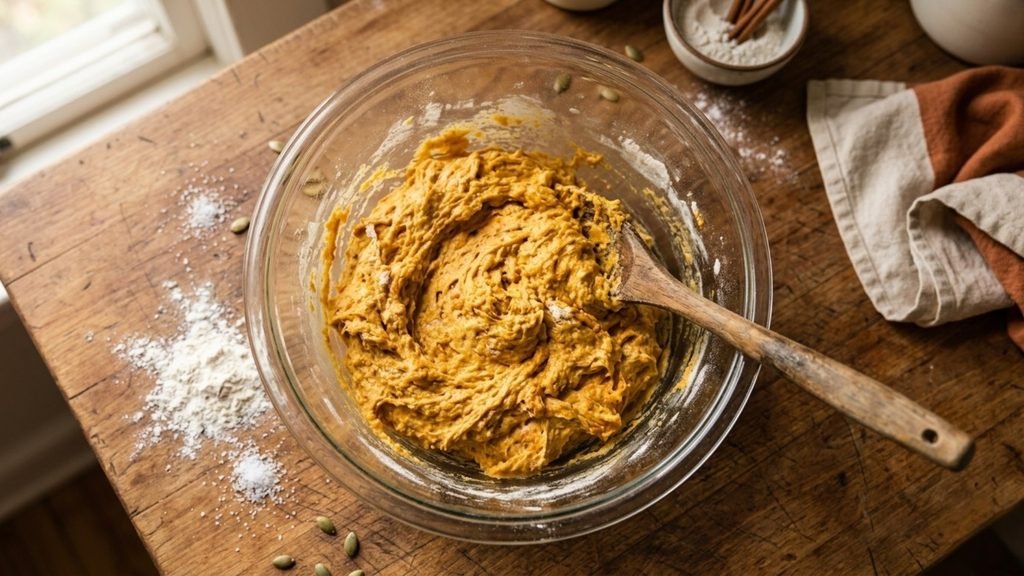
3Add the Butter and Egg, Then Knead. Add the softened butter and the egg to the rested dough. Knead by hand or with a dough hook on low speed for 8 to 10 minutes, until the dough is smooth, elastic, and only slightly tacky. It will feel softer than a lean bread dough – that’s the pumpkin puree, not a mistake.
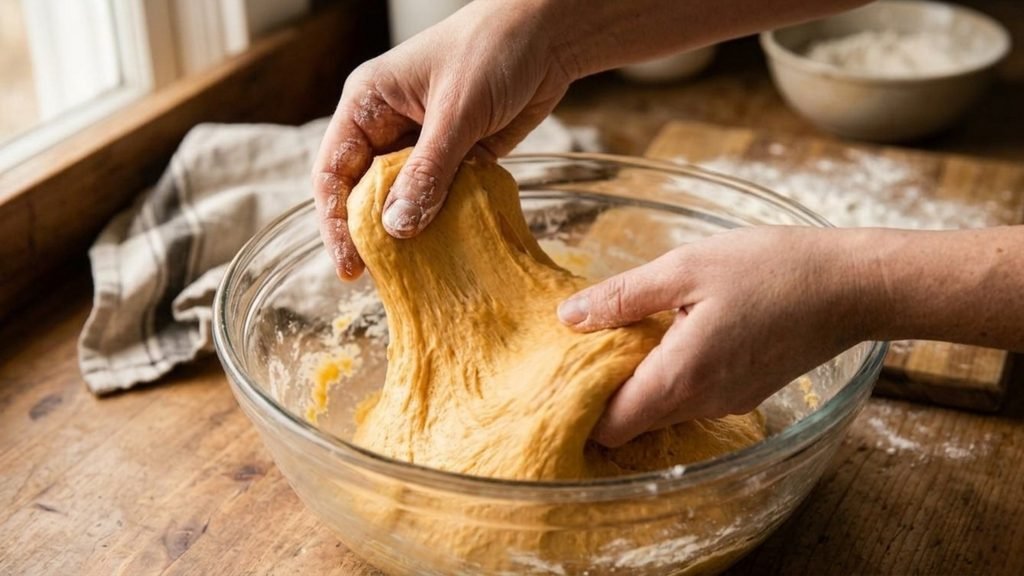
4Bulk Ferment and Stretch and Fold. Cover the bowl and let the dough bulk ferment at room temperature for 3 to 4 hours. During the first 2 hours, perform 2 to 3 sets of stretch and folds, spaced about 30 minutes apart, to build structure. The dough is ready when it looks puffy and has visibly expanded, though it won’t fully double the way a lean dough does.
5Shape the Loaf. Turn the dough out onto a lightly floured surface. Pat it into a rough rectangle, then roll it up tightly from one short end into a log. Pinch the seam closed and tuck the ends under. Place seam-side down into a greased 9×5-inch loaf pan.
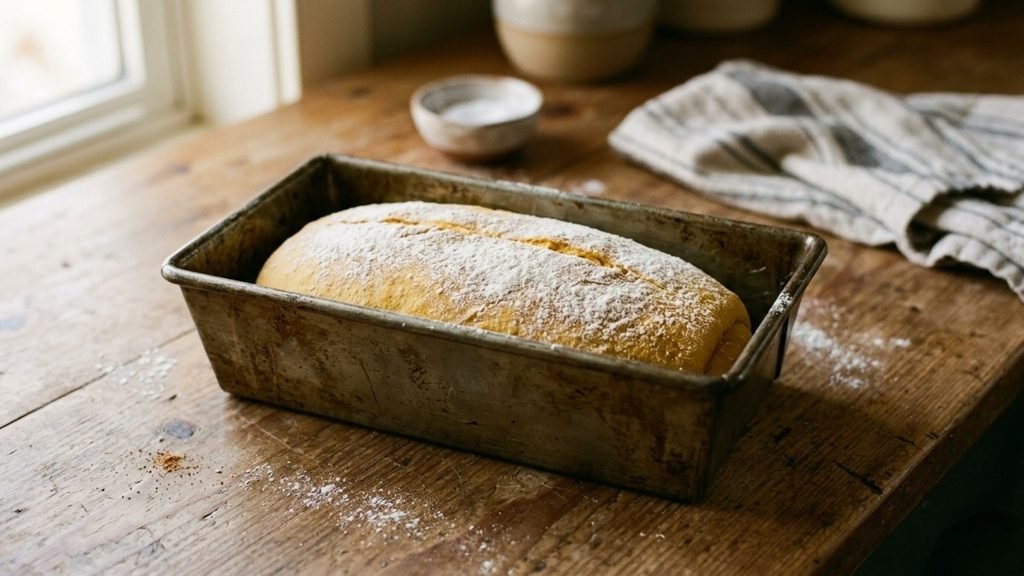
6Cold Retard Overnight. Cover the pan tightly with plastic wrap or a reusable cover and refrigerate overnight, 8 to 12 hours. This slow, cold fermentation is where most of the flavor develops, and it’s what lets you split the work across two easy days.
7Final Proof and Bake. The next morning, remove the pan from the fridge and let it sit at room temperature for 1 to 2 hours, until the dough has puffed up and domes just above the rim of the pan. Preheat your oven to 350°F (175°C) toward the end of proofing. Bake for 45 to 55 minutes, tenting the top loosely with foil around the 25-minute mark to prevent over-browning. The loaf is done when it’s deep golden brown and reads 195-200°F (90-93°C) on an instant-read thermometer.
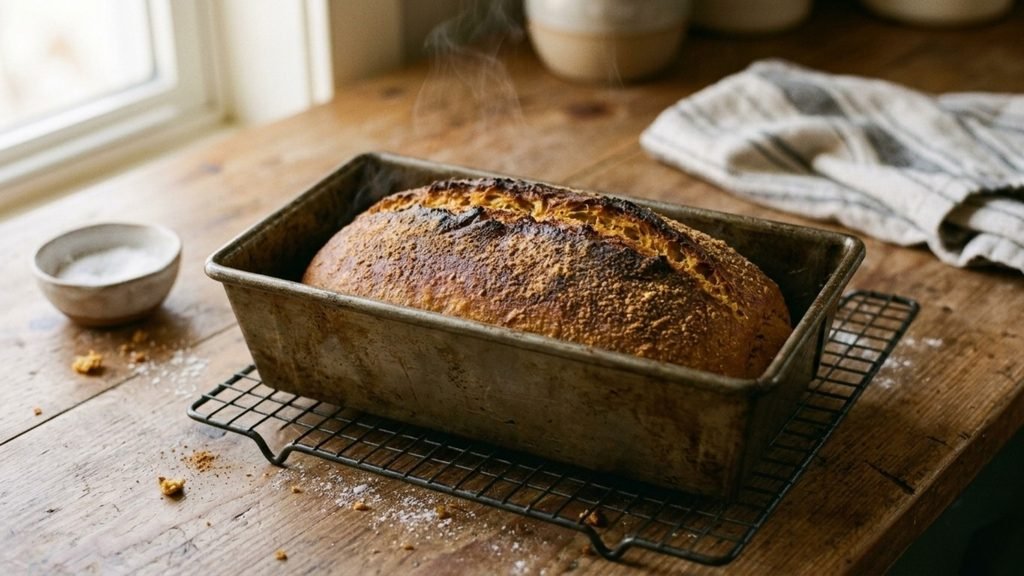
8Cool Completely Before Slicing. Cool the loaf in the pan for 15 minutes, then turn it out onto a wire rack. Let it cool completely, at least 1 hour, before slicing – the crumb is still setting as it cools, and slicing too early will make it look gummy even though it’s fully baked.
Tips & Troubleshooting
- If the dough feels quite soft and sticky after kneading, don’t add extra flour to fix it – that softness is normal for a pumpkin-enriched dough. Work with wet or oiled hands instead.
- Pumpkin pie filling is not the same as pumpkin puree. Check the can: pie filling already has sugar and spices added and will throw off this recipe. Use 100% pure pumpkin puree.
- If your loaf browns too quickly before the center finishes baking, tent it with foil earlier than the 25-minute mark, especially if your oven runs hot.
- A dense or slightly gummy crumb almost always means the loaf was sliced before it finished cooling, not underbaking – let it cool the full hour.
- If your kitchen is on the cooler side, bulk fermentation may take closer to 4 to 5 hours. Watch the dough, not the clock.
How to Store
– Room temperature: store in an airtight container or bread bag for up to 3 days.
– Refrigerator: because this is an enriched, moist loaf, it will mold faster than a lean bread – refrigerate for up to 1 week if your kitchen is warm or humid.
– Freezer: slice first, then wrap tightly and freeze for up to 3 months. Toast slices straight from frozen.
Nutrition
Nutrition estimated per slice (1 of 12) and will vary depending on the exact ingredients used.
215
CALORIES
33
CARBS (G)
5
PROTEIN (G)
8
FAT (G)
4
SAT. FAT (G)
8
SUGAR (G)
Desi’s Notes
I went through three bags of pumpkin puree getting this one right. The biggest lesson: pumpkin puree is not interchangeable with water, even though it looks like it should be. Canned puree varies a surprising amount in moisture from can to can and brand to brand, so this dough can feel noticeably softer or stiffer than my other enriched doughs depending on what’s in your pantry. Resist the urge to add flour to compensate – wet hands during shaping instead. As always, my times are built around my kitchen and my flour; yours may run a little faster or slower.
Before You Bake
Scaling this recipe up or down? Run your numbers through the Sourdough Calculator. And if you want a printable reference for troubleshooting or timing, browse all six Printable Quicksheets.
Knead to Know?
New recipes, baking tips, and sourdough troubleshooting — delivered before your starter even finishes its next rise.
Get the latest insights, no spam — just new recipes and baking tips. Unsubscribe anytime. See our Privacy Policy.






Tried this recipe? Leave a star rating below — it takes 10 seconds and helps other bakers decide what to make next.
Baked this recipe your way? Share it in Community Bakes and inspire other readers.