
Sourdough English Muffins
Griddle-cooked, cornmeal-dusted, and split open with a fork instead of a knife – these sourdough English muffins are a completely different dough from my bagels: soft, enriched with milk and butter, and built for those classic nooks and crannies instead of a chewy boiled crust.
Why You’ll Love It
- A soft, enriched dough – milk, butter, and a touch of sugar – built specifically for the griddle, not a repurposed bread dough
- No oven, no Dutch oven – just a griddle or skillet on the stovetop
- Same-day start to finish, no overnight cold proof required
- Real nooks and crannies from forking them open instead of slicing
- Cornmeal dusting means no oil or butter needed in the pan
Ingredients
Volume measurements are included for convenience, but they’re approximate – a kitchen scale will always get you a more consistent batch, especially for the flour.
- Bread flour (500 g / 4 cups): gives the dough enough structure to hold its shape on the griddle while still staying tender.
- Whole milk, lukewarm (240 g / 1 cup): the enrichment that makes this dough soft – this is what separates an English muffin dough from a lean bagel dough.
- Active sourdough starter (150 g / ⅔ cup): it needs to be bubbly and active before you mix. Room temperature or straight from the fridge both work, as long as it’s active.
- Granulated sugar (50 g / ¼ cup): feeds the starter, helps browning on the griddle, and rounds out the flavor.
- Unsalted butter, melted (40 g / 3 Tbsp): the second enrichment – it’s what gives the crumb its tenderness.
- Fine sea salt (9 g / about 1½ tsp): added with the flour. Salt volume varies by brand, so weighing is worth it here.
- Cornmeal or coarse semolina, for dusting (about 3 Tbsp): keeps the muffins from sticking to the griddle without any oil or butter, and gives them their classic dusted exterior.
Equipment
- Kitchen scale: highly, highly recommended. Precision is what makes this recipe repeatable.
- Griddle or large skillet: cast iron or a heavy nonstick pan both work well – you want steady, even heat.
- 3-inch round cutter, or a clean can: for cutting the muffins – any clean, open-ended can of about the right size works in a pinch.
- Wire cooling rack: lets air circulate underneath so the muffins don’t steam and turn soggy as they cool.
- Fork: for splitting the cooled muffins – a knife will cut through the air pockets instead of opening them up.
Sample Schedule (Same Day)
- Mix the dough (about 15 minutes hands-on)
- Knead about 8 minutes, until smooth and elastic
- Bulk rise 1.5-2 hours at room temperature, until doubled
- Pat out, cut into rounds, and dust with cornmeal
- Second rise 45 minutes, until puffy
- Cook on the griddle, about 7-8 minutes per side
- Cool at least 15 minutes before splitting

Sourdough English Muffins
Method
- Warm the milk to lukewarm and stir in the starter and sugar until the starter loosens and dissolves.
- Add the flour, melted butter, and salt; mix to form a soft, tacky dough.
- Knead about 8 minutes, until smooth and elastic (it will stay softer and stickier than a bread dough).
- Cover and let rise at room temperature 1.5–2 hours, until doubled.
- Turn the dough out onto a surface dusted with cornmeal and pat to about ¾-inch thick.
- Cut into rounds with a 3-inch cutter (or clean can); gather and re-pat scraps to cut more.
- Dust both sides of each round generously with cornmeal and arrange on a tray; cover and let rise 45 minutes, until puffy.
- Warm a griddle or large skillet over medium-low heat (no oil needed – the cornmeal keeps them from sticking).
- Cook in batches, 7–8 minutes per side, until deeply golden and cooked through (about 200°F in the center).
- Cool on a wire rack at least 15 minutes before splitting.
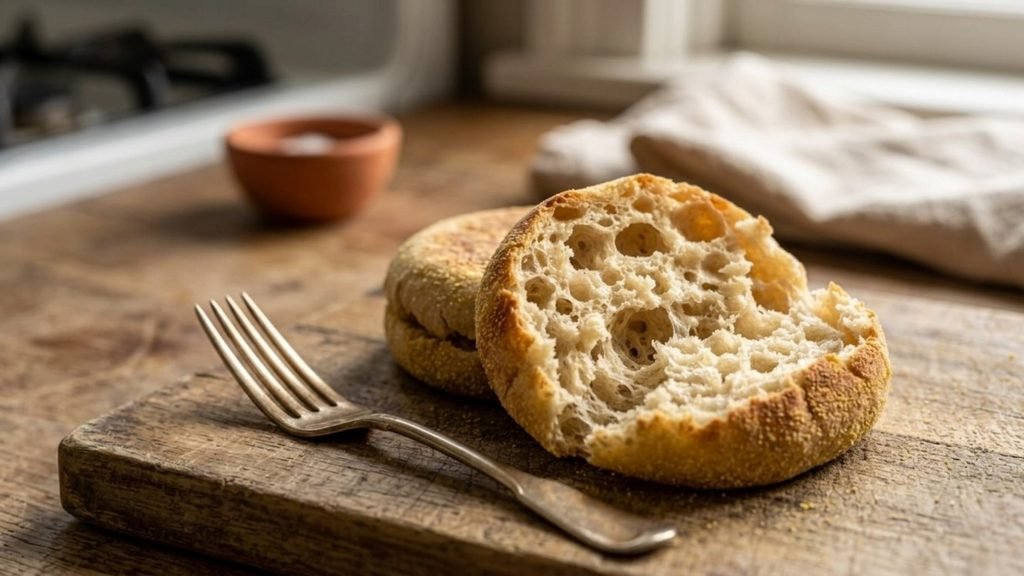
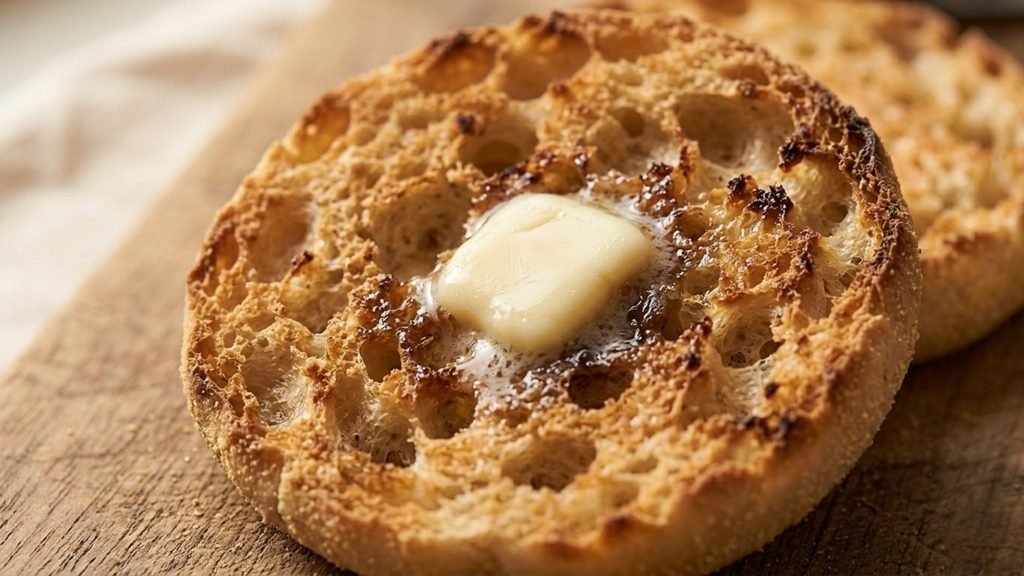
- Split with a fork (not a knife) to preserve the nooks and crannies, then toast and butter to serve.
Notes
Save This Recipe
Get it emailed to you now, plus new recipes as they go up.
Your email is safe with me. I’ll send this recipe straight over. No spam, ever—and you can unsubscribe anytime.
How to Make It
1Warm the milk and stir in the starter and sugar. Warm 240 g (1 cup) whole milk until just lukewarm – you should be able to comfortably hold a finger in it. Stir in 150 g (⅔ cup) active sourdough starter and 50 g (¼ cup) granulated sugar until the starter loosens and mostly dissolves.
2Add the flour, butter, and salt. Add 500 g (4 cups) bread flour, 40 g (3 Tbsp) melted unsalted butter, and 9 g (about 1½ tsp) fine sea salt. Mix until it comes together into a soft, tacky dough.
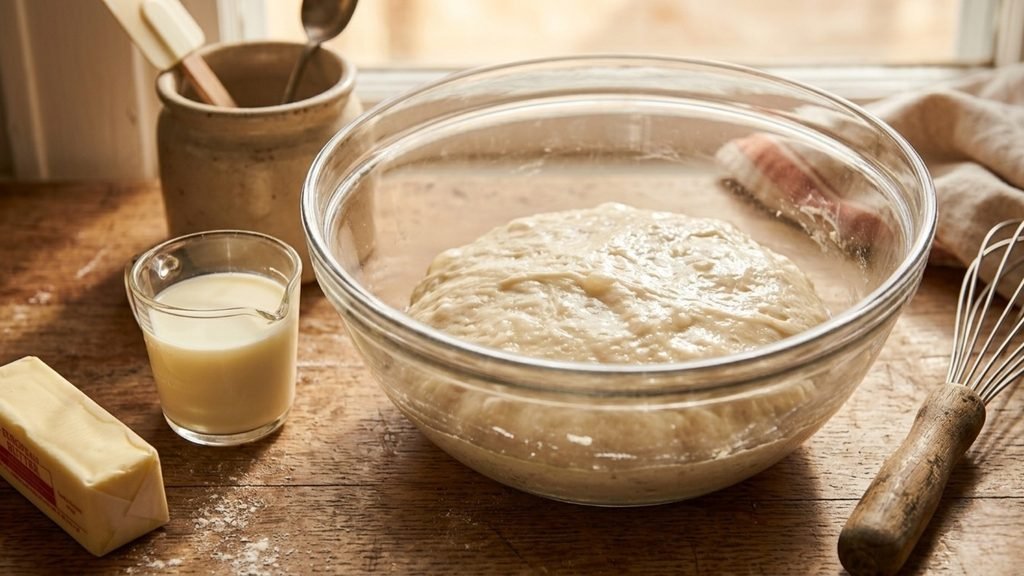
3Knead about 8 minutes. Knead by hand or with a stand mixer on low speed until smooth and elastic. This dough should stay noticeably softer and stickier than a bread or bagel dough – resist the urge to add much extra flour.
4Bulk rise 1.5-2 hours. Cover the bowl and let the dough rise at room temperature until doubled in size. The milk and sugar give the starter plenty to work with, so this rise moves faster than a lean loaf dough.
5Pat out and cut into rounds. Turn the dough out onto a surface dusted with cornmeal and pat gently to about ¾-inch thick – rolling with a pin will overwork it. Cut into rounds with a 3-inch cutter, gathering and re-patting the scraps to cut more.
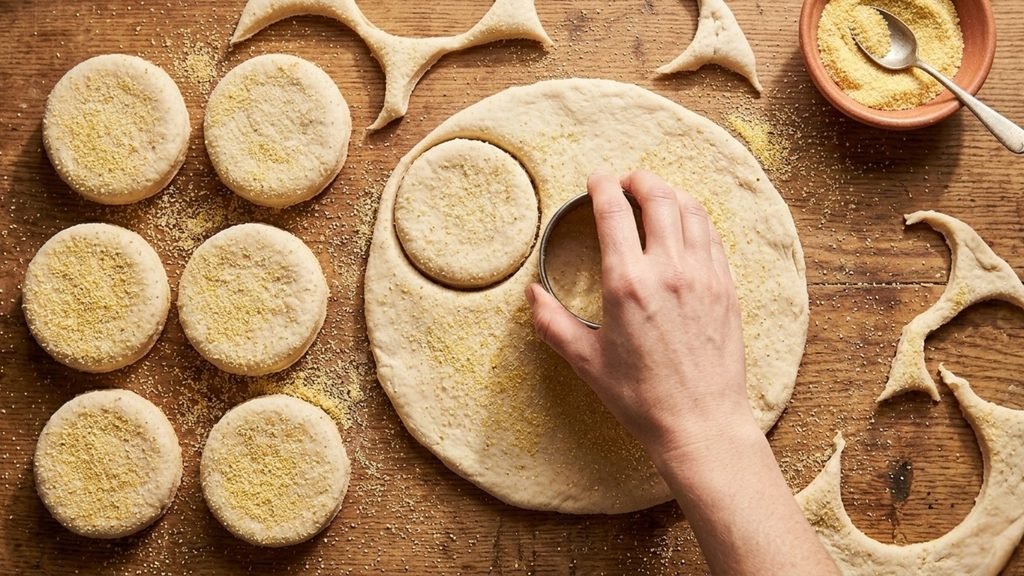
6Dust and arrange for the second rise. Dust both sides of each round generously with cornmeal and arrange on a tray, spaced apart. Cover loosely and let rise 45 minutes, until visibly puffy.
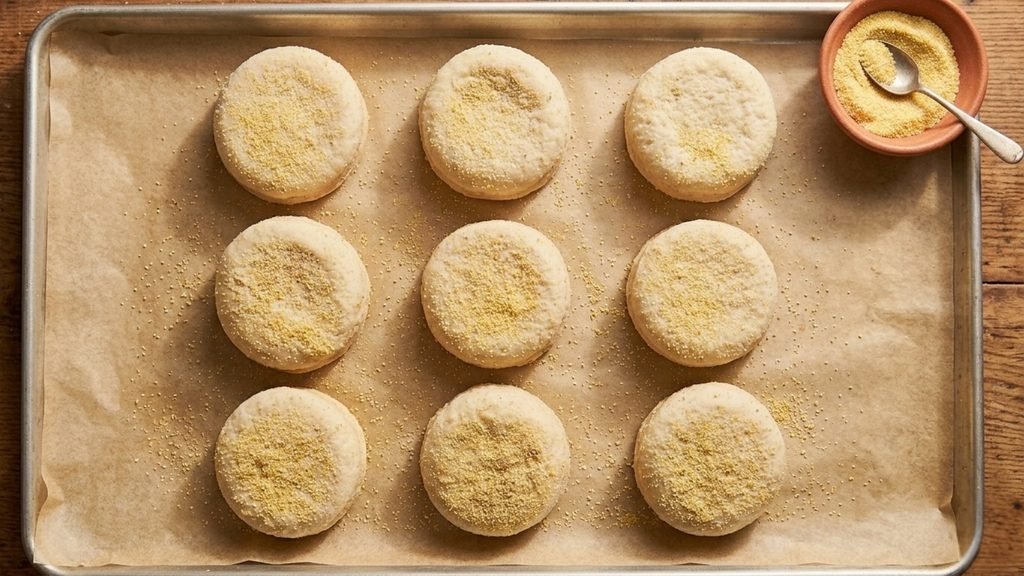
7Warm the griddle. Heat a griddle or large skillet over medium-low heat. You want steady, gentle heat – too hot and the outside will scorch before the inside cooks through.
8Cook 7-8 minutes per side. Cook the muffins in batches, without crowding the pan, until deeply golden on both sides and cooked through – an instant-read thermometer should read about 200°F in the center.
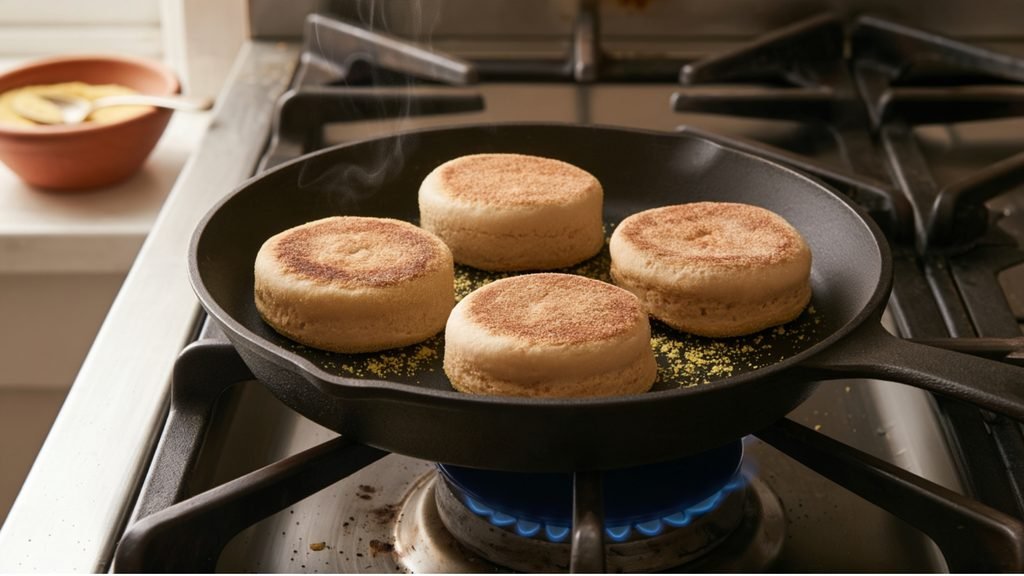
9Cool before splitting. Transfer to a wire rack and cool at least 15 minutes – they finish cooking a little from residual heat, so don’t split them straight off the griddle.
10Split with a fork. Work a fork around the outside edge and pull the halves apart by hand, rather than slicing with a knife – this is what opens up the nooks and crannies instead of cutting straight through them.
11Toast and serve. Toast the split halves and butter while warm – the toasted, craggy interior is the whole point.
Tips & Troubleshooting
- Keep the heat gentle: medium-low is not a suggestion – too hot and you’ll get a dark, scorched exterior with a raw center.
- Don’t skip the cornmeal: it’s doing double duty as a nonstick surface and as the classic dusted exterior – a bare griddle will stick.
- Check doneness by temperature, not just color: if you have an instant-read thermometer, 200°F in the center is the most reliable way to know they’re done.
- Always split with a fork: a knife slices straight through the air pockets that give English muffins their name.
How to Store
To store: in a paper or loosely closed plastic bag at room temperature, these are best within 2-3 days.
To freeze (my real recommendation): split the muffins the same day you make them, then freeze. Toast straight from frozen – you’ll get a fresher result than one left out on the counter for several days.
Nutrition
Per muffin, based on 9 muffins per batch. Estimated from the ingredients used – provided for convenience and not a substitute for a precise calculation.
170
Calories
30g
Carbs
5g
Protein
4g
Fat
1g
Fiber
260mg
Sodium
Desi’s Notes
People are always surprised these come from a completely different dough than my bagels – same starter, totally different everything else. The milk and butter here aren’t optional extras, they’re what makes this a proper English muffin dough instead of a bagel dough cooked a different way.
The griddle temperature is the one thing worth being patient about. I’d rather these take an extra few minutes per side on gentler heat than rush them and end up with a raw center under a dark crust. If you’re ever unsure, an instant-read thermometer takes all the guesswork out of it.
Before You Bake
Scaling this recipe up or down? Run your numbers through the Sourdough Calculator. And if you want a printable reference for troubleshooting your crumb and crust, grab the Crumb & Crust Diagnostic Quicksheet.
Knead to Know?
New recipes, baking tips, and sourdough troubleshooting — delivered before your starter even finishes its next rise.
Get the latest insights, no spam — just new recipes and baking tips. Unsubscribe anytime. See our Privacy Policy.




Tried this recipe? Leave a star rating below — it takes 10 seconds and helps other bakers decide what to make next.
Baked this recipe your way? Share it in Community Bakes and inspire other readers.