
Sourdough Bagels
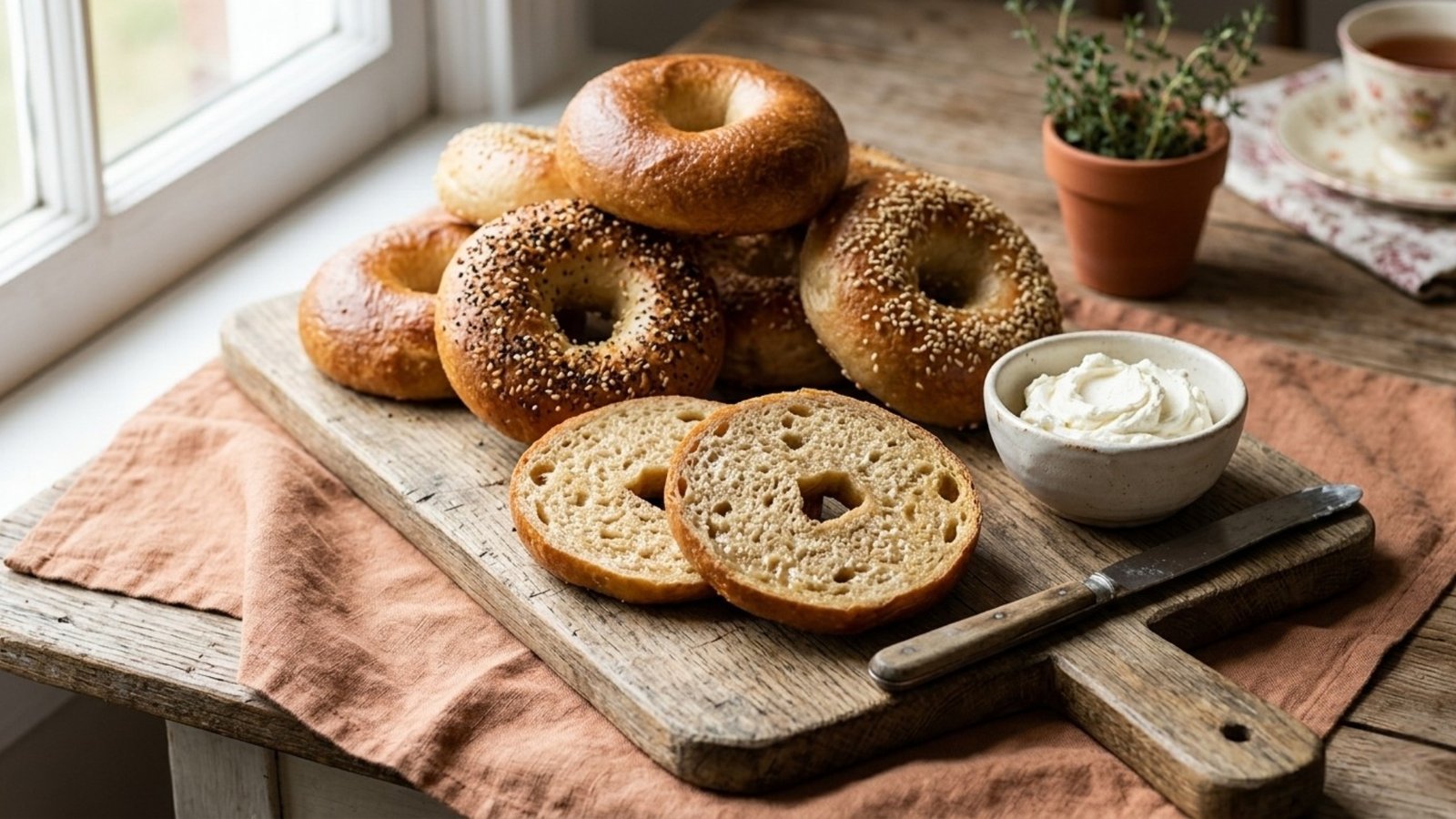
These are the bagels I make when I want the real thing – a stiff, lean dough that gets boiled first for that shiny, chewy crust, then baked until deeply golden. No stand mixer required, just a little patience and an overnight rest in the fridge.
Why You’ll Love It
- A stiff, low-hydration dough built specifically for boiling and baking – not a repurposed loaf dough
- An overnight cold retard develops real sourdough flavor without any commercial yeast
- A shiny, chewy crust from a quick baking-soda boil, just like a bakery bagel
- Totally customizable toppings – go plain, seeded, or everything-bagel style
- No stand mixer required – just your hands and a little patience
Ingredients
Volume measurements are included for convenience, but they’re approximate – a kitchen scale will always get you a more consistent batch, especially for the flour.
- Bread flour (600 g / 5 cups): a high-protein flour that gives this dough the strength and chew a proper bagel needs – all-purpose flour will make a softer, less chewy bagel.
- Filtered water, room temperature (300 g / 1¼ cups): kept deliberately low to make a stiff, workable dough – this is not the hydration you’d use for a loaf.
- Active sourdough starter (150 g / ⅔ cup): it needs to be bubbly and active before you mix. A stronger starter means a livelier bulk ferment.
- Barley malt syrup or honey (25 g / 1 Tbsp): malt syrup is the traditional choice and gives bagels their characteristic flavor, but honey works well too.
- Fine sea salt (14 g / about 2½ tsp): added after the first half of the flour, not before – salt added too early can slow fermentation down.
- Baking soda (1 Tbsp), for the boiling water: alkalizes the water so the crust sets quickly and gelatinizes, giving bagels their shiny, chewy skin.
- Egg white, beaten (1, optional), for egg wash: brushed on right after boiling so toppings and a glossy sheen stick to the crust.
- Everything bagel seasoning, sesame seeds, or poppy seeds (2 Tbsp, optional): for topping – or skip entirely for a plain bagel.
Equipment
- Kitchen scale: highly, highly recommended. Precision is what makes this recipe repeatable.
- Wide, shallow pot: gives you room to boil two or three bagels at a time without crowding.
- Slotted spoon or spider: for lowering the bagels in and lifting them back out of the boiling water.
- Baking sheet: for baking the bagels after they’re boiled and topped.
- Parchment paper: keeps the boiled dough from sticking to the tray.
- Wire cooling rack: lets air circulate underneath so the bottoms don’t turn soggy as they cool.
Sample Schedule (2-Day)
Day 1
- Mix the dough (about 15 minutes hands-on)
- Knead about 10 minutes, until firm and smooth
- Bulk ferment 2-3 hours at room temperature, until slightly puffy
- Divide into 8 pieces, shape into rings, and rest 10 minutes
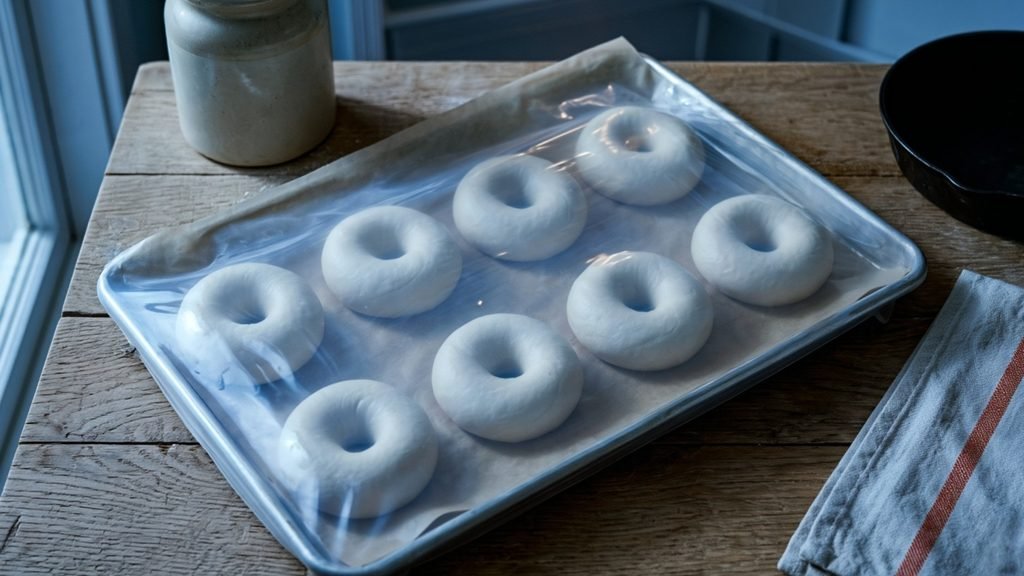
- Arrange on a parchment-lined tray, cover, and refrigerate overnight
Day 2
- Bring a pot of water to a boil and stir in the baking soda
- Boil the bagels 60-90 seconds per side, in batches
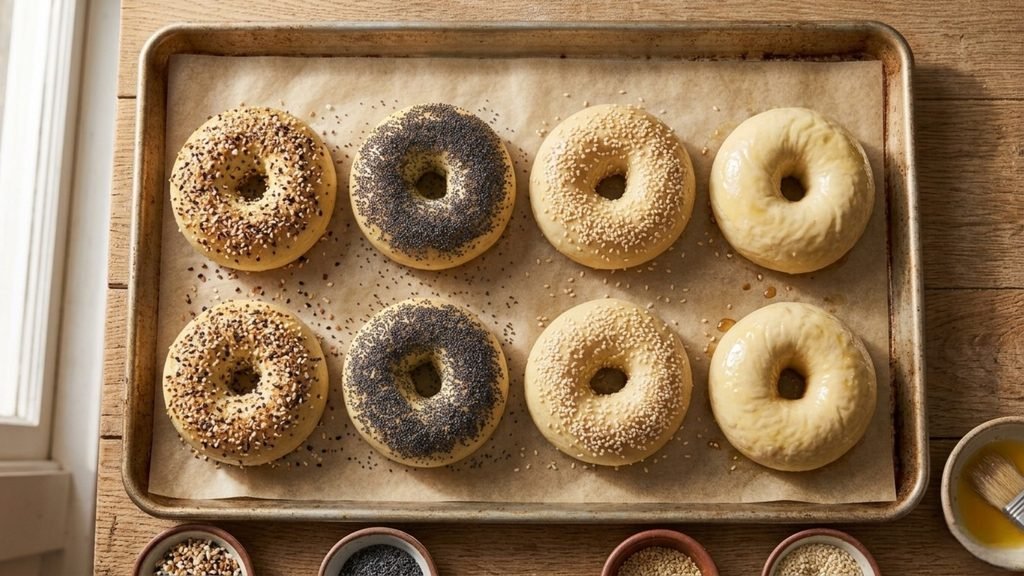
- Brush with egg wash and top with seeds, if using
- Bake at 425°F for 20-22 minutes, until deeply golden
- Cool on a rack at least 20 minutes before slicing
Sourdough Bagels
Method
- Stir the water, starter, and malt syrup together until the starter loosens and mostly dissolves.
- Add the flour and salt, and mix to form a stiff, shaggy dough.
- Knead by hand or with a stand mixer for about 10 minutes, until the dough is firm, smooth, and only slightly tacky.
- Cover and bulk ferment at room temperature for 2.5–3 hours, until slightly puffy (this dough won’t double – it’s too stiff).
- Divide the dough into 8 equal pieces (about 130 g each) and shape into tight rounds; rest 10 minutes.
- Poke a hole through the center of each ball and stretch into a ring; place on a parchment-lined tray.
- Cover and refrigerate overnight (8–12 hours).
- Bring a wide pot of water to a boil; stir in the baking soda.
- Boil the bagels 60–90 seconds per side, working in batches; drain briefly.
- Arrange boiled bagels on a parchment-lined baking sheet, brush with egg white wash, and top with seeds if using.
- Bake at 425°F for 20–22 minutes, until deeply golden.
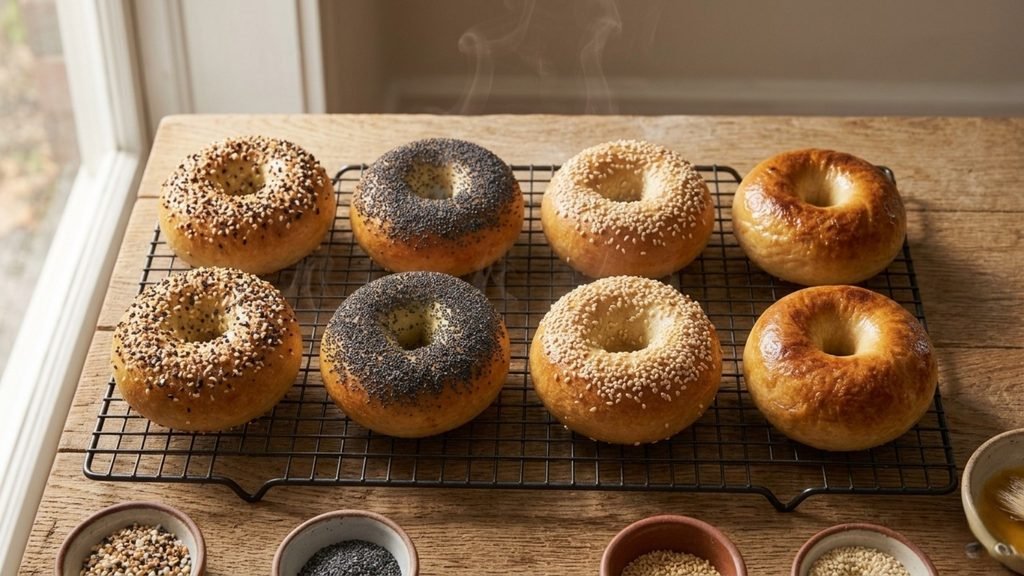
- Cool on a rack at least 20 minutes before slicing.
Notes
Save This Recipe
Get it emailed to you now, plus new recipes as they go up.
Your email is safe with me. I’ll send this recipe straight over. No spam, ever—and you can unsubscribe anytime.
How to Make It
1Stir the water, starter, and malt syrup together. In a large bowl, whisk 300 g (1¼ cups) room-temperature filtered water with 150 g (⅔ cup) active, bubbly sourdough starter and 25 g (1 Tbsp) barley malt syrup (or honey) until the starter loosens and mostly dissolves.
2Add the flour and salt. Add 600 g (5 cups) bread flour and 14 g (about 2½ tsp) fine sea salt. Mix with your hands or a stand mixer fitted with a dough hook until everything comes together into a stiff, shaggy dough – it should feel noticeably firmer than a loaf dough.
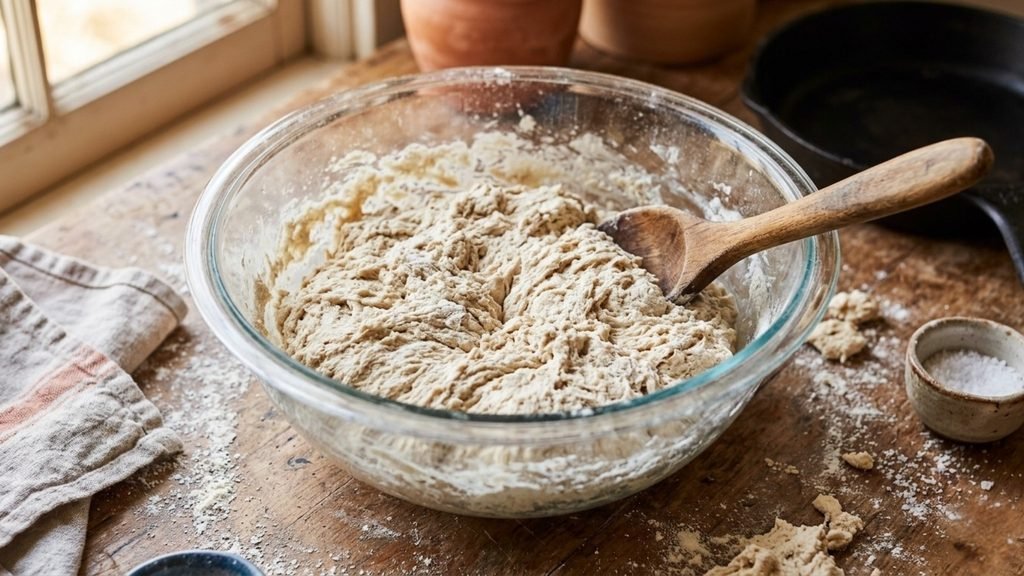
3Knead about 10 minutes. Knead by hand on a lightly floured surface, or with a stand mixer on low speed, until the dough is firm, smooth, and only slightly tacky. It won’t feel as soft or extensible as a loaf dough – that’s exactly right for a bagel.
4Bulk ferment 2-3 hours. Cover the bowl and let the dough rest at room temperature until it looks slightly puffy and feels a little softer. This dough is too stiff to double in size the way a loaf does, so don’t wait for that.
5Divide into 8 pieces. Turn the dough out and divide it into 8 equal pieces, about 130 g each. Shape each piece into a tight, smooth ball and let rest, covered, for 10 minutes to relax the gluten.
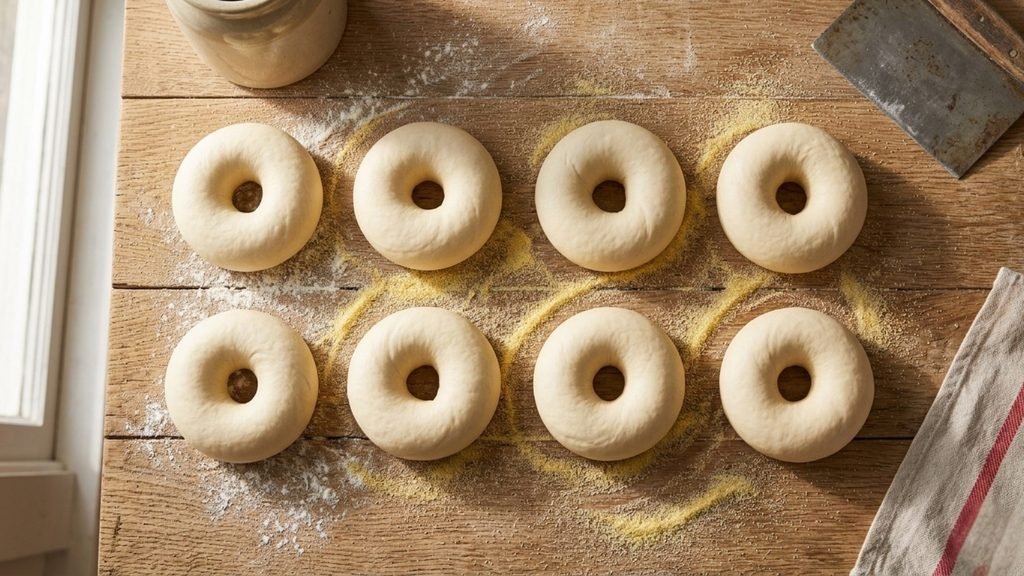
6Shape into rings. Poke a hole through the center of each ball with your thumb, then gently stretch and rotate it to widen the hole to about 2 inches across – it will close up some as it proofs, so err on the larger side.
7Refrigerate overnight. Arrange the shaped bagels on a parchment-lined tray, cover tightly, and refrigerate for 8-12 hours. This slow, cold rise is what builds real sourdough flavor.
8Bring the boiling water to a boil. Fill a wide, shallow pot with a few inches of water, bring it to a boil, and stir in 1 Tbsp baking soda. Preheat your oven to 425°F while the water heats.
9Boil the bagels. Working in batches of 2-3, boil the bagels 60-90 seconds per side – shorter for a softer crust, longer for something chewier. Lift them out with a slotted spoon and let them drain briefly.

10Top and arrange for baking. Arrange the boiled bagels on a parchment-lined baking sheet. While still tacky, brush with beaten egg white and sprinkle with seeds or everything bagel seasoning, if using.
11Bake 20-22 minutes. Bake at 425°F until deeply golden brown all over, rotating the tray halfway through for even color.
12Cool before slicing. Transfer to a wire rack and cool at least 20 minutes before slicing – the crumb is still setting right out of the oven.
Tips & Troubleshooting
- Keep the dough stiff: resist the urge to add extra water. A slack dough won’t hold the ring shape through boiling and baking.
- Don’t skip the cold retard: boiling straight from a room-temperature rise works in a pinch, but the overnight chill is where most of the flavor comes from.
- Boil time controls the crust: a shorter boil gives a softer, breadier crust; a longer boil gives a thicker, chewier one.
- Toppings stick best wet: brush with egg wash and add toppings while the bagels are still warm and tacky from boiling, not after they’ve cooled.
How to Store
To store: in a paper or loosely closed plastic bag at room temperature, bagels are best within 1-2 days – they stale faster than a loaf because of their shape and low hydration.
To freeze (my real recommendation): slice the bagels in half the same day you bake them, then freeze. Toast straight from frozen – you’ll get a fresher result than a day-old bagel left on the counter.
Nutrition
Per bagel, based on 8 bagels per batch. Estimated from the ingredients used – provided for convenience and not a substitute for a precise calculation.
210
Calories
42g
Carbs
7g
Protein
1g
Fat
2g
Fiber
380mg
Sodium
Desi’s Notes
I get asked a lot why I bother with a stiff dough instead of just using my loaf dough for bagels – the answer is that a wetter dough simply won’t hold its shape through a boil. This dough is meant to be firm, almost dry-feeling compared to what you’re used to if you’ve made my Plain Sourdough Loaf. Don’t add extra water to make it easier to handle.
The overnight retard matters more here than it might seem. Bagels boiled straight after a same-day rise are fine, but the ones that spend a night in the fridge have a noticeably deeper, tangier flavor – the closest I’ve gotten to a real New York-style bagel at home.
Before You Bake
Scaling this recipe up or down? Run your numbers through the Sourdough Calculator. And if you want a printable reference for troubleshooting your crumb and crust, grab the Crumb & Crust Diagnostic Quicksheet.
Knead to Know?
New recipes, baking tips, and sourdough troubleshooting — delivered before your starter even finishes its next rise.
Get the latest insights, no spam — just new recipes and baking tips. Unsubscribe anytime. See our Privacy Policy.


Tried this recipe? Leave a star rating below — it takes 10 seconds and helps other bakers decide what to make next.
Baked this recipe your way? Share it in Community Bakes and inspire other readers.