
Sourdough Cinnamon Rolls
These are the rolls I make when I want the house to smell like a bakery before anyone’s even out of bed. The dough mixes the night before, so all that’s left in the morning is shaping, a short rise, and the best part – the glaze.
Why You’ll Love It
- An overnight bulk rise means the hard part happens while you sleep
- A soft, enriched dough that pulls apart in soft, buttery layers
- A cream cheese glaze that goes on while the rolls are still warm
- Naturally leavened – no commercial yeast, still soft and pillowy
- The pan can go straight from the fridge into a quick room-temp rise, so brunch stays on schedule
Ingredients
Volume measurements are included for convenience, but they’re approximate – a kitchen scale will always get you a more consistent batch, especially for the flour.
This recipe makes 12 rolls in a 9×13-inch pan.
- Bread flour (500 g / 4 cups): gives the dough enough structure to hold up to rolling and filling without tearing.
- Whole milk (180 g / ¾ cup), lukewarm: adds softness to the crumb.
- Active sourdough starter (125 g / generous ½ cup): needs to be bubbly and active.
- Granulated sugar (50 g / ¼ cup): sweetens the dough itself, separate from the filling.
- Unsalted butter (85 g / 6 Tbsp), softened and divided: part goes into the dough, part into the filling.
- Eggs (2 large): add richness and help the crumb stay soft for days.
- Fine sea salt (9 g / about 1½ tsp): balances the sweetness in both the dough and filling.
- Brown sugar (150 g / ¾ cup): mixed with the remaining softened butter and cinnamon for the filling.
- Ground cinnamon (2 Tbsp): the other half of the filling, mixed with the brown sugar and butter.
- Cream cheese (115 g / 4 oz), softened: the base of the glaze.
- Powdered sugar (120 g / 1 cup), plus a splash of milk: whisked into the softened cream cheese for the glaze.
Equipment
- 9×13-inch baking pan: sized for 12 rolls with a bit of room to expand.
- Rolling pin: for evening out the filled dough before slicing.
- Unflavored dental floss or a sharp serrated knife: floss gives the cleanest slice through a soft filled dough without squishing it.
Sample Schedule (2-Day)
Day 1
- Mix the enriched dough (about 20 minutes hands-on)
- Bulk ferment at room temperature 3-4 hours, until puffy
- Roll, fill, and slice into rolls
- Arrange in the pan, cover, and refrigerate overnight
Day 2
- Let the pan sit at room temperature 1-1.5 hours until puffy
- Bake 24-28 minutes until golden
- Cool 10 minutes, then glaze while still warm
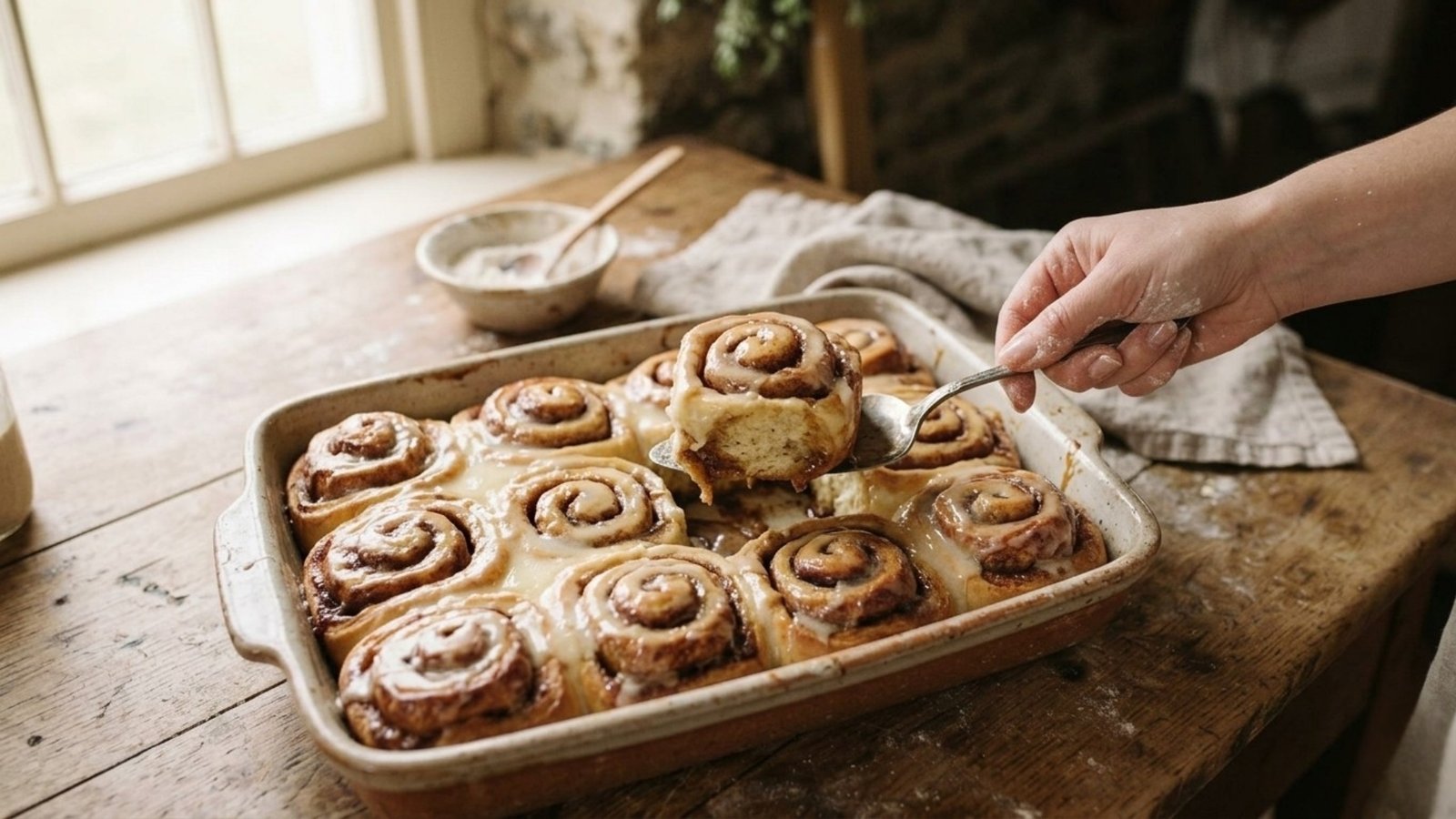
Sourdough Cinnamon Rolls
Method
- Whisk milk, starter, sugar, and eggs together, then mix in the flour and salt to form a shaggy dough.
- Knead in half the butter (reserve the rest) until smooth and elastic, about 8 minutes.
- Cover and bulk ferment 3–4 hours at room temperature until puffy.
- Mix remaining butter with brown sugar and cinnamon for the filling.
- Roll dough into a 16×12-inch rectangle and spread with filling.
- Roll into a tight log and slice into 12 rolls.
- Arrange in a greased 9×13-inch pan, cover, and refrigerate overnight.
- Let sit at room temperature 1–1.5 hours until puffy.
- Bake at 350°F for 24–28 minutes until golden.
- Beat cream cheese, powdered sugar, and a splash of milk into a glaze; spread over warm rolls.
Notes
Save This Recipe
Get it emailed to you now, plus new recipes as they go up.
Your email is safe with me. I’ll send this recipe straight over. No spam, ever—and you can unsubscribe anytime.
How to Make It
1Mix the dough. In a large bowl or stand mixer, whisk together 180 g (¾ cup) lukewarm milk, 125 g (generous ½ cup) active starter, 50 g (¼ cup) sugar, and 2 eggs. Add 500 g (4 cups) flour in two additions with 9 g (1½ tsp) salt mixed in between, until a shaggy dough forms.
2Knead in the butter. Knead in 57 g (4 Tbsp) of the softened butter (reserve the rest for the filling) in two additions, kneading about 8 minutes total, until the dough is smooth, glossy, and elastic.
3Bulk ferment. Cover and let rise at room temperature for 3 to 4 hours, until puffy and increased by about 50%.
4Make the filling. Stir together the remaining 28 g (2 Tbsp) softened butter, 150 g (¾ cup) brown sugar, and 2 Tbsp cinnamon into a spreadable paste.
5Roll and fill. Turn the dough onto a floured surface and roll into a 16×12-inch rectangle. Spread the filling evenly, leaving a bare inch along one long edge.
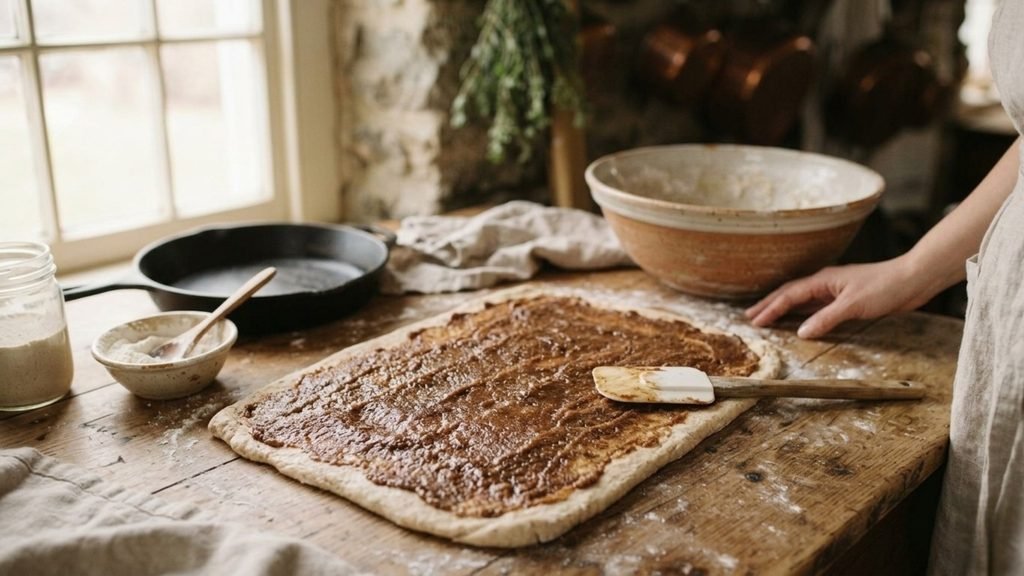
6Roll and slice. Starting from the long edge with filling, roll the dough into a tight log, pinching the seam closed. Using floss or a sharp knife, slice into 12 even rolls.

7Arrange and chill. Place the rolls cut-side up in a greased 9×13-inch pan, cover tightly, and refrigerate overnight, 8 to 14 hours.
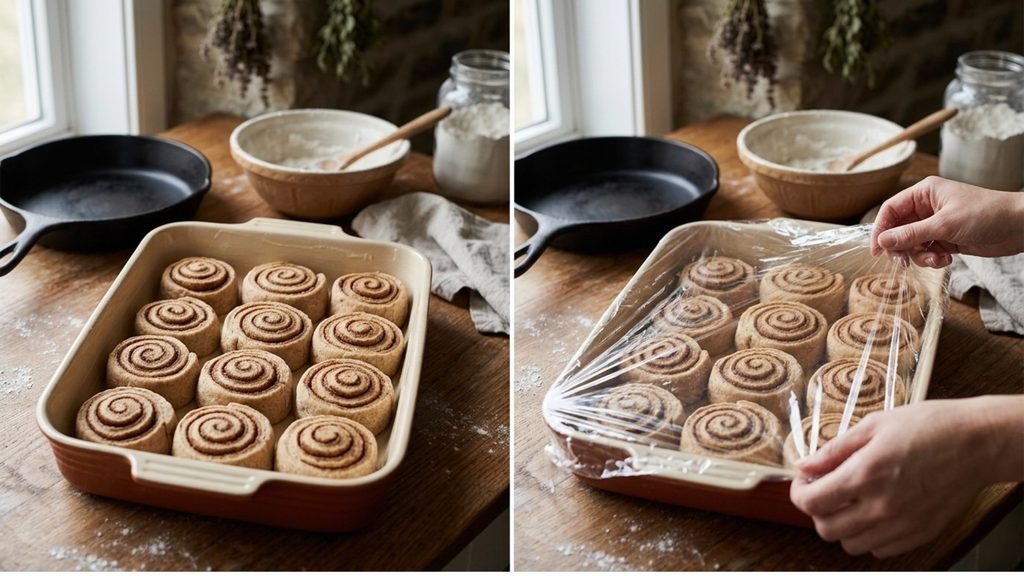
8Warm and rise. The next morning, take the pan out and let it sit at room temperature for 1 to 1.5 hours, until the rolls look puffy and are touching each other.
9Bake. Preheat the oven to 350°F. Bake the rolls for 24 to 28 minutes, until golden brown on top and the centers are set.
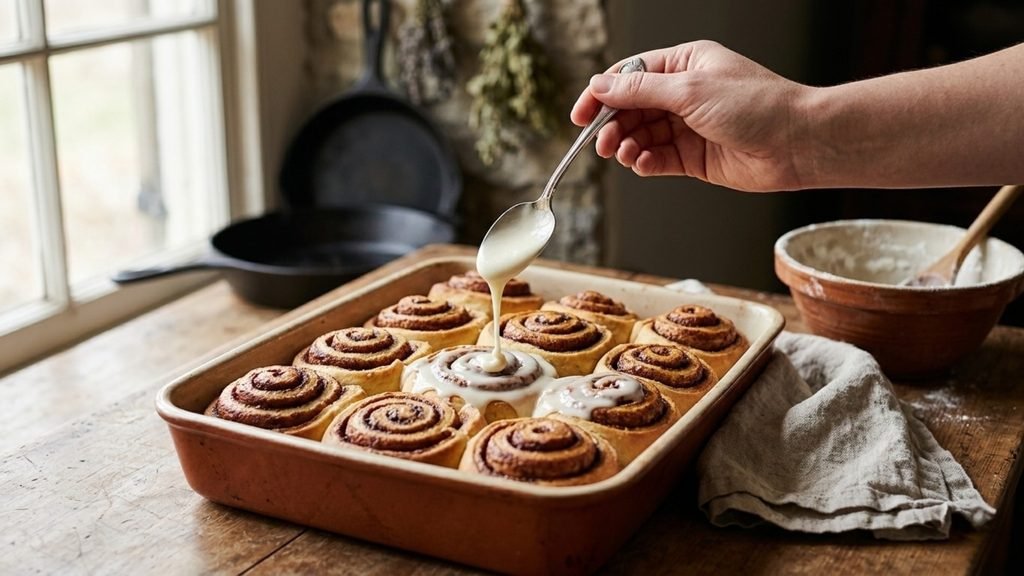
10Glaze. While the rolls bake, beat the softened cream cheese with powdered sugar and a splash of milk until smooth and pourable. Spread over the rolls while they’re still warm, so it melts slightly into every layer.
Tips & Troubleshooting
- Floss over a knife: unflavored dental floss slides through the filled dough cleanly where a knife tends to squash the layers.
- Puffy, not doubled: the overnight rolls are ready to bake once they look visibly puffy and are touching their neighbors – they don’t need to fully double.
- Glaze while warm, not hot: warm rolls let the glaze soak in slightly; piping hot rolls will melt it into a thin puddle instead of a glossy coat.
- Uneven oven: rotate the pan halfway through baking if your oven runs hot in the back.
How to Store
To store: keep glazed rolls covered at room temperature for up to 2 days, or in the fridge for up to 5.
To freeze: freeze unglazed, fully cooled rolls in an airtight container for up to 2 months. Thaw and warm in a low oven, then glaze fresh.
Nutrition
Per roll, based on 12 rolls per pan. Estimated from the ingredients used – provided for convenience and not a substitute for a precise calculation.
340
CALORIES
52
CARBS (G)
7
PROTEIN (G)
12
FAT (G)
7
SAT. FAT (G)
24
SUGAR (G)
220
SODIUM (MG)
Desi’s Notes
These are sweeter and more tender than my lean loaves, which makes sense – there’s sugar, butter, milk, and eggs doing a lot of the work alongside the starter. Don’t expect the same tang you get from a plain sourdough loaf; that’s by design here.
If your kitchen is on the warmer side, keep an eye on the overnight proof – in a hot house it can finish closer to 6 hours in the fridge rather than the full night. Look for puffy, touching rolls as your real cue, not the clock.
Before You Bake
Scaling this recipe up or down? Run your numbers through the Sourdough Calculator. And if you want a printable reference for troubleshooting or timing, browse all six Printable Quicksheets.
Knead to Know?
New recipes, baking tips, and sourdough troubleshooting — delivered before your starter even finishes its next rise.
Get the latest insights, no spam — just new recipes and baking tips. Unsubscribe anytime. See our Privacy Policy.




Tried this recipe? Leave a star rating below — it takes 10 seconds and helps other bakers decide what to make next.
Baked this recipe your way? Share it in Community Bakes and inspire other readers.