

Sourdough Pizza Dough
This is the dough I make on a Thursday so pizza night just happens on Friday or Saturday without any extra thought. A long cold ferment does most of the flavor work, so the ingredient list stays short: flour, water, starter, oil, and salt. No commercial yeast, no rushing.
Why You’ll Love It
- Just five ingredients, and the cold ferment builds real, complex flavor without any effort from you
- Flexible timing – bake it any day from 1 to 3 days after mixing
- Makes enough for two 12-inch pizzas, easy to double for a crowd
- A high-heat bake gets you a chewy, blistered crust without needing a wood-fired oven
- Freezes well as portioned dough balls for pizza on demand
Ingredients
Volume measurements are included for convenience, but they’re approximate – a kitchen scale will always get you a more consistent dough, especially for the flour.
This recipe makes two dough balls, each enough for a 12-inch pizza.
- Bread flour (500 g / 4 cups): the higher protein content gives this crust the chew a good pizza needs.
- Filtered water (325 g / 1⅓ cups), room temperature: unlike some of my other loaves, this dough doesn’t need lukewarm water since it has a long, cool fermentation ahead of it.
- Active sourdough starter (100 g / scant ½ cup): needs to be bubbly and active before mixing.
- Olive oil (20 g / about 1½ Tbsp): adds tenderness and helps the crust crisp instead of drying out.
- Fine sea salt (11 g / about 2 tsp): added after the first half of the flour, same rule as always.
Equipment
- Kitchen scale: hydration matters a lot for a dough you’ll be stretching thin by hand.
- Pizza stone or steel: preheated hot, this is what gives you a crisp, blistered bottom crust instead of a soggy one.
- Pizza peel: makes transferring a topped, floppy dough into a hot oven manageable instead of a disaster.
- Two medium containers or bowls with lids: for the cold ferment – something with a bit of headroom for the dough to expand.
Sample Schedule (2-Day)
Day 1
- Mix the dough (about 15 minutes hands-on)
- Bulk ferment 3-4 hours at room temperature, until puffy
- Divide into two balls and place in oiled containers
- Refrigerate at least overnight (up to 3 days)
Day 2 (or whenever you’re ready to bake)
- Pull dough balls out 1-2 hours before baking to come to room temperature
- Preheat pizza stone or steel for at least 45 minutes
- Stretch, top, and bake, 7-9 minutes

Sourdough Pizza Dough
Method
- Stir water and active starter together, then mix in the flour in two additions with the salt in between, until a shaggy dough forms.
- Knead about 5 minutes until smooth, then knead in the olive oil.
- Cover and bulk ferment 3–4 hours at room temperature, until puffy.
- Divide into two balls, shape tightly, and place in oiled containers.
- Refrigerate at least overnight, up to 3 days.
- 1–2 hours before baking, bring dough to room temperature.
- Preheat a pizza stone or steel to 500°F for at least 45 minutes.
- Stretch into a 12-inch round, top, and transfer to the hot stone.
- Bake 7–9 minutes until blistered and golden.
Notes
Save This Recipe
Get it emailed to you now, plus new recipes as they go up.
Your email is safe with me. I’ll send this recipe straight over. No spam, ever—and you can unsubscribe anytime.
How to Make It
1Mix the dough. In a large bowl, stir together 325 g (1⅓ cups) room-temperature water and 100 g (scant ½ cup) active starter until dissolved. Add 500 g (4 cups) flour in two additions, mixing in 11 g (2 tsp) salt between them, until a shaggy dough forms.
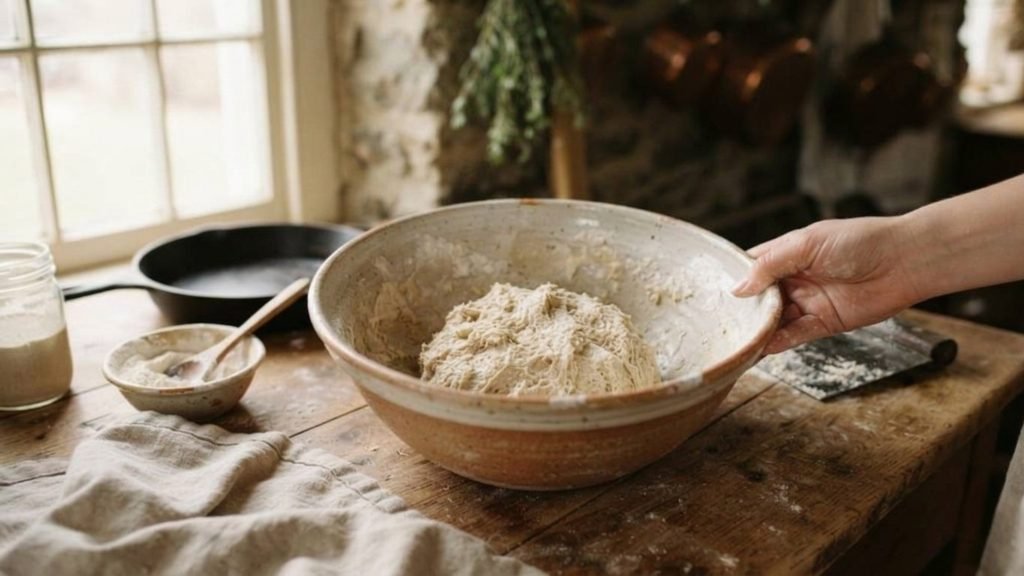
2Knead briefly. Knead by hand for about 5 minutes, or mix on low with a dough hook for 4 minutes, until the dough is smooth and only slightly tacky. Drizzle in the 20 g (1½ Tbsp) olive oil and knead another minute until it’s fully absorbed.
3Bulk ferment. Cover the bowl and let the dough rise at room temperature for 3 to 4 hours, until visibly puffy but not necessarily doubled.
4Divide and ball. Turn the dough out and divide it into two equal pieces (about 475 g each). Shape each into a tight ball by tucking the edges under and rolling it against the counter.
5Refrigerate. Place each ball in a lightly oiled container with a lid, or in a bowl covered tightly with plastic wrap. Refrigerate for at least overnight, and up to 3 days – the flavor keeps improving.
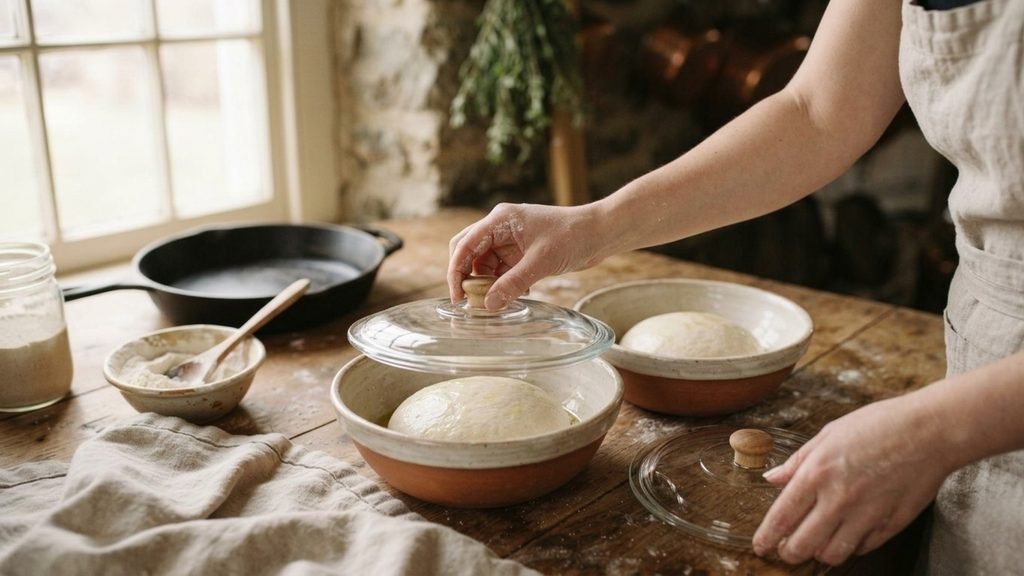
6Bring to room temperature. About 1 to 2 hours before you plan to bake, take the dough out of the fridge and let it sit, covered, at room temperature. Cold dough is much harder to stretch without tearing.
7Preheat. Place a pizza stone or steel on a rack in the upper third of your oven and preheat to 500°F (or as high as your oven goes) for at least 45 minutes. The stone needs real time to store up heat.
8Shape the crust. On a floured surface, gently press and stretch one dough ball into a 12-inch round, working from the center out and leaving a slightly thicker rim for the crust. Avoid a rolling pin, which knocks out the air bubbles you want.
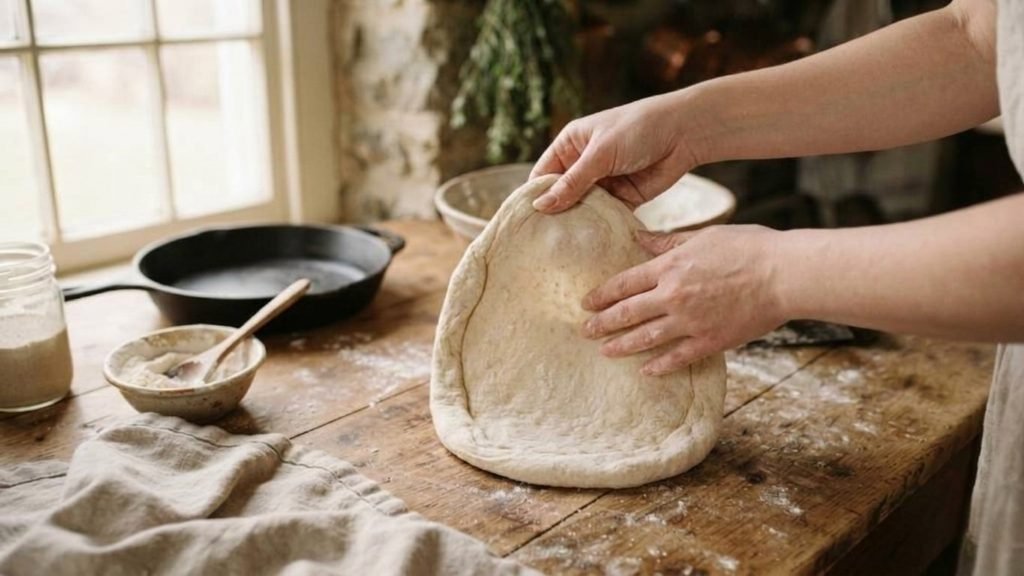
9Top and transfer. Move the shaped dough onto a floured or cornmeal-dusted pizza peel, add your sauce and toppings quickly, then give the peel a sharp shake to make sure the dough slides freely before transferring it to the hot stone.

10Bake. Bake for 7 to 9 minutes, until the crust is blistered and deeply golden and the cheese is bubbling. Rotate halfway through if your oven has hot spots.
Tips & Troubleshooting
- Cold dough tears: always let it warm up before stretching – a cold ball fights you and rips instead of stretching.
- Preheat longer than you think: a stone that hasn’t fully soaked up heat gives you a pale, floppy bottom crust no matter how hot the oven reads.
- Don’t overload the toppings: a wet, heavily topped pizza steams instead of crisping. Less is genuinely more here.
- Freezing dough balls: after the cold ferment, dough balls can be frozen in oiled bags for up to 3 months. Thaw overnight in the fridge, then bring to room temperature before shaping.
How to Store
To store unbaked dough: keep in the fridge, tightly covered, for up to 3 days – it only gets better as it sits.
To store baked pizza: leftover slices keep in the fridge for 3 days. Reheat in a hot skillet or oven, not the microwave, to keep the crust from turning soft.
Nutrition
Per slice, based on 8 slices per pizza (16 slices total for both crusts). Estimated from the ingredients used – provided for convenience and not a substitute for a precise calculation.
175
CALORIES
33
CARBS (G)
6
PROTEIN (G)
2
FAT (G)
1
FIBER (G)
320
SODIUM (MG)
Desi’s Notes
This dough is more forgiving of a hot kitchen than my loaves are, since a slightly faster bulk ferment doesn’t hurt it the way it can hurt a delicate boule. If your kitchen runs warm, just keep an eye on it and pull it into the fridge once it looks puffy, even if that’s closer to 3 hours than 4.
The longer cold ferment genuinely changes the flavor – day 3 dough tastes noticeably more complex than day 1. If you can plan ahead, it’s worth the wait.
Before You Bake
Scaling this recipe up or down? Run your numbers through the Sourdough Calculator. And if you want a printable reference for troubleshooting or timing, browse all six Printable Quicksheets.
Knead to Know?
New recipes, baking tips, and sourdough troubleshooting — delivered before your starter even finishes its next rise.
Get the latest insights, no spam — just new recipes and baking tips. Unsubscribe anytime. See our Privacy Policy.


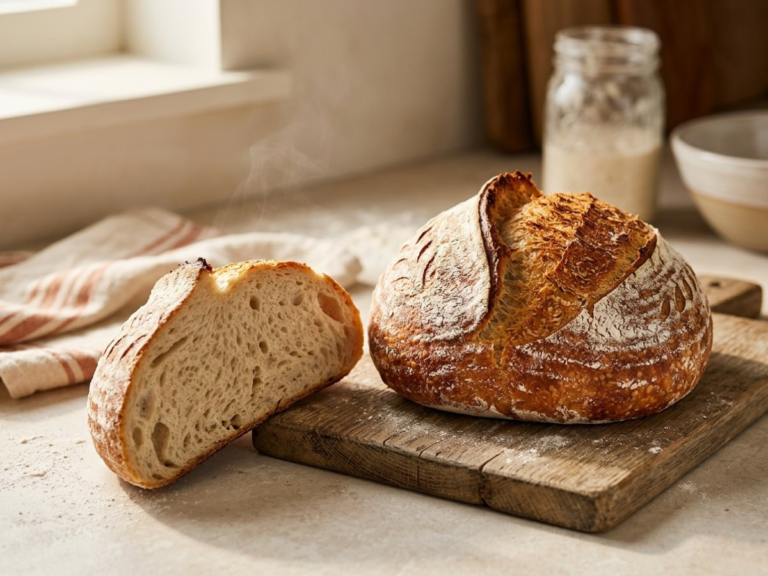

Tried this recipe? Leave a star rating below — it takes 10 seconds and helps other bakers decide what to make next.
Baked this recipe your way? Share it in Community Bakes and inspire other readers.