
Sourdough Focaccia
Focaccia is the sourdough bake I recommend to anyone intimidated by shaping a boule, because there’s almost none of it here. You pour the dough into a pan, dimple it with your fingers, and let the olive oil do most of the flavor work.
Why You’ll Love It
- No shaping skill required – just pour, dimple, and bake
- A wet dough that’s nearly impossible to overwork
- That signature crisp, oil-crackled bottom crust everyone fights over
- One pan, minimal cleanup, and it feeds a crowd
- Just as good the next day, sliced for sandwiches
Ingredients
Volume measurements are included for convenience, but they’re approximate – a kitchen scale will always get you a more consistent loaf, especially for the flour.
This dough is very wet by design – resist the urge to add extra flour, which will make the crumb dense instead of airy.
- Bread flour (500 g / 4 cups): a strong flour holds structure even at this dough’s high hydration.
- Filtered water (400 g / 1⅔ cups), lukewarm: this dough is deliberately wet, around 80% hydration.
- Active sourdough starter (100 g / scant ½ cup): needs to be bubbly and active.
- Olive oil (60 g / ¼ cup), divided: some goes into the dough, most goes into the pan and on top.
- Fine sea salt (12 g / about 2¼ tsp): a touch more than my loaves, since focaccia’s salt needs to carry through a thicker crumb.
- Flaky salt and fresh or dried rosemary (optional), for topping: a classic focaccia finish, though this dough is a blank canvas for whatever you like.
Equipment
- 9×13-inch baking pan: gives you the classic rectangular focaccia shape and a good crust-to-crumb ratio.
- Bowl scraper: this dough is too wet to handle much with your hands – a scraper does the folding for you.
Sample Schedule (2-Day)
Day 1
- Mix the dough (about 10 minutes hands-on)
- Bulk ferment with 3 folds over 3-4 hours
- Pour into an oiled pan, cover, and refrigerate overnight
Day 2
- Let the pan sit at room temperature 2-3 hours until puffy
- Dimple, top, and drizzle with olive oil
- Bake 22-25 minutes until deep golden

Sourdough Focaccia
Method
- Stir water and active starter together, then mix in flour and salt until no dry flour remains.
- Rest 20 minutes.
- Fold the dough 4 times, resting 30 minutes between each round, for a total of 3 fold rounds.
- Bulk ferment until puffy and risen about 50%, roughly 1.5–2 more hours.
- Oil a 9×13-inch pan, pour in the dough, turn once to coat, cover, and refrigerate overnight.
- Let sit at room temperature 2–3 hours until puffy.
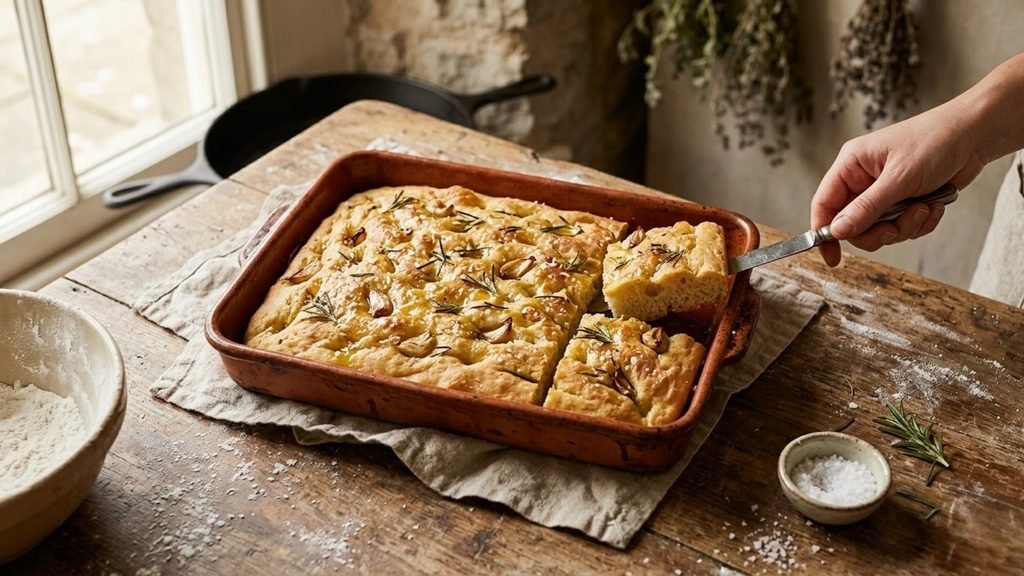
- Drizzle with olive oil, dimple with fingertips, and top with flaky salt and rosemary.
- Bake at 425°F for 22–25 minutes until deep golden.
- Cool 10 minutes in the pan before slicing.
Notes
Save This Recipe
Get it emailed to you now, plus new recipes as they go up.
Your email is safe with me. I’ll send this recipe straight over. No spam, ever—and you can unsubscribe anytime.
How to Make It
1Mix the dough. In a large bowl, stir 400 g (1⅔ cups) lukewarm water and 100 g (scant ½ cup) active starter together until dissolved. Add 500 g (4 cups) flour and 12 g (2¼ tsp) salt, and stir with a spatula or your hand until no dry flour remains – it will be a shaggy, sticky mass.
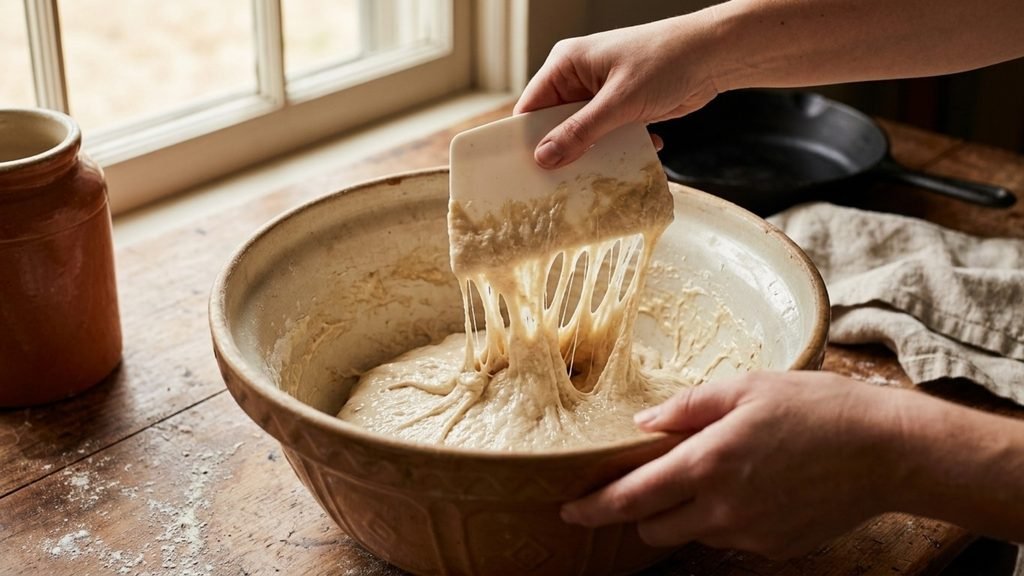
2Rest. Cover the bowl and let it rest for 20 minutes to let the flour hydrate.
3Fold. With wet hands, grab one side of the dough, stretch it up, and fold it over itself. Rotate the bowl a quarter turn and repeat 3 more times. Cover and rest 30 minutes, then repeat this fold two more times, 30 minutes apart.
4Bulk ferment. After the final fold, cover and let the dough rise at room temperature until puffy and increased by about 50%, roughly 1.5 to 2 more hours.
5Pan and chill. Pour about 30 g (2 Tbsp) olive oil into a 9×13-inch pan, spreading it to coat the bottom and sides. Pour the dough into the pan – don’t deflate it by kneading – and turn it once to coat both sides in oil. Cover and refrigerate overnight.
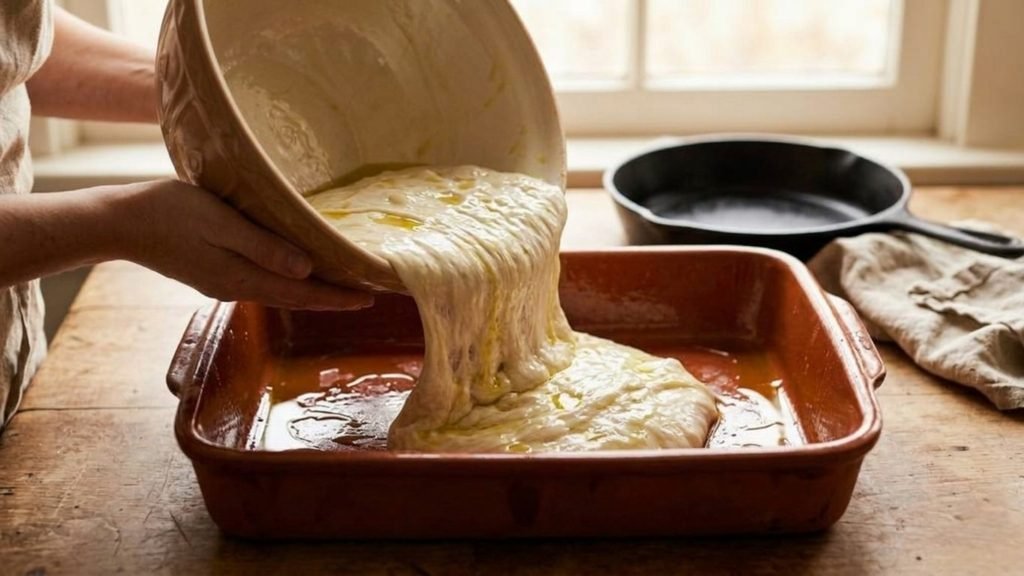
6Warm up. The next day, take the pan out and let it sit at room temperature for 2 to 3 hours, until visibly puffy and nearly filling the pan.
7Dimple and top. Preheat the oven to 425°F. Drizzle the remaining 30 g (2 Tbsp) olive oil over the top, then press your fingertips firmly all the way down to the pan to create the classic dimpled surface. Sprinkle with flaky salt and rosemary, if using.
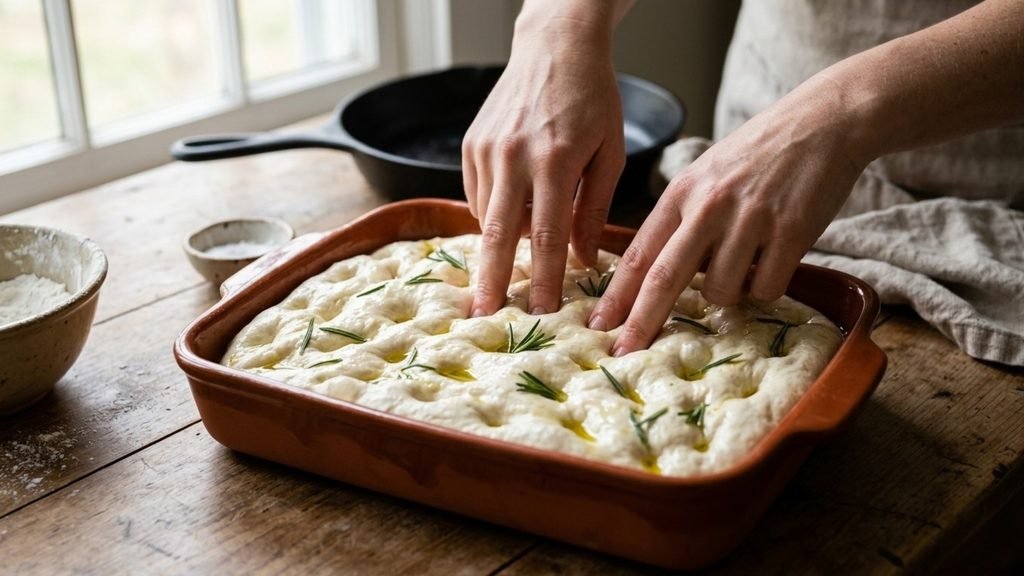
8Bake. Bake for 22 to 25 minutes, until deeply golden on top and crisp at the edges.
9Cool slightly. Let the focaccia cool in the pan for 10 minutes, then transfer to a rack or cutting board. It’s best served warm or at room temperature.
Tips & Troubleshooting
- Wet hands, not floured: keep a bowl of water nearby for the folding stage – wet hands release from the dough far better than flour does on this hydration level.
- Don’t skip the dimpling: pressing all the way to the bottom of the pan is what creates those little pools for olive oil and salt to collect in.
- Underbaked centers: if the middle seems pale or dense, your dough may not have proofed long enough in step 6 – give it more time next round rather than more oven time.
- Topping timing: heavier toppings like cherry tomatoes or thinly sliced potato go on before baking; delicate herbs like fresh basil are better added after, so they don’t scorch.
How to Store
To store: keep at room temperature, loosely covered, for up to 2 days. The crust softens slightly but the crumb stays good.
To freeze: wrap the cooled, whole focaccia (or individual pieces) tightly and freeze up to 2 months. Reheat in a 350°F oven for a few minutes to re-crisp the bottom.
Nutrition
Per piece, based on 12 pieces per pan. Estimated from the ingredients used – provided for convenience and not a substitute for a precise calculation.
190
CALORIES
31
CARBS (G)
5
PROTEIN (G)
5
FAT (G)
1
FIBER (G)
340
SODIUM (MG)
Desi’s Notes
This is the recipe I hand to anyone who says sourdough intimidates them. There’s no scoring, no banneton, no tight shaping – just pouring and dimpling, and it still turns out genuinely impressive.
In a hot, humid kitchen, keep a close eye on the folds and bulk rise – this wetter dough ferments noticeably faster than my stiffer loaves, sometimes finishing the whole bulk stage in under 3 hours total.
Before You Bake
Scaling this recipe up or down? Run your numbers through the Sourdough Calculator. And if you want a printable reference for troubleshooting or timing, browse all six Printable Quicksheets.
Knead to Know?
New recipes, baking tips, and sourdough troubleshooting — delivered before your starter even finishes its next rise.
Get the latest insights, no spam — just new recipes and baking tips. Unsubscribe anytime. See our Privacy Policy.




Tried this recipe? Leave a star rating below — it takes 10 seconds and helps other bakers decide what to make next.
Baked this recipe your way? Share it in Community Bakes and inspire other readers.