
Sourdough Flatbread
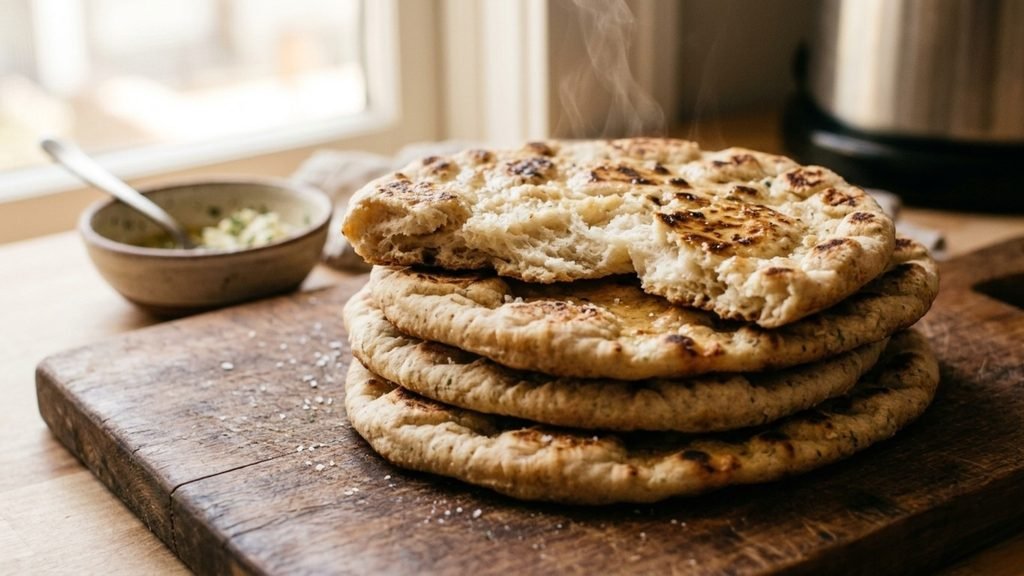
A soft, pillowy skillet flatbread with yogurt worked into the dough for extra tenderness, brushed with garlic butter straight out of the pan – no overnight rise required.
Why You’ll Love It
- Ready the same day, start to finish, unlike most of our other sourdough recipes – a good option when you want that sourdough flavor without the overnight wait.
- Cooked in a hot skillet on the stovetop, so no oven or Dutch oven needed.
- The yogurt in the dough keeps these soft and pliable, perfect for scooping up dips or wrapping around fillings.
- A garlic butter brush at the end takes these from good to irresistible.
Ingredients
Volume measurements are included for convenience, but they’re approximate – a kitchen scale will always get you a more consistent batch, especially for the flour.
A closer look at what makes this flatbread soft and pliable, and what you’ll need.
- Bread flour (400 g / 3¼ cups): provides the structure for this dough.
- Water (250 g / 1 cup): hydrates the dough alongside the yogurt.
- Plain yogurt (30 g / 2 Tbsp): the key to this flatbread’s soft, tender texture.
- Extra-virgin olive oil (20 g / 1½ Tbsp): adds richness and helps the dough stay pliable.
- Active sourdough starter (100 g / scant ½ cup): fed and near peak for reliable rise.
- Fine sea salt (9 g / about 1½ tsp): for the dough.
- Unsalted butter (45 g / 3 Tbsp): melted with garlic for brushing over the finished flatbreads.
- Garlic (2 cloves): minced finely so it infuses the butter evenly.
- Fresh parsley (1 Tbsp): chopped, for the garlic butter.
Equipment
- Large mixing bowl: for mixing and rising the dough.
- Rolling pin: for rolling out each flatbread.
- Cast iron or heavy skillet: for cooking the flatbreads with good char.
Sample Schedule
Same Day
- Feed your starter 4 to 6 hours before mixing so it's active and doubled.
- Mix the dough and knead briefly.
- Let rise at room temperature for about 4 hours, until puffy.
- Divide, roll out, and cook each flatbread in a hot skillet.
- Brush with garlic butter and serve warm.

Sourdough Flatbread
Method
- Whisk the water, yogurt, olive oil, and active starter together, then mix in the flour and salt to a shaggy dough.
- Knead 5-6 minutes until smooth and only slightly tacky.
- Cover and let rise at room temperature about 4 hours, until puffy.
- Divide into 6 pieces and roll each into a thin round, about 1/8-inch thick.
- Cook each flatbread in a hot dry skillet, 1-2 minutes per side, until puffed and charred in spots.
- Melt the butter with the garlic and parsley while the flatbreads cook.
- Brush each warm flatbread with the garlic butter and serve warm.
Notes
Save This Recipe
Get it emailed to you now, plus new recipes as they go up.
Your email is safe with me. I’ll send this recipe straight over. No spam, ever—and you can unsubscribe anytime.
How to Make It
1Feed Your Starter. Feed your starter 4 to 6 hours before mixing, until doubled, domed, and passing the float test.
2Mix the Dough. Whisk the water, yogurt, olive oil, and active starter together. Add the flour and salt and mix to a shaggy dough. Knead by hand for 5 to 6 minutes, until smooth and only slightly tacky.
3Rise. Cover the bowl and let the dough rise at room temperature for about 4 hours, until puffy and increased in size.
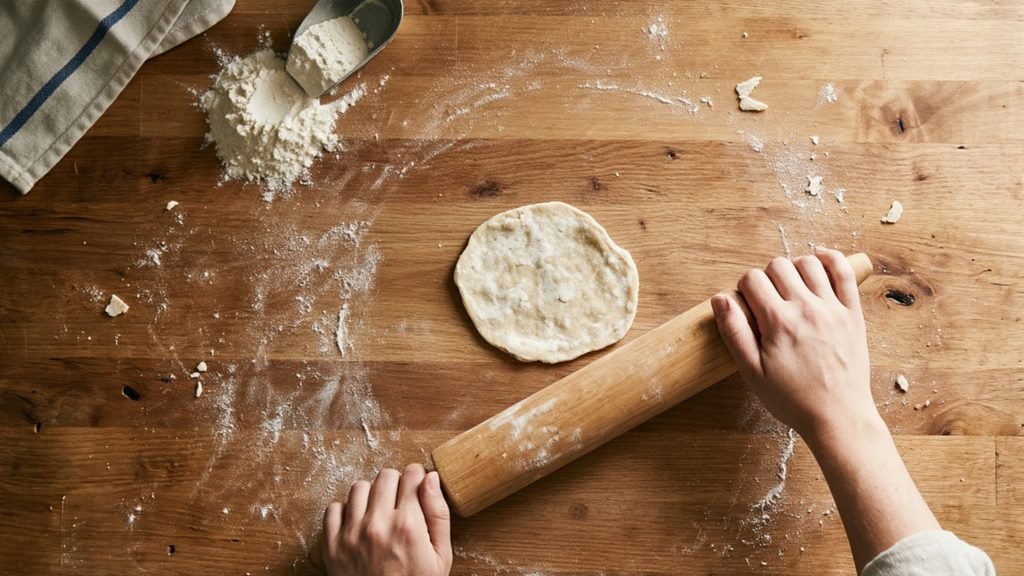
4Divide and Roll. Divide the dough into 6 equal pieces. On a lightly floured surface, roll each piece into a thin round or oval, about 1/8-inch thick.
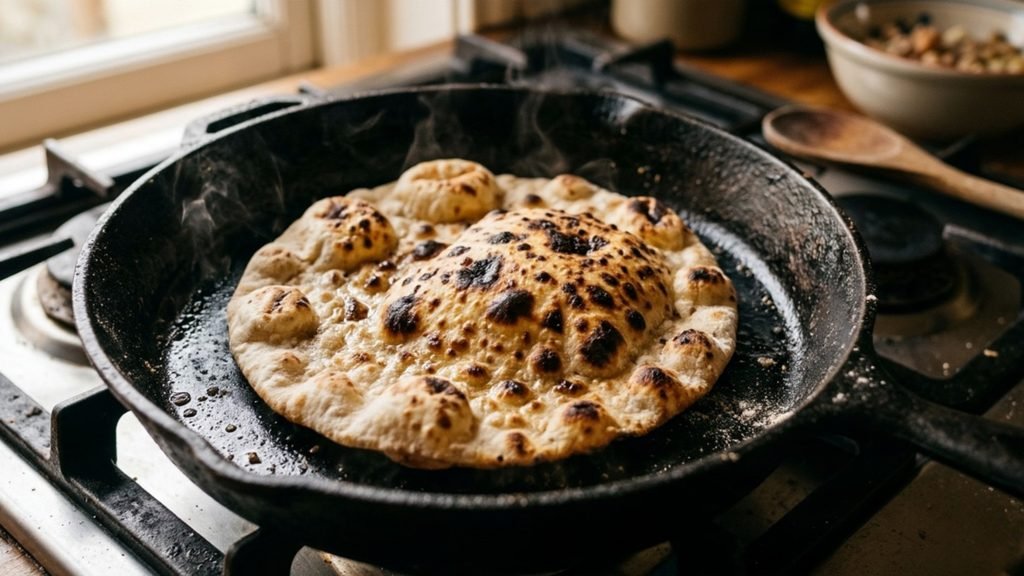
5Cook in a Hot Skillet. Heat a dry cast iron or heavy skillet over medium-high heat. Cook each flatbread for 1 to 2 minutes per side, until puffed and charred in spots.
6Make the Garlic Butter. While the flatbreads cook, melt the butter in a small saucepan with the garlic and parsley.
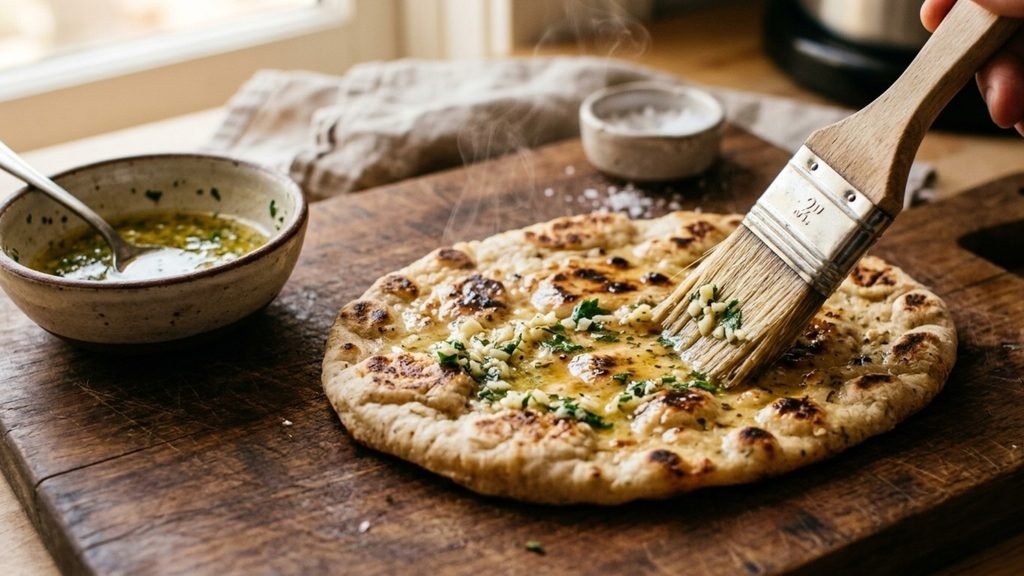
7Brush and Serve. Brush each warm flatbread with the garlic butter as it comes off the skillet. Stack and serve warm.
Tips & Troubleshooting
- Sticky dough: the dough will feel softer and stickier than our loaf doughs – that’s the yogurt, not a mistake; resist adding much extra flour.
- Rolling thin: roll the dough thin for the best texture; a thicker round will taste more like a soft roll than a flatbread.
- Skillet heat: the flatbread will dry out instead of charring and puffing – let it fully preheat first.
- Keeping them warm: stack finished flatbreads under a clean towel to keep them soft and warm while you finish the batch.
How to Store
Best fresh: eaten warm, the day they’re made.
Room temperature: wrapped in a towel or airtight bag, for up to 2 days; reheat in a dry skillet.
Freezer: between sheets of parchment for up to 2 months; reheat straight from frozen in a hot skillet.
Nutrition
Nutrition estimated per flatbread (1 of 6) and will vary depending on the exact ingredients used.
195
CALORIES
29
CARBS (G)
5
PROTEIN (G)
6
FAT (G)
3
SAT. FAT (G)
290
SODIUM (MG)
Desi’s Notes
This is the one sourdough recipe on the site I make on a whim, since it doesn’t need an overnight cold retard – active starter and a few hours on the counter is all it takes. The dough will feel quite soft and slightly sticky; that’s the yogurt, and it’s what keeps the finished flatbread tender rather than tough. Cook these in a screaming hot dry or lightly oiled skillet for the best char and bubble.
Before You Bake
Scaling this recipe up or down? Run your numbers through the Sourdough Calculator. And if you want a printable reference for troubleshooting or timing, browse all six Printable Quicksheets.
Knead to Know?
New recipes, baking tips, and sourdough troubleshooting — delivered before your starter even finishes its next rise.
Get the latest insights, no spam — just new recipes and baking tips. Unsubscribe anytime. See our Privacy Policy.



Tried this recipe? Leave a star rating below — it takes 10 seconds and helps other bakers decide what to make next.
Baked this recipe your way? Share it in Community Bakes and inspire other readers.